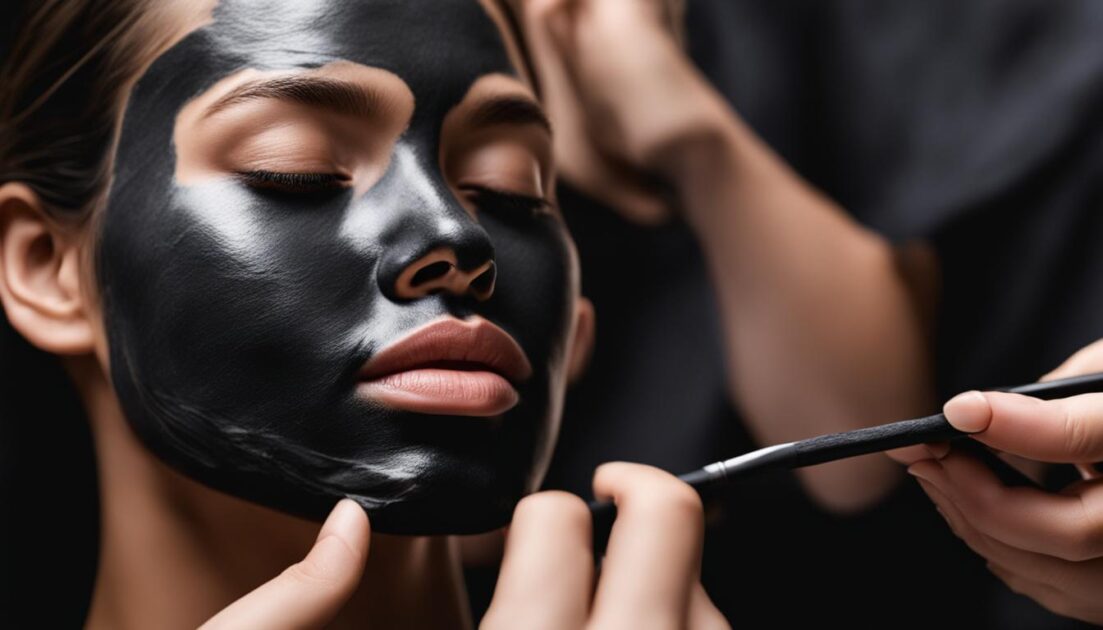
Greetings, fellow skincare enthusiasts! In today’s article, I will be sharing my expert insights on the use of activated charcoal for skin. Over the years, activated charcoal has gained significant popularity in skincare products, thanks to its detoxifying and complexion-improving properties.
While scientific research on the effectiveness of charcoal for skincare is limited, there is evidence to suggest that it can be beneficial, especially for those with oily skin. The ability of activated charcoal to remove toxins and absorb excess oil makes it an appealing ingredient for individuals looking to tackle these specific skin concerns.
Experts in the field, such as Michelle Wong and Melissa Kanchanapoomi Levin, recommend combining charcoal with clays to maximize its benefits. However, it is important to note that charcoal can bind to other active ingredients, so it is advisable to avoid using actives alongside charcoal-based products.
Charcoal can be found in various skincare products, including masks, soaps, sponges, deodorants, and even hair treatments. It is available in different forms, such as powder or tablets, for those who prefer a DIY approach.
Key Takeaways:
- Activated charcoal has become popular in skincare due to its detoxifying and complexion-improving benefits.
- While scientific research is limited, charcoal’s ability to remove toxins and absorb oil can be beneficial for those with oily skin.
- Combining charcoal with clays can maximize its benefits, but it should not be used with other active ingredients.
- Charcoal is commonly found in masks, soaps, sponges, deodorants, and hair treatments.
- It is available in powder or tablet form for DIY skincare enthusiasts.
Stay tuned for the next section, where we will explore the various benefits of activated charcoal for the skin!
Benefits of Activated Charcoal for Skin
While there is limited scientific evidence to support the claims, there are various anecdotal benefits associated with using activated charcoal on the skin. It is believed to cleanse the skin by removing dirt and dead skin cells, potentially reducing the appearance of pores. Charcoal’s absorbent properties make it effective as a gentle exfoliant and oil absorber. It may also have antibacterial properties that can help fight acne, although further research is needed to confirm this. However, it is important to consider the additional ingredients in charcoal-based products to ensure they are suitable for your skin.
Activated charcoal is a popular ingredient in skincare products due to its potential benefits for various skin concerns. Here are some of the key benefits of using activated charcoal for skin:
- Cleanses and detoxifies: Activated charcoal has the ability to draw out impurities, toxins, and pollutants from the skin, providing a deep cleanse that helps remove dirt, oil, and dead skin cells. This can leave the skin feeling refreshed and rejuvenated.
- Reduces the appearance of pores: The absorbent properties of activated charcoal can help in minimizing the appearance of pores by effectively removing the buildup of dirt and excess oil that can clog them. This can result in a smoother and more refined complexion.
- Exfoliates gently: Charcoal-based products can act as a gentle exfoliant, helping to slough off dead skin cells and promote cell turnover. This can improve the overall texture and tone of the skin, revealing a brighter and more radiant complexion.
- Controls oiliness: Activated charcoal has the ability to absorb excess oil from the skin, making it particularly beneficial for individuals with oily or combination skin types. This can help mattify the skin and reduce shine, providing a more balanced and matte appearance.
- Potential antibacterial properties: While further research is needed, some studies suggest that activated charcoal may possess antibacterial properties that can help combat acne-causing bacteria. This makes it a potentially useful ingredient for individuals dealing with acne or blemish-prone skin.
It’s important to note that while many people report positive results from using activated charcoal for skincare, individual experiences may vary. It’s also crucial to consider the overall formulation of charcoal-based products and the additional ingredients they contain. Some products may have a combination of active ingredients, such as salicylic acid or clay, which can further enhance the benefits for specific skin concerns.
Disclaimer: The benefits mentioned above are based on anecdotal evidence and should not replace professional skincare advice. It’s recommended to consult with a dermatologist or skincare specialist before introducing new products into your skincare routine.

Adding an image representing the benefits of activated charcoal for skin:
How to Use Activated Charcoal for Skin
There are various ways to incorporate activated charcoal into your skincare routine. Whether you’re dealing with oily skin, blackheads, or simply looking for a deep cleanse, activated charcoal can be a beneficial addition. Here are some simple methods for using activated charcoal for your skin:
1. Facial Cleanser
One of the easiest ways to use activated charcoal is by adding charcoal powder to your regular facial cleanser. Simply mix a small amount of charcoal powder with your cleanser in your palm, lather it up, and gently massage it onto your skin. Rinse thoroughly with warm water and pat dry.
2. Charcoal Mask
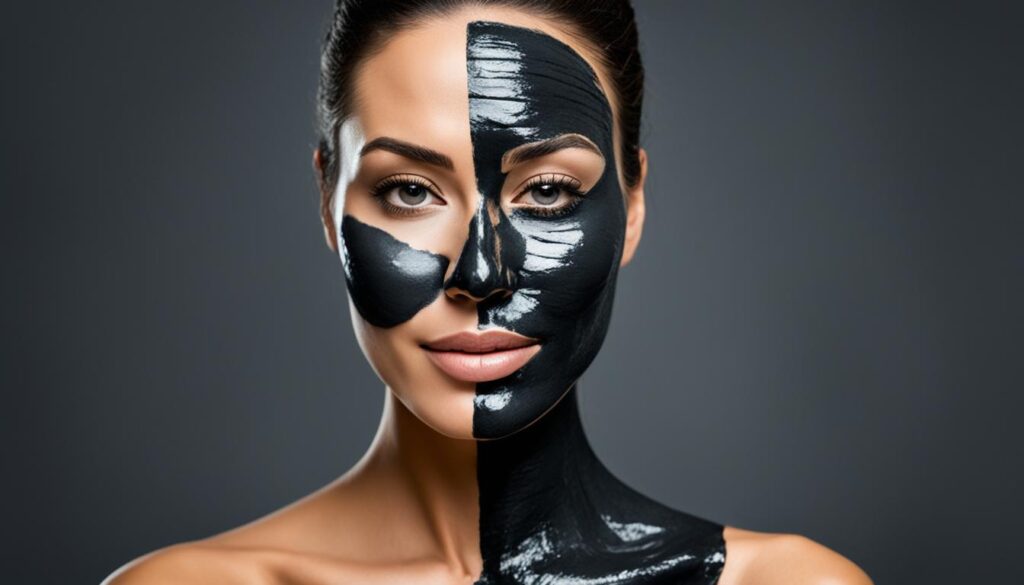
A charcoal mask is a popular way to enjoy the detoxifying benefits of activated charcoal. Apply a thin, even layer of a charcoal-based mask to your clean, dry face. Allow it to dry for about 15-20 minutes, or until it becomes firm to the touch. Rinse off the mask with warm water and follow with your regular skincare routine.
3. Charcoal Scrub
If you prefer a physical exfoliation, you can make your own charcoal scrub by mixing charcoal powder with other ingredients such as sugar or salt. The gritty texture of the scrub combined with the absorbent properties of activated charcoal can help remove dead skin cells and unclog pores. Gently massage the scrub onto damp skin in circular motions, then rinse thoroughly.
4. Follow Manufacturer’s Instructions
When using charcoal-based products, it’s important to follow the instructions provided by the manufacturer. Different products may have specific guidelines regarding application frequency, duration, and usage recommendations. Taking these instructions into account will ensure you get the best results while minimizing the risk of irritation or other adverse effects.
Incorporating activated charcoal into your skincare routine can help detoxify and rejuvenate the skin. However, it’s important to consider your specific skin needs and any potential sensitivities before using charcoal-based products. As with any new skincare ingredient, it’s always a good idea to perform a patch test before applying it to your entire face.
Activated Charcoal for Skin Detoxification

Activated charcoal is widely known for its detoxifying properties and has been used in medicine to remove toxins from the body and treat various conditions. While its detoxification benefits for the skin are still under-researched, its ability to adsorb impurities and pollutants make it a potentially useful ingredient for skin detoxification.
When applied topically, activated charcoal can help draw out dirt, oil, and other substances that clog the pores, leading to a clearer complexion. Its absorbent properties make it effective in removing pollutants that accumulate on the skin’s surface, helping to achieve a deep cleanse.
Although many claims surrounding the detoxification benefits of activated charcoal for skin are based on anecdotal evidence, further scientific studies are needed to validate these claims and provide more conclusive evidence.
“Activated charcoal’s adsorbent properties make it a promising ingredient for skin detoxification, removing impurities that can clog the pores and contribute to skin concerns.” – Dr. Michelle Wong
Benefits of Activated Charcoal for Skin Detoxification:
- Draws out impurities and toxins from the skin
- Helps remove dirt, oil, and pollutants that clog the pores
- Promotes a deep cleanse and refreshed complexion
Incorporating activated charcoal into your skincare routine can be done through various products, such as masks, cleansers, and scrubs. However, it is essential to follow the instructions provided by the manufacturer and consider the specific needs of your skin before incorporating any new ingredient into your routine.
While the detoxification benefits of activated charcoal for the skin are promising, it’s important to note that individual results may vary, and further research is needed to fully understand and validate the efficacy of activated charcoal for skin detoxification.
Activated Charcoal for Acne and Oily Skin
Charcoal products are often marketed as beneficial for acne-prone and oily skin. The theory is that charcoal’s stickiness can help remove dirt and oil from the skin, preventing breakouts. However, the effectiveness of charcoal itself in treating acne is still uncertain, as many charcoal cleansers and masks contain other active ingredients known to have efficacy in fighting acne, such as salicylic acid and fruit extracts. It is recommended to consider the entire formulation of a charcoal product and the additional ingredients it contains before attributing its benefits solely to charcoal. Nonetheless, charcoal is generally considered safe and unlikely to cause allergic reactions or irritation.
To maximize the benefits of activated charcoal for acne and oily skin, it is important to choose products that are specifically formulated for these concerns. Look for ingredients like salicylic acid, tea tree oil, and witch hazel, which have been proven to be effective in treating acne. Combining these ingredients with activated charcoal can help target breakouts and control excess oil production.
When using charcoal products for acne or oily skin, it’s essential to follow a proper skincare routine. Cleanse your face twice a day, morning and night, using a gentle cleanser that contains activated charcoal. This will help remove impurities and excess oil without stripping the skin’s natural moisture. Follow up with a lightweight, oil-free moisturizer to keep the skin hydrated without clogging the pores.
Pro Tip: If you have severe acne or persistent breakouts, it is recommended to consult a dermatologist for personalized advice and treatment options.
| Key Benefits of Activated Charcoal for Acne and Oily Skin |
|---|
| 1. Helps remove excess oil and impurities from the skin |
| 2. Can prevent clogged pores and breakouts |
| 3. May have antibacterial properties that help fight acne-causing bacteria |
| 4. Provides a deep cleanse without drying out the skin |
| 5. Can help control shine and mattify the skin |
Activated Charcoal for Blackheads
The use of activated charcoal for blackheads is based on its ability to unclog pores and remove impurities. Charcoal’s absorbent properties can help draw out dirt, excess oil, and other substances that contribute to the formation of blackheads. By effectively clearing the pores, charcoal may assist in reducing the appearance of blackheads.
Charcoal masks or cleansers that contain additional ingredients like kaolin clay and alpha-hydroxy acids may provide added benefits for treating blackheads. Kaolin clay helps to absorb excess oil and gently exfoliate the skin, while alpha-hydroxy acids can aid in removing dead skin cells and promoting cell turnover.
However, it is important to note that the effectiveness of charcoal in specifically targeting blackheads has not been extensively researched. Results may vary depending on the individual’s skin type and condition. It is recommended to consult with a skincare professional or dermatologist for personalized advice on incorporating activated charcoal into a blackhead treatment routine.
FAQ
What are the benefits of using activated charcoal for skin?
Activated charcoal is believed to cleanse the skin by removing dirt and dead skin cells, potentially reducing the appearance of pores. It can act as a gentle exfoliant and oil absorber and may also have antibacterial properties that can help fight acne.
How can I incorporate activated charcoal into my skincare routine?
You can use a facial cleanser that contains activated charcoal or make your own by adding charcoal powder to your regular cleanser. You can also apply a charcoal mask once or twice a week to detoxify and rejuvenate the skin. Another option is to use a charcoal scrub by mixing charcoal powder with other ingredients like sugar or salt.
Does activated charcoal help with skin detoxification?
While there is limited scientific research on the detoxification benefits of charcoal for skin, its absorbent properties suggest it may help in removing dirt, oil, and other pollutants that can clog the pores.
Is activated charcoal effective for treating acne and oily skin?
Charcoal products are often marketed as beneficial for acne-prone and oily skin. While the effectiveness of charcoal itself in treating acne is still uncertain, charcoal cleansers and masks can contain other active ingredients known to have efficacy in fighting acne, such as salicylic acid and fruit extracts.
Can activated charcoal help with blackheads?
The use of activated charcoal for blackheads is based on its ability to unclog pores and remove impurities. Charcoal masks or cleansers that contain additional ingredients like kaolin clay and alpha-hydroxy acids may provide added benefits for treating blackheads.


