Discover the hidden gem of skincare: almond oil. This natural body moisturizer is not only nourishing but also offers a multitude of benefits for your skin. Derived from almonds, almond oil is packed with essential nutrients like vitamin D, vitamin E, and various minerals, making it a powerhouse for hydration and rejuvenation.
When it comes to skincare, natural is always best. Almond oil provides a gentle yet effective solution for those seeking a natural body moisturizer. Its lightweight consistency allows for easy absorption, leaving your skin feeling smooth and supple without any greasy residue.
But the benefits of almond oil go beyond mere hydration. Thanks to its antioxidant properties, almond oil can protect your skin from the damaging effects of UV radiation and help reduce inflammation and irritation. It also contributes to evening out your skin tone and can even diminish the appearance of stretch marks.
For those looking for an organic option, organic almond oil is readily available and provides all the same benefits without any harmful additives or chemicals. It’s perfect for individuals with sensitive skin or those who prefer a more natural approach to their skincare routine.
So, why settle for just any body moisturizer when you can indulge your skin in the goodness of almond oil? Say goodbye to dry, dull skin and hello to a more radiant and nourished complexion. Try almond oil today and let its natural goodness work wonders for your skin!
Key Takeaways:
- Almond oil is a natural body moisturizer that offers rich hydration and nourishment.
- It is packed with essential nutrients like vitamin D, vitamin E, and minerals.
- Almond oil protects the skin from UV radiation damage and reduces inflammation.
- It helps even out the skin tone and can diminish the appearance of stretch marks.
- Organic almond oil is a great option for individuals with sensitive skin.
The Science Behind Almond Oil
Almond oil is not just an ordinary skincare ingredient; it is packed with a variety of chemical constituents that contribute to its remarkable properties. These constituents include hydrocarbons and oxygenated compounds, which work together to promote healthy and nourished skin.
The hydrocarbons found in almond oil are primarily terpenes, such as monoterpenes, sesquiterpenes, and diterpenes. These compounds play a crucial role in inhibiting toxin accumulation, stimulating the liver and glands, and possessing anti-inflammatory and anti-bacterial properties. By incorporating almond oil into your skincare routine, you can benefit from these terpenes’ ability to soothe and protect your skin.
On the other hand, almond oil also contains various oxygenated compounds, including esters, aldehydes, ketones, alcohols, phenols, and oxides. These compounds offer a range of benefits for the skin. For example, esters and aldehydes have anti-fungal and calming properties, while ketones and alcohols provide antioxidant effects. Phenols and oxides, on the other hand, contribute to the overall skin health and protection. The combination of these constituents makes almond oil an excellent choice for body moisturization, as it delivers multiple benefits to the skin.
Almond oil’s chemical constituents, including terpenes, esters, aldehydes, ketones, alcohols, phenols, and oxides, work together to provide anti-inflammatory, anti-bacterial, anti-fungal, and antioxidant properties, making it an ideal ingredient for body moisturization.
By harnessing the power of almond oil’s chemical constituents, you can nourish and hydrate your skin effectively. It’s no wonder that almond oil has become a popular choice for skincare enthusiasts worldwide!
Almond Oil Chemical Constituents:
| Constituent | Beneficial Properties |
|---|---|
| Terpenes | Inhibits toxin accumulation, stimulates the liver and glands, and possesses anti-inflammatory and anti-bacterial properties |
| Esters | Anti-fungal and calming properties |
| Aldehydes | Anti-fungal and calming properties |
| Ketones | Antioxidant effects |
| Alcohols | Antioxidant effects |
| Phenols | Overall skin health and protection |
| Oxides | Overall skin health and protection |
Now that we’ve explored the fascinating science behind almond oil, let’s delve deeper into its specific benefits for the skin in the next section. Stay tuned!

Benefits of Almond Oil for the Skin
Almond oil is a powerhouse when it comes to skin benefits. Its natural properties make it a valuable addition to any skincare routine. Let’s explore the various advantages that almond oil offers:
Reduces Skin Irritation and Calms Inflammation
Almond oil is known for its soothing properties, making it an excellent choice for reducing skin irritation. It can effectively calm inflammatory conditions like psoriasis and eczema, providing relief and promoting healthier skin.
Rejuvenates the Skin for a Revitalized Appearance
By using almond oil, you can give your skin a renewed and fresh look. Its rejuvenating properties help enhance the skin’s overall appearance, making it look more youthful and vibrant.
Evens Out the Skin Tone and Improves Complexion
Uneven skin tone and dark spots can be a cause of concern for many. Almond oil can help even out the skin tone by reducing discoloration and improving complexion over time. Regular use can result in a more even and radiant complexion.
Provides Antioxidants for Skin Protection
Almond oil is a rich source of antioxidants, which play a vital role in protecting the skin from oxidative stress caused by environmental factors. These antioxidants help neutralize free radicals and prevent damage to the skin cells, promoting a healthier and more youthful appearance.
Reduces the Appearance of Stretch Marks
Stretch marks can be a common concern, especially after pregnancy or fluctuations in weight. Almond oil has been shown to have hydrating and nourishing properties that can help reduce the appearance of stretch marks, allowing the skin to appear smoother and more toned.
Hydrates the Skin for Lasting Moisture
One of the most significant benefits of using almond oil is its exceptional ability to hydrate the skin. It acts as a natural emollient, locking in moisture and preventing water loss. Regular use of almond oil can lead to well-hydrated and supple skin with a healthy, radiant glow.
“Almond oil is a versatile ingredient with numerous benefits for the skin. From reducing skin irritation and inflammation to rejuvenating the skin and providing antioxidants, it is a true skincare powerhouse.” – Expert Dermatologist
With its remarkable properties, almond oil can significantly improve the health and appearance of your skin. Whether you’re concerned about skin irritation, uneven tone, or stretch marks, almond oil is a natural solution that can address these issues effectively.
Now that we have explored the benefits of almond oil for the skin, let’s move on to discovering who should use almond oil and how to incorporate it into your skincare routine.
Who Should Use Almond Oil and How to Use It
Almond oil is a versatile and beneficial ingredient suitable for individuals with dry or sensitive skin in need of hydration and calming effects. It can be effectively used for the face, body, and hair, providing multiple benefits. Here are some ways to incorporate almond oil into your skincare and haircare routine:
Almond Oil for Face:
- Use almond oil as a standalone moisturizer for the face to hydrate and nourish the skin.
- Apply almond oil as a cleanser or makeup remover to gently remove impurities and promote a healthy complexion.
- Add a few drops of almond oil to your face cream for extra hydration and to boost the moisturizing properties.
- Almond oil can be used as an ingredient in face masks or facial treatments for added benefits.
Almond Oil for Body:
- Apply almond oil all over the body as a body oil for overall moisturization and to improve skin texture.
- Use almond oil as a massage oil to relax the body and promote circulation.
- Mix almond oil with other natural ingredients to create a personalized body scrub for exfoliation.
Almond Oil for Hair:
- Massage almond oil into the scalp to nourish and moisturize the hair follicles.
- Apply almond oil to the ends of the hair to prevent split ends and add shine.
- Use almond oil as a pre-shampoo treatment by applying it to damp hair and leaving it on for a few hours before washing.
- Add a few drops of almond oil to your conditioner for extra hydration and to detangle the hair.
Almond Oil for Cuticles:
- Gently massage almond oil into the cuticles to moisturize and soften them.
- Regularly applying almond oil to the cuticles can promote healthy nail growth.
It’s important to note that if you have a nut allergy, it’s best to avoid using almond oil.
| Benefits of Almond Oil | Usage |
|---|---|
| Hydrates and nourishes the skin | Apply as a standalone moisturizer for face and body; massage into scalp for hair |
| Reduces skin irritation | Apply to soothe and calm irritated skin |
| Calms inflammation | Use as a cleanser or makeup remover for sensitive skin |
| Rejuvenates the skin | Massage into face or body to revitalize and improve complexion |
| Evens out the skin tone | Regular use can help improve complexion and even out skin tone |
| Provides antioxidants | Protects the skin from oxidative stress and free radicals |
| Reduces stretch marks | Gently massage into affected areas to diminish the appearance of stretch marks |
| Moisturizes cuticles | Apply to cuticles to keep nails healthy and hydrated |
Almond Oil for Skin Health
When it comes to maintaining healthy skin, almond oil offers a range of benefits that promote skin health and vitality. From supporting the skin barrier to acting as an antioxidant, almond oil can be a valuable addition to your skincare routine. Let’s explore the various ways almond oil can benefit your skin.
Supporting the Skin Barrier
One of the main advantages of almond oil is its ability to strengthen the skin barrier. The skin barrier serves as a protective shield, preventing irritants and harmful substances from penetrating the skin. Almond oil improves the barrier function, making the skin more resilient and less prone to irritation. This is particularly beneficial for individuals with sensitive skin who may experience issues like redness and dryness.
Antioxidant Protection
Almond oil is also rich in antioxidants, which play a vital role in keeping the skin healthy. Antioxidants help neutralize free oxygen radicals, which can cause damage to cellular structures. By using almond oil, you can protect your skin from oxidative stress and promote overall skin health.
Reducing Sun Damage and Scar Appearance
Research has shown that almond oil has the potential to reduce the effects of sun damage on the skin. The antioxidants in almond oil help neutralize the free radicals caused by UV radiation, minimizing the damage and inflammation associated with sun exposure. Additionally, almond oil has been found to have scar-improving properties, potentially reducing the appearance of scars over time.
Gentle and Soothing for Sensitive Skin
For individuals with sensitive skin, finding gentle and soothing skincare products is crucial. Almond oil is a natural and mild ingredient that can provide relief for sensitive skin. Its moisturizing properties help hydrate and nourish the skin without causing irritation or redness, making it a suitable choice for those with sensitive skin.
In summary, almond oil offers multiple benefits for skin health. It supports the skin barrier, acts as an antioxidant, reduces the effects of sun damage and scars, and is gentle and soothing for sensitive skin. By incorporating almond oil into your skincare routine, you can promote healthy and radiant skin.
Types of Almond Oil and How to Use Them
When it comes to almond oil, there are two main types: bitter almond oil and sweet almond oil. Let’s explore the characteristics of each and their various uses in skincare, haircare, and even cooking.
Bitter Almond Oil
Bitter almond oil is primarily used in soaps, aromatherapy, and massage therapy. It has a strong, distinct scent that is often sought after for its therapeutic properties. However, due to its high concentration of amygdalin, a natural compound that can be toxic when ingested, bitter almond oil is generally not safe for consumption. It is important to always verify the product’s intended use and consult a professional before using bitter almond oil.
Sweet Almond Oil
Sweet almond oil is the more common and widely used type of almond oil. It is safe for both topical application and ingestion, making it a versatile and popular choice. In skincare, sweet almond oil is known for its moisturizing and nourishing properties. It is often found in various skincare products such as lotions, creams, and serums to provide hydration and improve the overall health of the skin.
When it comes to haircare, sweet almond oil can help promote hair growth, reduce scalp irritation, and add shine to dull hair. It can be used as a standalone hair oil or added to hair masks, conditioners, and styling products to enhance their benefits.
But sweet almond oil doesn’t stop there – it has culinary uses too! With its mild, nutty flavor, it can be used in cooking and baking. This versatile oil can be drizzled over salads or used as a healthy replacement for vegetable oils in various recipes. From sautéing to baking, sweet almond oil adds a delightful touch to your culinary creations.
Here is a comparison table summarizing the main differences between bitter almond oil and sweet almond oil:
| Bitter Almond Oil | Sweet Almond Oil | |
|---|---|---|
| Main Uses | Soaps, aromatherapy, massage therapy | Skincare, haircare, cooking |
| Safe for Consumption | No | Yes |
| Fragrance | Strong, distinct | Mild, nutty |
| Skin Benefits | N/A | Moisturizing, nourishing |
| Hair Benefits | N/A | Promotes hair growth, reduces scalp irritation, adds shine |
| Culinary Uses | N/A | Adds flavor and nutrition to cooking and baking |
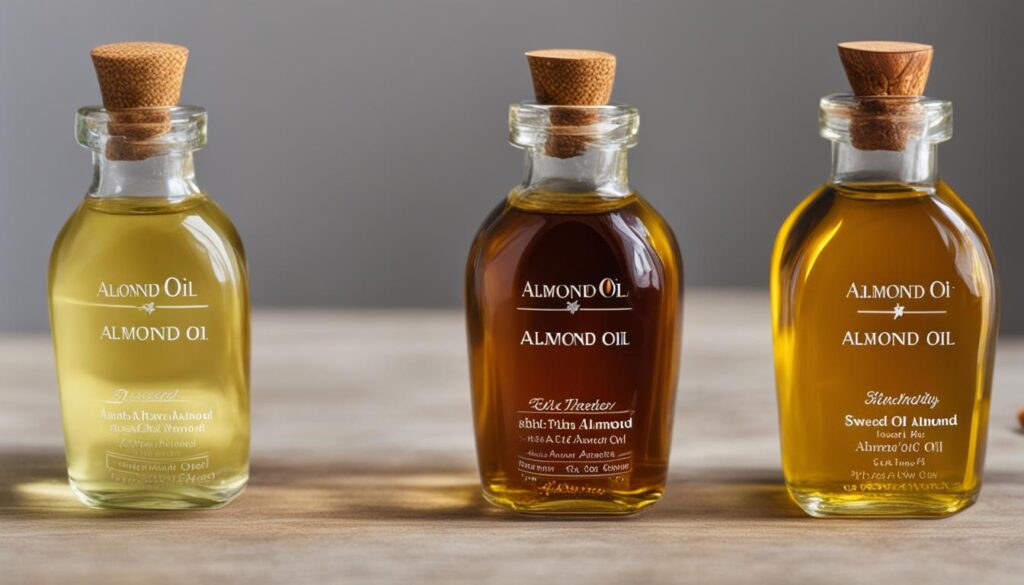
Now that you know the differences between bitter almond oil and sweet almond oil, you can make informed decisions in choosing the right almond oil for your skincare, haircare, or culinary needs.
Where to Find Almond Oil Products
Almond oil has gained popularity in the skincare industry for its incredible nourishing and hydrating properties. If you’re looking to incorporate almond oil into your skincare routine, you’ll be pleased to know that it’s readily available in a variety of products.
When it comes to almond oil products, you’ll find a range of options designed to cater to different skincare needs. From shower oils to lip oils and cleansing milks, there’s something for everyone.
Here are some popular almond oil products that harness the benefits of this incredible ingredient:
L’Occitane’s Almond Shower Oil
L’Occitane’s Almond Shower Oil is a luxurious and indulgent product that combines the nourishing properties of almond oil with a delightful fragrance. This shower oil gently cleanses the skin while leaving it moisturized and soft. It’s perfect for those who want a pampering experience while nourishing their skin.
Burt’s Bees Hydrating Sweet Almond Lip Oil
Burt’s Bees Hydrating Sweet Almond Lip Oil is a must-have for anyone looking to keep their lips hydrated and healthy. Infused with almond oil, this lip oil provides long-lasting moisture and nourishment, keeping your lips looking soft and supple. Say goodbye to dry, chapped lips with this hydrating lip oil.
Irene Forte’s Almond Cleansing Milk
Irene Forte’s Almond Cleansing Milk is a gentle yet effective cleanser that removes impurities without stripping the skin of its natural oils. Enriched with almond oil, this cleansing milk nourishes and hydrates the skin, leaving it feeling soft, smooth, and refreshed. It’s suitable for all skin types and is an excellent addition to your daily skincare routine.
These are just a few examples of the almond oil products available in the market. By incorporating these products into your skincare routine, you can harness the benefits of almond oil for nourished and hydrated skin.
Conclusion
Almond oil is a versatile ingredient that offers a wide range of benefits for the skin. From reducing irritation and calming inflammation to rejuvenating the skin and evening out the skin tone, almond oil is a powerful ally in any skincare routine. With its antioxidant properties, it provides protection against free radicals and helps reduce the appearance of stretch marks. Additionally, almond oil hydrates the skin, leaving it nourished and radiant.
Whether used as a standalone moisturizer or incorporated into skincare products, almond oil is suitable for all skin types. It can be applied to the body, face, and even hair to provide deep hydration and a healthy glow. By integrating almond oil into your daily skincare regimen, you can experience the transformative effects of this natural body moisturizer.
With its myriad skincare benefits, almond oil is truly a secret weapon for achieving healthy and radiant skin. Say goodbye to dryness, irritation, and uneven skin tone by harnessing the power of almond oil. So why wait? Start incorporating almond oil into your skincare routine today and experience the incredible results for yourself.
FAQ
What are the benefits of using almond oil for body moisturizer?
Almond oil is a natural body moisturizer that soothes the skin, protects it from UV radiation damage, and restores its moisture barrier. It reduces skin irritation, calms inflammation, rejuvenates the skin, evens out the skin tone, provides antioxidants, reduces stretch marks, and hydrates the skin.
Who should use almond oil and how should it be used?
Almond oil is suitable for anyone with dry or sensitive skin in need of hydration and calming effects. It can be used for the face, body, and hair. Almond oil can be applied as a standalone moisturizer, used as a cleanser or makeup remover, added to face cream for extra hydration, used as a body oil for overall moisturization, and applied to cuticles for nail health.
How does almond oil support the skin barrier?
Almond oil improves the barrier function of the skin, making it more resilient and less prone to irritation. It acts as an antioxidant, protecting the skin from free oxygen radicals that can damage cellular structures. Almond oil has been shown to reduce the effects of UV damage from sun exposure and can potentially improve scar appearance.
What are the different types of almond oil and how can they be used?
There are two main types of almond oil: bitter almond oil and sweet almond oil. Bitter almond oil is used in soaps, aromatherapy, and massage therapy and is generally not safe for ingestion. Sweet almond oil, on the other hand, is safe to use on the skin, hair, and even for cooking. It can be used as a standalone ingredient or mixed with other oils for enhanced benefits.
Where can I find almond oil products?
Almond oil can be found in a variety of skincare products, ranging from shower oils to lip oils and cleansing milks. Some popular products that feature almond oil include L’Occitane’s Almond Shower Oil, Burt’s Bees Hydrating Sweet Almond Lip Oil, and Irene Forte’s Almond Cleansing Milk.


