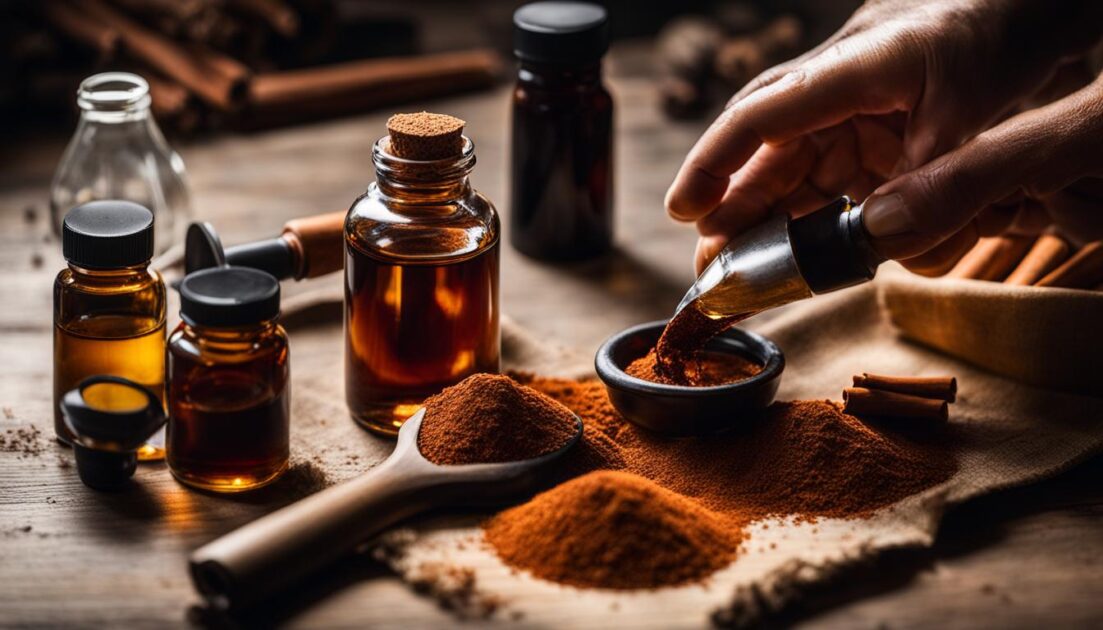
Cinnamon oil is a popular essential oil known for its numerous benefits. However, ensuring the purity of cinnamon oil is crucial to guarantee its authenticity and quality. By conducting specific purity checks, you can determine if the cinnamon oil you have is genuine and free from any adulteration. In this article, I will explore the techniques and methods to check the purity of cinnamon oil, allowing you to confidently use it for its intended purposes.
Key Takeaways:
- Checking the purity of cinnamon oil is essential for getting the maximum potency and effectiveness of its therapeutic properties.
- Visual inspection can help identify impurities or adulteration in cinnamon oil.
- The aroma test can indicate the purity of cinnamon oil by assessing its fragrance.
- The solubility test can determine if cinnamon oil contains any impurities or additives.
- Laboratory analysis provides accurate results for assessing the purity of cinnamon oil.
When it comes to obtaining the purest cinnamon oil, it is important to choose reliable brands and suppliers. Reputable companies that prioritize quality and authenticity are more likely to provide the purest form of cinnamon oil. Look for brands that provide detailed information on the source of the cinnamon, extraction process, and any third-party testing they may conduct. Specialty aromatherapy stores and trusted online retailers that specialize in natural products are excellent options for purchasing high-quality cinnamon oil.
Proper storage and handling of cinnamon oil are crucial for maintaining its purity. To preserve the oil’s quality, store it in dark glass bottles to protect it from light exposure. Keep the oil in a cool, dry place, away from direct sunlight and extreme temperatures. It is also essential to use clean and dry utensils when handling the oil to prevent contamination.
Key Takeaways:
- Choose reputable brands and suppliers for obtaining pure cinnamon oil.
- Store cinnamon oil in dark glass bottles, away from light exposure.
- Keep the oil in a cool, dry place to maintain its quality.
- Use clean and dry utensils when handling cinnamon oil to prevent contamination.
Why is Cinnamon Oil Purity Important?
Checking the purity of cinnamon oil is crucial for various reasons. As a consumer, it is essential to ensure that the cinnamon oil you purchase is of the highest quality and free from any adulteration or contaminants. By testing the purity of cinnamon oil, you can:
- Ensure maximum potency and effectiveness of the oil’s therapeutic properties
- Prevent potential health risks from using adulterated or low-quality oils
- Minimize the risk of skin reactions or adverse effects
- Make informed decisions about storage and shelf life
Pure cinnamon oil guarantees that you are harnessing the full potential of its health benefits. Adulterated oils may not provide the desired effects and could even contain harmful substances. Moreover, knowing the oil’s purity allows you to understand its stability and storage requirements, ensuring its long-lasting effectiveness.
Test for Cinnamon Oil Purity
To determine the purity of cinnamon oil, there are several techniques and methods available:
- Visual Inspection
- Aroma Test
- Solubility Test
- Laboratory Analysis
Each of these techniques offers unique insights into the quality and purity of cinnamon oil, allowing you to make informed decisions about its usage.
| Technique | Description |
|---|---|
| Visual Inspection | Examining the appearance and color of the oil for any cloudiness, sediment, or impurities |
| Aroma Test | Determining the oil’s fragrance, ensuring it has a strong and characteristic cinnamon aroma |
| Solubility Test | Mixing the oil with alcohol or carrier oils to check if it dissolves completely, indicating purity |
| Laboratory Analysis | Submitting a sample of the oil for professional testing using gas chromatography-mass spectrometry (GC-MS) to identify its chemical composition and confirm purity |
Visual Inspection
When assessing the purity of cinnamon oil, visual inspection serves as an initial step in the process. Pure cinnamon oil should possess a clear and transparent appearance, free from any cloudiness, sediment, or impurities. These factors could potentially indicate a lower quality of the oil or adulteration. Additionally, genuine cinnamon oil typically exhibits a characteristic color, ranging from light yellow to amber.
Any significant deviation from this color range can raise concerns about the oil’s purity. By conducting a visual inspection, you can evaluate the clarity and color of cinnamon oil, providing valuable insights into its overall quality.
Aroma Test
The aroma of cinnamon oil is a key indicator of its purity. Pure cinnamon oil emits a distinct and robust fragrance that closely resembles the natural scent of cinnamon.
To conduct the aroma test, follow these steps:
- Step 1: Take a small whiff of the cinnamon oil.
- Step 2: Inhale deeply to fully experience the aroma.
- Step 3: Pay attention to the quality and strength of the scent.
If the cinnamon oil has a weak or artificial smell, or if it exhibits an unpleasant odor, it may indicate the presence of impurities or adulteration.
“The aroma of pure cinnamon oil should resemble the natural scent of cinnamon, ensuring its authenticity and quality.”
The aroma test provides valuable insights into the purity of cinnamon oil, allowing you to confidently determine its suitability for your desired applications.
Solubility Test
The solubility test is an effective method to assess the purity of cinnamon oil. By testing its solubility in specific solvents, you can determine whether the oil is free from impurities and additives. Pure cinnamon oil should dissolve completely in suitable substances such as alcohol or carrier oils like jojoba or coconut oil.
To conduct the solubility test:
- Take a small amount of cinnamon oil.
- Mix the oil with the chosen solvent, ensuring a proper ratio.
- Stir the mixture thoroughly.
- Observe whether the oil dissolves completely or leaves a residue.
If the cinnamon oil dissolves completely, it is likely to be pure, indicating a high level of quality. On the other hand, if the oil leaves a residue or fails to dissolve entirely, it may contain impurities or additives that can affect its purity.
The solubility test provides a quick and straightforward way to evaluate the purity of cinnamon oil. However, for a more accurate assessment, consider combining the solubility test with other methods such as visual inspection, aroma test, and laboratory analysis. This comprehensive approach ensures a thorough evaluation of the oil’s purity and helps you make informed choices when selecting cinnamon oil for your needs.
Laboratory Analysis
For a more accurate assessment of cinnamon oil purity, laboratory analysis can be conducted. This involves sending a sample of the oil to a certified laboratory for testing. Gas chromatography-mass spectrometry (GC-MS) is commonly used for the analysis of essential oils, including cinnamon oil. The results of the analysis will provide a detailed breakdown of the chemical components present in the oil, confirming its purity and identifying any potential adulterants.
Choosing Reliable Brands and Suppliers
When it comes to ensuring the purity of cinnamon oil, selecting reliable brands and suppliers is of utmost importance. Trusted companies that specialize in producing high-quality essential oils are more likely to prioritize purity and authenticity. Look for brands that provide detailed information about the source of the cinnamon, extraction process, and any third-party testing they may conduct. Consider purchasing cinnamon oil from specialty aromatherapy stores or trusted online retailers that specialize in natural products.
By choosing reputable brands and suppliers, you can have peace of mind knowing that you are purchasing pure and authentic cinnamon oil. These companies often have rigorous quality control measures in place, ensuring that their products are free from adulteration and meet the highest standards of purity.
When exploring different brands and suppliers, it is helpful to read customer reviews and testimonials to gauge the quality and reliability of their products. Look for feedback from customers who have firsthand experience with the brand or supplier you are considering. This can provide valuable insights and help you make an informed decision.
It is also worth noting that some well-established brands offer certifications and accreditations that further validate the purity of their cinnamon oil. These certifications can include organic certifications, which indicate that the oil is made from organically grown cinnamon, free from pesticides and other harmful substances.
Key Considerations when Choosing Brands and Suppliers
| Consideration | Description |
|---|---|
| Company Reputation | Choose brands with a positive reputation for producing high-quality essential oils. |
| Source of Cinnamon | Look for brands that provide detailed information about the origin of the cinnamon used in their oil. |
| Extraction Process | Consider brands that are transparent about their extraction methods, ensuring that the oil is obtained using high-quality processes. |
| Third-Party Testing | Some brands conduct third-party testing to verify the purity and quality of their oils. Look for this information on their product labels or websites. |
| Customer Reviews | Read reviews from other customers to gain insights into the quality and authenticity of the brands you are considering. |
| Certifications | Some brands may have organic certifications or other accreditations that demonstrate their commitment to purity and authenticity. |
Remember that choosing reliable brands and suppliers is an important step in ensuring the purity of cinnamon oil. By doing thorough research and considering the key factors mentioned above, you can have confidence in the quality and authenticity of the cinnamon oil you purchase.
Storing and Handling Cinnamon Oil
Proper storage and handling of cinnamon oil are crucial to maintaining its purity. To safeguard the quality of your cinnamon oil, it is recommended to store it in dark glass bottles. This helps protect the oil from exposure to light, which can degrade its purity over time.
Furthermore, it is important to keep the oil in a cool and dry place, away from direct sunlight and extreme temperatures. This helps preserve the integrity of the oil and prevents any negative effects that heat or excessive cold can have on its quality.
When handling cinnamon oil, always ensure that your utensils are clean and dry. This prevents any potential contamination, which could compromise the purity of the oil. By following these practices, you can prolong the shelf life and maintain the long-lasting purity of your cinnamon oil.
FAQ
How can I check the purity of cinnamon oil?
There are several methods you can use to check the purity of cinnamon oil. These include visual inspection, aroma testing, solubility testing, and laboratory analysis. Each method provides different indicators of purity and can be used individually or in combination for a more accurate assessment.
Why is it important to ensure the purity of cinnamon oil?
Ensuring the purity of cinnamon oil is important for several reasons. Pure cinnamon oil provides maximum potency and effectiveness of its therapeutic properties, reducing the risk of using adulterated or low-quality oils. Additionally, pure cinnamon oil is safer to use, minimizing the chances of skin reactions or other adverse effects. Lastly, knowing the purity of the oil allows you to make informed decisions about its storage and shelf life.
How can visual inspection help determine the purity of cinnamon oil?
Visual inspection is an initial step in checking the purity of cinnamon oil. Pure cinnamon oil should have a clear and transparent appearance without any cloudiness, sediment, or impurities. The oil should also have a characteristic color ranging from light yellow to amber. Any significant deviation from these qualities may indicate a lower quality or adulteration.
How can the aroma test determine the purity of cinnamon oil?
The aroma of cinnamon oil is another indicator of its purity. Pure cinnamon oil has a strong and distinct fragrance that resembles the natural scent of cinnamon. By taking a small whiff of the oil and checking for the characteristic aroma, you can determine if the oil is pure. If the oil smells weak, artificial, or has an unpleasant odor, it may be adulterated or contain impurities.
How can the solubility test help determine the purity of cinnamon oil?
The solubility test is a method for determining the purity of cinnamon oil. Pure cinnamon oil is soluble in alcohol or carrier oils like jojoba or coconut oil. By mixing a small amount of cinnamon oil with the chosen solvent, you can check if the oil dissolves completely or leaves a residue. Complete dissolution indicates a higher likelihood of purity, while the presence of residue may indicate impurities or additives.
Can laboratory analysis be used to assess the purity of cinnamon oil?
Yes, laboratory analysis is a more accurate method for assessing the purity of cinnamon oil. This involves sending a sample of the oil to a certified laboratory for testing, usually using gas chromatography-mass spectrometry (GC-MS). The analysis provides a detailed breakdown of the chemical components present in the oil, confirming its purity and identifying any potential adulterants.
How can I choose reliable brands and suppliers for cinnamon oil?
When selecting cinnamon oil, it is important to choose reliable brands and suppliers. Look for well-known and reputable companies that prioritize purity and authenticity. Seek brands that provide detailed information on the source of the cinnamon, extraction process, and any third-party testing they may conduct. Consider purchasing from specialty aromatherapy stores or trusted online retailers that specialize in natural products.
What are the storage and handling practices to maintain cinnamon oil’s purity?
To maintain the purity of cinnamon oil, it is crucial to follow proper storage and handling practices. Store the oil in dark glass bottles to protect it from light exposure, as light can degrade its quality. Keep the oil in a cool, dry place away from direct sunlight and extreme temperatures. Always use clean and dry utensils when handling the oil to prevent contamination. By following these practices, you can ensure the long-lasting purity of your cinnamon oil.


