Argan oil is a valuable and highly sought-after product, known for its numerous benefits for skin, hair, and overall health. However, due to its high demand and limited production, there is a risk of counterfeit or diluted versions being sold in the market. To ensure that you are getting pure and authentic Argan oil, it is important to know how to check its purity. In this guide, I will provide you with quick and easy methods to verify the purity of Argan oil and ensure that you are getting the genuine, high-quality product you deserve.
Key Takeaways:
- Learn how to check the purity of Argan oil to avoid counterfeit or diluted versions.
- Verify the ingredients list for 100% pure Argan oil without any additives or preservatives.
- Assess the packaging to ensure it is in a dark glass bottle that protects against light exposure.
- Consider the price as genuine, high-quality Argan oil is difficult to produce and may be more expensive.
- Assess the scent, texture, and color of the oil to identify its authenticity.
Understanding Argan Oil Production and Quality Standards
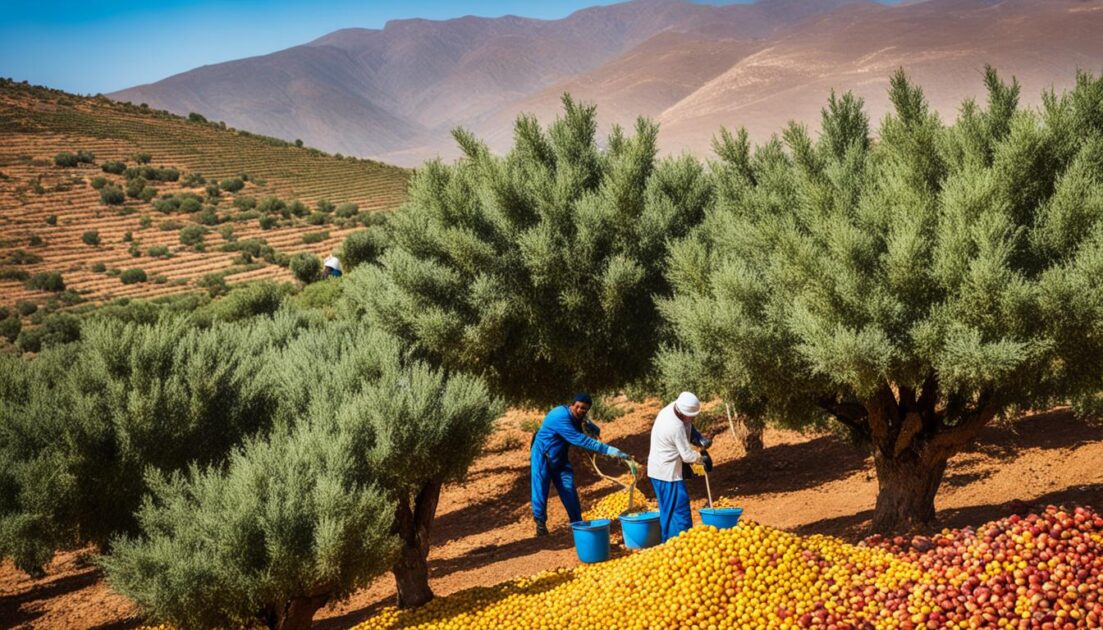
Argan oil, a highly sought-after product, is derived from the kernels of the Argan tree native to southwestern Morocco. The production of Argan oil involves various methods, including traditional extraction and modern techniques.
The traditional extraction process entails hand-kneading the Argan tree kernels and pressing them to release the oil. This method has been practiced for centuries and is still used today, particularly by local cooperatives. It is known as a labor-intensive process that produces small quantities of high-quality Argan oil.
In modern production, mechanical and solvent extraction methods are employed to obtain larger quantities of Argan oil. Mechanical extraction involves the use of machines to crush and grind the kernels, facilitating oil release. Solvent extraction, on the other hand, utilizes chemical solvents to extract the oil from the kernels.
The composition of Argan oil is a key factor in determining its quality. The oil is rich in fatty acids, tocopherols, polyphenols, and sterols, which contribute to its beneficial properties. These components are carefully preserved during the production process to maintain the integrity and quality of the oil.
Morocco has set quality standards, known as the Moroccan Normative for Argan oil, to ensure the purity and overall quality of Argan oil. These standards specify the chemical and physical properties that the oil must meet, including criteria for acidity, peroxide value, and moisture content. By adhering to these standards, producers ensure that the Argan oil is pure and of the highest quality.
| Production Methods | Advantages | Disadvantages |
|---|---|---|
| Traditional Extraction | Preserves the quality and authenticity of Argan oil Supports local cooperatives and sustainable practices |
Labor-intensive process Yields smaller quantities |
| Mechanical Extraction | Enables larger-scale production Increases availability of Argan oil |
Potential impact on oil quality May require additional processing steps |
| Solvent Extraction | Allows for efficient extraction of Argan oil Maximizes oil yield |
Potential residue of chemical solvents Requires careful monitoring and regulation |
Understanding the production methods and quality standards of Argan oil is crucial for consumers who seek pure and authentic products. By choosing Argan oil that has been produced using traditional methods or meets the Moroccan Normative standards, you can ensure that you are getting the highest quality oil with all its beneficial properties intact.
Evaluating the Ingredients List
When it comes to determining the purity of Argan oil, the ingredients list is an essential factor to consider. To ensure that you are getting 100% pure Argan oil, carefully examine the ingredients listed on the packaging. Genuine Argan oil should have only one ingredient listed: 100% Argan oil (Argania Spinosa) Kernel Oil. A high-quality, authentic product should not contain any additives such as preservatives, fragrances, parabens, or water.
Pure organic Argan oil is the epitome of quality, providing you with the unadulterated benefits of this remarkable oil. By opting for pure organic Argan oil, you can be confident that you are receiving a product free from any dilution or contamination. This ensures that you can fully experience the natural and potent properties that make Argan oil highly sought after for its exceptional nourishing and rejuvenating effects on the skin, hair, and overall well-being.
| Features of Genuine Argan Oil |
|---|
| 100% pure Argan oil (Argania Spinosa) Kernel Oil |
| No additives such as preservatives, fragrances, parabens, or water |
| Pure organic Argan oil |
Assessing the Packaging
When it comes to Argan oil, packaging plays a vital role in maintaining its purity and quality. Choosing the right packaging can help prevent light exposure and ensure that you are getting a genuine product. Here are some key considerations when assessing the packaging of Argan oil:
- Dark Glass Packaging: Opt for Argan oil that is packaged in dark glass bottles, preferably amber or brown. Dark glass helps protect the oil from light exposure, which can degrade its quality and reduce its efficacy. The darker color of the glass acts as a barrier, preventing harmful UV rays from penetrating and affecting the oil.
- Avoid Clear or Plastic Bottles: Clear or plastic bottles should be avoided as they do not provide adequate protection against light. These types of packaging allow light to pass through easily, which can accelerate the oxidation process of the oil. This can lead to a decrease in its potency and effectiveness.
- Eco-Friendly Packaging: Consider choosing products that come in eco-friendly and recyclable packaging. This not only indicates a brand’s commitment to sustainability but also ensures that the packaging materials are less likely to leach any potentially harmful substances into the oil.
By carefully assessing the packaging of Argan oil and selecting products that are packaged in dark glass bottles and are eco-friendly, you can ensure that you are purchasing a high-quality, authentic product that has not been compromised by light exposure.
| Packaging Type | Pros | Cons |
|---|---|---|
| Dark Glass (Amber/Brown) | Protects against light exposure, maintains oil quality, chemically stable | May be slightly more expensive, limited visibility of oil level |
| Clear Glass | Allows visibility of oil level | Offers minimal protection against light exposure, may accelerate oxidation |
| Plastic | Lightweight and portable | Does not provide adequate protection against light, may leach harmful substances |
Considering the Price
The price of Argan oil can vary depending on its quality and purity. Genuine, high-quality Argan oil is difficult to produce and requires time and effort, which is reflected in its price. It is important to be cautious of extremely cheap Argan oil, as it may be an indication of a diluted or counterfeit product. While the most expensive Argan oil is not necessarily the best, it is worth investing in a reasonably priced product that is known for its purity and authenticity.
If the price of Argan oil seems too good to be true, it’s worth questioning its authenticity and quality. Cheap Argan oil may be diluted with other oils or contain synthetic additives, compromising its effectiveness and benefits. High-quality Argan oil is typically priced slightly higher due to the labor-intensive production processes involved in extracting the oil from the Argan tree kernels.
If you are looking for affordable Argan oil without compromising on quality, consider purchasing from reputable brands that prioritize fair pricing and transparency. These brands often work directly with Argan oil cooperatives in Morocco, ensuring sustainable production practices and fair trade for the local communities.
Comparing Argan Oil Prices
Here is a comparison table of different Argan oil brands and their prices to give you a better idea of the price range:
| Brand | Size | Price |
|---|---|---|
| Brand A | 1 oz | $20 |
| Brand B | 2 oz | $30 |
| Brand C | 0.5 oz | $15 |
| Brand D | 3.4 oz | $40 |
As you can see from the table, Argan oil prices can vary based on the brand, size of the bottle, and the concentration of pure Argan oil. It is essential to consider both the price and the reputation of the brand when making a purchase.
I believe in investing in high-quality products rather than compromising on purity and effectiveness for the sake of a lower price. When it comes to Argan oil, a reasonably priced product that is known for its authenticity and purity is the best choice for your skin, hair, and overall health.
By choosing high-quality Argan oil that fits your budget, you can experience all the benefits this remarkable oil has to offer without compromising on its purity and effectiveness.
Assessing the Scent, Texture, and Color
The sensory attributes of Argan oil play a crucial role in determining its purity and quality. By evaluating the scent, texture, and color, you can gain additional insights into the authenticity of the oil.
1. Argan Oil Scent
Genuine Argan oil possesses a mild nutty aroma, reminiscent of popcorn or a rubber band. This distinct scent quickly dissipates upon contact with the skin, leaving behind a subtle and pleasant fragrance.
2. Texture of Argan Oil
The texture of Argan oil is an essential characteristic to consider. It should be smooth and non-sticky, allowing for easy application and absorption into the skin. A high-quality Argan oil will leave your skin feeling silky and nourished without any residue.
3. Color of Argan Oil
The color of Argan oil can vary depending on its grade and purpose. Cosmetic-grade Argan oil typically exhibits a light golden yellow color, while culinary-grade Argan oil tends to have a richer golden brown hue. These colors result from the natural pigments found in the Argan kernels.
“I was amazed by the pleasant nutty aroma and smooth texture of the Argan oil. It absorbed effortlessly into my skin, leaving it soft and hydrated.” – Happy Customer
By carefully considering the scent, texture, and color, you can determine the authenticity and quality of Argan oil. Remember, genuine Argan oil should have a mild nutty scent, a smooth and non-sticky texture, and exhibit a golden yellow or golden brown color.
Checking for Labels and Certifications
Labels and certifications play a vital role in ensuring the purity and authenticity of Argan oil. When purchasing Argan oil, it is important to look for specific labels and certifications that demonstrate the high quality of the product.
Firstly, check for oils that are labeled as “100% pure.” This label indicates that the Argan oil is made solely from the kernels of the Argan tree, without any additives or dilution. By choosing 100% pure Argan oil, you can be confident that you are getting a genuine and high-quality product.
Additionally, it is beneficial to select oils that specify they are cold-pressed or made in Morocco. Cold-pressed Argan oil is extracted without the use of heat or chemicals, preserving its natural properties and ensuring a higher quality oil. The “Made in Morocco” label confirms that the oil is sourced and produced in its authentic origin, further guaranteeing its purity.
Moreover, certifications such as ECOCERT can provide independent verification of the oil’s organic and sustainable production practices. ECOCERT certification ensures that the Argan oil has been produced using environmentally friendly methods and complies with specific organic standards. This certification adds an extra layer of credibility and reliability to the product.
By checking for these labels and certifications, you can make an informed decision when purchasing Argan oil, knowing that you are choosing a genuine, high-quality product that has met strict quality and production standards.
| Label/Certification | Description |
|---|---|
| 100% Pure | Indicates that the Argan oil is made solely from the kernels of the Argan tree without any additives or dilution. |
| Cold-Pressed | Specifies that the Argan oil has been extracted without the use of heat or chemicals, preserving its natural properties. |
| Made in Morocco | Confirms that the Argan oil is sourced and produced in the authentic origin of Morocco, ensuring its purity. |
| ECOCERT Certified | Provides independent verification that the Argan oil has been produced using environmentally friendly methods and complies with specific organic standards. |
Supporting Ethical and Fair Trade Practices
When it comes to choosing Argan oil, I highly recommend supporting brands that prioritize ethical and fair trade practices. Opt for oils that are ethically sourced from cooperatives and support the local communities in Morocco. By purchasing fair trade Argan oil, you not only get a high-quality product but also contribute to the sustainability and economic growth of the region.
Argan oil cooperatives play a crucial role in the production and distribution of this valuable oil. These cooperatives empower local women by providing them with fair wages, safe working conditions, and educational opportunities. By supporting these cooperatives, you help create a positive impact on the lives of the workers and their families.
Moreover, sustainable Argan oil production ensures the preservation of the Argan forests and its biodiversity. When brands practice sustainable harvesting methods, they help maintain the delicate balance of the ecosystem and protect the valuable Argan tree. This sustainable approach ensures that future generations can continue to benefit from the remarkable properties of Argan oil.
FAQ
How can I check the purity of Argan oil?
To check the purity of Argan oil, you can start by examining the ingredients list. Genuine Argan oil should have only one ingredient listed: 100% Argan oil (Argania Spinosa) Kernel Oil. It should not contain any additives such as preservatives, fragrances, parabens, or water. Checking for these ingredients ensures that you are getting pure and authentic Argan oil.
What should I look for in the packaging of Argan oil?
When assessing the packaging of Argan oil, it is important to choose products that are packaged in dark glass bottles, preferably amber or brown. Dark glass helps protect the oil from light exposure, which can degrade its quality. Clear or plastic bottles should be avoided, as they do not provide adequate protection against light. Opting for eco-friendly and recyclable packaging can also be a sign of a reputable brand that values sustainability.
How can I determine the authenticity of Argan oil based on its price?
The price of Argan oil can vary depending on its quality and purity. Genuine, high-quality Argan oil requires time and effort to produce, which is reflected in its price. While the most expensive Argan oil is not necessarily the best, it is important to be cautious of extremely cheap Argan oil as it may be a diluted or counterfeit product. Investing in a reasonably priced product known for its purity and authenticity is a worthwhile consideration.
What sensory attributes can help assess the purity of Argan oil?
The sensory attributes of Argan oil can provide insights into its purity. Genuine Argan oil has a mild nutty aroma, similar to the scent of popcorn or a rubber band. The aroma should dissipate quickly upon contact with the skin. The texture of Argan oil should be smooth and non-sticky, easily absorbed into the skin. Cosmetic-grade Argan oil has a light golden yellow color, while culinary-grade Argan oil has a golden brown color. Assessing these sensory characteristics can help determine the authenticity and quality of the oil.
Are there any labels or certifications I should look for when purchasing Argan oil?
Labels and certifications can provide further assurance of the purity and authenticity of Argan oil. Look for oils that are labeled as “100% pure” and specify that they are cold-pressed or made in Morocco, as these indicate a higher quality product. Additionally, certifications such as ECOCERT can provide independent verification of the oil’s organic and sustainable production practices. Checking for these labels and certifications can help you make an informed decision when purchasing Argan oil.
How can I support ethical and fair trade practices when purchasing Argan oil?
When choosing Argan oil, consider supporting brands that prioritize ethical and fair trade practices. Look for oils that are sourced from cooperatives and support the local communities in Morocco. By purchasing ethically sourced and fair trade Argan oil, you can contribute to the sustainability and economic growth of the region.


