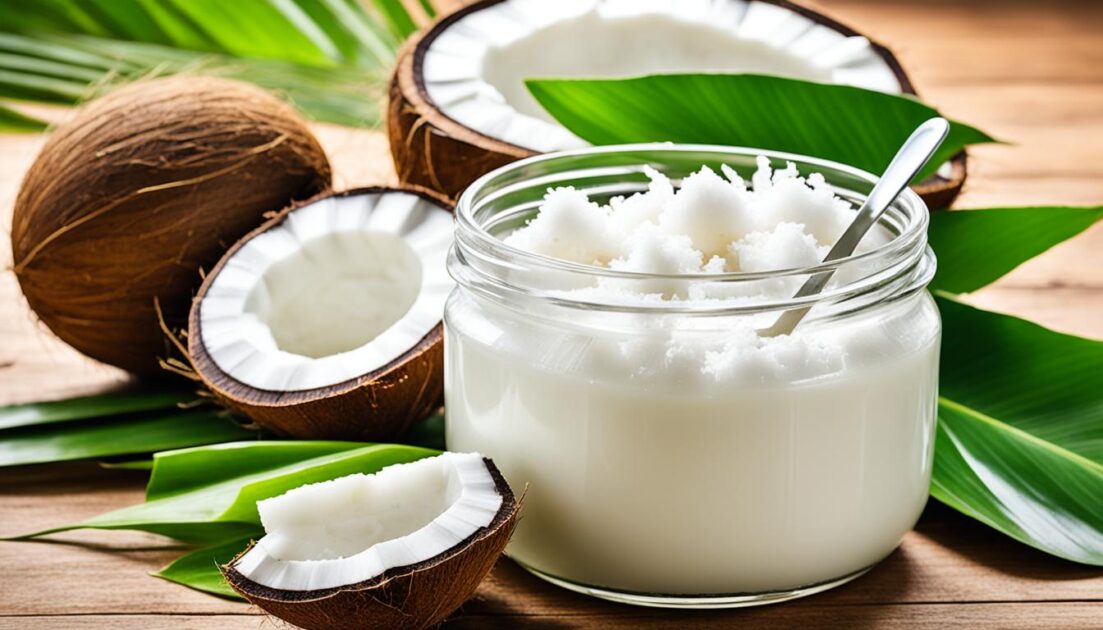
When it comes to enjoying the benefits of coconut oil, purity is key. But how can you be sure that the coconut oil you have is authentic and free from impurities? In this article, I will guide you through simple and effective methods to check the purity of coconut oil at home. By following these techniques, you can determine the authenticity of your coconut oil and ensure that you are getting the best quality product.
Key Takeaways:
- There are several methods to check the purity of coconut oil, including the heat test, fridge test, freezing test, smell and taste test, and color test.
- Pure coconut oil has a low melting point and will quickly change from solid to liquid form in the heat test.
- In the fridge test, pure coconut oil will solidify and become firm at temperatures below 25 degrees Celsius (77 degrees Fahrenheit).
- Pure coconut oil will solidify and become hard like butter in the freezing test.
- Pure coconut oil has a distinct coconut aroma and a mild and sweet taste in the smell and taste test.
- Avoid coconut oil that is pure white, as it may be bleached or contain additives.
- Look for reputable brands with independent certifications to ensure the authenticity of your coconut oil.
Heat Test
One way to check the purity of coconut oil is through the heat test. Heating coconut oil can reveal valuable insights into its quality and authenticity.
Here’s how you can perform the heat test:
-
Start by heating a small amount of coconut oil in a pan or microwave until it melts completely.
-
Pure coconut oil typically has a low melting point, which means it will quickly change from solid to liquid form.
-
Observe the consistency and melting time of the oil. If the coconut oil takes longer to melt or has a significantly different consistency compared to pure coconut oil, it may be adulterated with other oils or additives.
By performing the heat test, you can assess the purity and authenticity of the coconut oil you have. Remember, authentic coconut oil should have a low melting point and melt quickly when exposed to heat.
Fridge Test
In addition to the heat test, another reliable method to assess the purity of coconut oil is the fridge test. By subjecting the oil to varying temperatures, you can gain insights into its quality and authenticity.
To perform the fridge test, start by placing a small amount of coconut oil in a container or jar. Ensure that the container is sealed tightly to prevent any external contaminants from affecting the results. Allow the oil to sit in the fridge for approximately 30 minutes to an hour.
After the designated time has passed, remove the container from the fridge and carefully observe the consistency of the coconut oil. Pure coconut oil, when exposed to temperatures below 25 degrees Celsius (77 degrees Fahrenheit), will solidify and become firm.
If the coconut oil remains liquid or exhibits a different texture, it may indicate that impurities are present or that the oil has been mixed with other oils. It is important to note that the precise firmness of the solidified coconut oil can vary based on factors such as the specific type and processing methods used.
The fridge test provides a valuable way to gauge the purity of coconut oil by utilizing temperature as an indicator. By performing this test and comparing the results to the expected outcome, you can make a more informed decision when purchasing or using coconut oil.
Why does the fridge test work?
When exposed to cooler temperatures, pure coconut oil will solidify due to its high saturated fat content. The molecular structure of the oil changes, causing it to become more solid at lower temperatures. This characteristic is a result of the presence of medium-chain triglycerides (MCTs) in coconut oil.
Impure or adulterated coconut oil, on the other hand, may contain other types of oils or additives that affect its freezing point. These substances can alter the consistency and behavior of the oil when subjected to cold temperatures, leading to different results in the fridge test.
Freezing Test: A Reliable Method to Determine Coconut Oil Authenticity
When it comes to testing the purity of coconut oil, the freezing test is a tried and true method. By subjecting a small sample of coconut oil to freezing temperatures, we can discern its authenticity with ease. Here’s how you can conduct the freezing test:
- Take a small amount of coconut oil and place it in the freezer.
- Leave it undisturbed for a few hours.
- Check the consistency of the oil.
Pure coconut oil, free from any impurities, will solidify and become as hard as butter when frozen. Its texture should be consistent throughout, without any unusual variations. If the oil does not freeze or exhibits a different consistency, it may not be pure coconut oil.
For visual reference, here’s an image depicting the freezing test in action:
The freezing test provides valuable insights into the authenticity of coconut oil and ensures that you are getting a high-quality product. However, it is important to note that this test should be used in combination with other methods, such as the heat test and smell and taste test, to obtain a comprehensive evaluation of coconut oil purity.
Smell & Taste Test
The smell and taste test are essential methods for evaluating the quality and purity of coconut oil. By using your senses, you can gain valuable insights into the authenticity of the oil.
Pure coconut oil has a distinct and pleasant coconut aroma, which is a reflection of its natural state. When you open a jar of pure coconut oil, you should immediately notice the enticing scent of fresh coconuts. If the oil has any strange or rancid smell, it may indicate a low-quality product or potential adulteration.
Similarly, pure coconut oil has a mild and sweet taste that is indicative of its high quality. When you consume a small amount of the oil, it should impart a delicate coconut flavor that is pleasing to the palate. If the oil tastes strong, off-putting, or has any other undesirable flavors, it may be a sign of impurities or additives.
Ensure the coconut oil you select passes the smell and taste test to ensure you are getting a high-quality product that is pure and authentic.
| Indicator | Quality |
|---|---|
| Pleasant coconut aroma | High quality |
| Strange or rancid smell | Low quality or adulteration |
| Mild and sweet taste | High quality |
| Strong or off-putting taste | Low quality or impurities |
Color Test
The color of coconut oil can provide valuable insights into its purity and authenticity. By visually assessing the color, you can determine if the coconut oil has undergone any processing or if it may contain additives.
Pure coconut oil is typically light yellow or slightly yellowish in color, reflecting its natural state. However, it is important to note that coconut oil can also have an ivory white hue, which is still considered pure.
When assessing coconut oil, it is important to avoid purchasing oil that appears pure white. This color could indicate that the oil has been bleached or processed, raising questions about its purity and quality. Additionally, pure coconut oil should not have extreme variations in color or appear cloudy.
When purchasing coconut oil, look for products with a natural, light yellow color. This indicates minimal processing and a higher likelihood of authenticity. By selecting coconut oil with the right color, you can ensure that you are getting a high-quality product that retains its beneficial properties.
Choosing Authentic Coconut Oil
In addition to conducting tests to determine the purity of coconut oil, there are other important factors to consider when choosing an authentic product. One way to ensure the quality and authenticity of coconut oil is to look for reputable brands that undergo independent certifications. These certifications, such as BRC, FSSC, Halal, Kosher, non-GMO, and Organic Certification, provide assurance that the manufacturer follows strict quality standards.
When evaluating coconut oil, it is also essential to check the label for information about the processing methods and origin of the oil. Understanding how the oil is produced and where it comes from can give valuable insights into its purity and quality. Reputable brands often provide transparent information about their sourcing and production practices, which can help you make an informed decision.
By considering these factors and combining them with the methods to assess coconut oil purity, you can confidently choose authentic and high-quality coconut oil for your needs. Whether you use coconut oil for culinary purposes or as a skincare product, ensuring its authenticity and purity is crucial for the best results.
FAQ
How can I check the purity of coconut oil?
There are several methods you can use to determine the authenticity of coconut oil. These include the heat test, fridge test, freezing test, smell and taste test, and color test. By following these simple techniques, you can easily assess the purity of your coconut oil.
What is the heat test for coconut oil purity?
The heat test involves heating a small amount of coconut oil until it melts. Pure coconut oil has a low melting point and will quickly change from solid to liquid form. If the oil takes longer to melt or has a different consistency, it may be adulterated with other oils or additives.
How does the fridge test help determine coconut oil purity?
The fridge test involves placing a small amount of coconut oil in the fridge for about 30 minutes to an hour. Pure coconut oil will solidify and become firm at temperatures below 25 degrees Celsius (77 degrees Fahrenheit). If the oil remains liquid or has a different texture, it may contain impurities or be mixed with other oils.
What is the freezing test for coconut oil authenticity?
The freezing test is a reliable way to check the purity of coconut oil. Simply put a small sample of coconut oil in the freezer and leave it for a few hours. Pure coconut oil will solidify and become hard, similar to butter. If the oil does not freeze or has a different consistency, it may not be pure coconut oil.
How can I assess the purity of coconut oil through smell and taste?
The smell and taste test can help determine the purity of coconut oil. Pure coconut oil has a distinct and pleasant coconut aroma and a mild and sweet taste. If the oil has a strong odor or an off-putting taste, it may be of low quality or adulterated.
Can the color of coconut oil indicate its purity?
Yes, the color of coconut oil can provide insights into its purity. Pure coconut oil is usually light yellow or slightly yellowish in color. However, it can also be ivory white. It is best to avoid coconut oil that is pure white, as it may be bleached or contain additives. Look for coconut oil with a natural, light yellow hue.
How do I choose authentic coconut oil?
When choosing coconut oil, look for reputable brands that undergo independent certifications such as BRC, FSSC, Halal, Kosher, non-GMO, and Organic Certification. These certifications ensure that the manufacturer follows strict quality standards. Additionally, check the label for information about the processing methods and origin of the coconut oil.
Source Links
- https://timesofindia.com/life-style/food-news/5-tips-to-check-the-purity-of-coconut-oil-at-home/photostory/96572974.cms
- https://medium.com/@suppliercoconut/3-ways-to-identify-the-virgin-coconut-oil-from-many-suppliers-f905ad25210d
- https://www.linkedin.com/pulse/how-do-you-identify-good-quality-coconut-oil-sharmaline-vittachi


