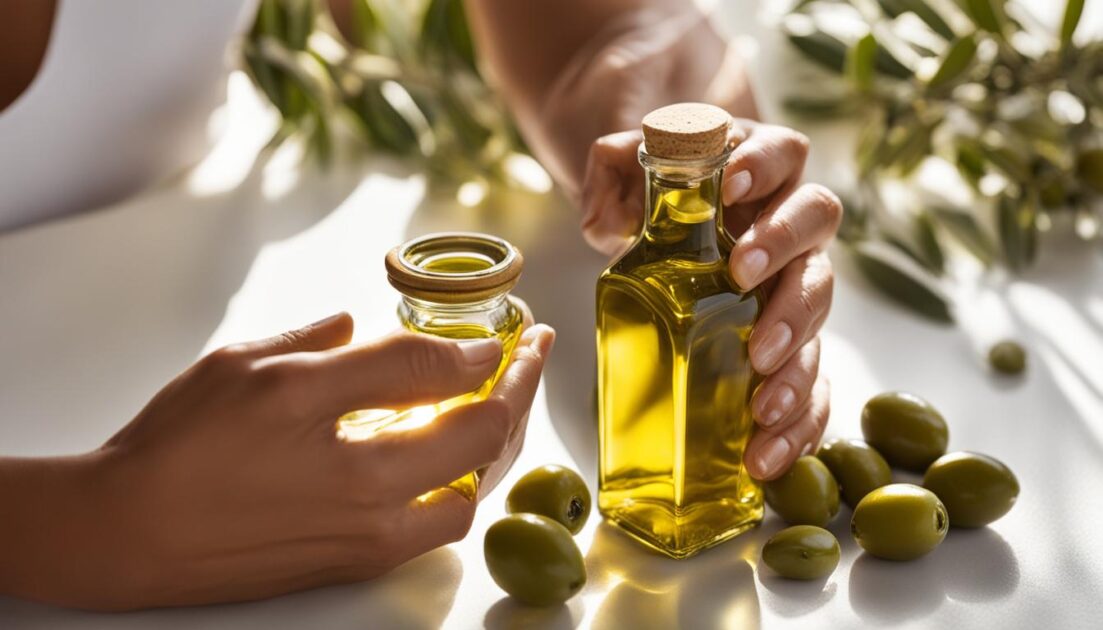
Welcome to my article on the incredible benefits of olive oil for the face. Olive oil is not just a kitchen staple; it also has numerous advantages when incorporated into your skincare routine. Its antioxidant properties, rich vitamin content, and antibacterial effects make it a powerful ally in achieving a natural glow and maintaining healthy skin.
Olive oil is packed with vitamins A, D, E, and K, which are known for their nourishing properties. These vitamins act as antioxidants, protecting the skin from harmful free radicals and potentially reducing the risk of cancer development. In addition, olive oil has antibacterial properties that can help combat bacteria on the skin, although virgin coconut oil may be more effective in this regard.
When used on the face, olive oil can serve multiple purposes. It can be used as a moisturizer, exfoliator, eye makeup remover, face mask, wrinkle treatment, and scar oil. However, it is crucial to choose a high-quality olive oil and conduct a patch test before applying it to your face. Some individuals with damaged skin barriers, childhood eczema, or clogged pores may need to use olive oil sparingly or avoid it altogether.
Are you ready to uncover the amazing benefits of olive oil for your skin? Let’s dive deeper into the details:
Key Takeaways:
- Olive oil contains vitamins A, D, E, and K, which act as antioxidants for the skin.
- Olive oil has antibacterial properties, although virgin coconut oil may be more effective in eliminating bacteria.
- Olive oil can be used as a moisturizer, exfoliator, eye makeup remover, face mask, wrinkle treatment, and scar oil.
- It is important to choose high-quality olive oil and conduct a patch test before applying it to the face.
- Individuals with damaged skin barriers, childhood eczema, or clogged pores should use olive oil sparingly or avoid it altogether.
The Benefits of Olive Oil for Skin
Olive oil offers numerous benefits for the skin, making it a popular choice in skincare routines. Its antioxidant properties help prevent premature aging and protect against cancer-causing cells. Olive oil is rich in vitamins A, D, E, and K, which provide nourishment and support overall skin health. Additionally, it possesses antibacterial effects, although it may not be as potent as virgin coconut oil in eliminating bacteria.
As a moisturizer, olive oil is highly effective for both the skin and hair. It is commonly found in various personal care products due to its moisturizing properties and ability to prevent a greasy feeling when applied to damp skin. Moreover, olive oil can be utilized in different skincare practices, such as exfoliation, eye makeup removal, face masks, wrinkle treatments, and scar oil.
Benefits of Olive Oil for Skin:
- Antioxidant properties combat premature aging and protect against cancer-causing cells
- Rich in vitamins A, D, E, and K for nourishing the skin
- Has antibacterial effects
- Acts as a moisturizer for the skin and hair
- Prevents a greasy feeling when applied to damp skin
- Can be used for exfoliation, eye makeup removal, face masks, wrinkle treatments, and scar oil
It is crucial to select high-quality olive oil and conduct a patch test before using it on the face to ensure compatibility with the skin. Despite its numerous benefits, individuals with specific skin conditions such as a compromised skin barrier, childhood eczema, or clogged pores should use olive oil cautiously or consider alternative options.
Using Olive Oil for Face Acne
Olive oil is often lauded for its numerous benefits for the skin, but when it comes to acne-prone skin, it may not be the most suitable option for everyone. While olive oil does possess moisturizing properties and can help in killing acne-causing bacteria, its high concentration of fatty acids can potentially exacerbate acne breakouts.
Therefore, for individuals with acne-prone skin, it is recommended to opt for olive oil-based products specifically designed for acne treatment rather than using pure olive oil. These products tend to have a lower concentration of fatty acids and are formulated to address the specific needs of acne-prone skin.
Moreover, using olive oil alone may not effectively remove makeup, so it is best to pair it with a gentle cleanser to ensure a thorough cleanse of the skin.
That being said, there are instances where olive oil may still prove beneficial. Some individuals have reported success in reducing acne by applying olive oil to their skin, as it possesses antibacterial properties that can help combat the bacteria responsible for acne breakouts. However, it is crucial to perform a patch test before incorporating olive oil into your skincare routine and discontinue use if it worsens any existing skin conditions.
In addition to potentially helping with active acne, olive oil may also aid in fading acne scars and hyperpigmentation, thanks to its moisturizing and nourishing properties.
Remember, each person’s skin is unique, and what works for one may not work for another. It’s always important to consult a dermatologist or skincare professional for personalized advice and recommendations.
Olive Oil for Face Acne: Pros and Cons
| Pros | Cons |
|---|---|
|
|
When it comes to dealing with acne, it’s crucial to find the right skincare routine that works for you. While olive oil can offer potential benefits, it’s important to use it with caution and consider your skin’s unique needs and sensitivities.
How to Use Olive Oil for Glowing Skin
To achieve glowing skin, olive oil can be used in various ways. Here are some effective methods:
1. Olive oil as a moisturizer:
Apply olive oil directly to your skin or mix it with your favorite moisturizer. Massage it gently in circular motions until it absorbs into the skin. Olive oil helps in hydrating and nourishing the skin, leaving it soft and supple.
2. Olive oil as an exfoliator:
Create a natural exfoliating scrub by mixing olive oil with sea salt. Gently massage the mixture onto your face in gentle circular motions. This will remove dead skin cells and reveal a brighter, smoother complexion.
3. Olive oil as an eye makeup remover:
Olive oil is a gentle yet effective makeup remover, especially for waterproof eye makeup. Apply a small amount to a cotton pad and gently wipe off your eye makeup. It will break down the makeup without irritating the delicate skin around the eyes.
4. Olive oil face mask:
Create a nourishing face mask by mixing olive oil with ingredients like egg white, honey, or ground oats. Apply the mixture to your face and leave it on for 15-20 minutes. Rinse off with warm water to reveal a refreshed and rejuvenated complexion.
5. Olive oil for wrinkle treatment:
Dab a small amount of olive oil around the eye area to help reduce the appearance of wrinkles. Massage gently to improve blood circulation and promote a youthful glow.
6. Olive oil for scar oil:
Olive oil can be used to fade scars and reduce their appearance. Apply a few drops of olive oil directly to the scarred area and massage it in circular motions. This can help improve the texture of the skin over time.
Remember to choose high-quality olive oil and do a patch test before applying it to your face. Everyone’s skin is different, so it’s essential to find what works best for you. Enjoy the natural benefits of olive oil for glowing and healthy-looking skin!
Olive Oil for Dry Skin Moisturizer
Olive oil is a natural and popular moisturizer for dry skin, offering exceptional hydration and nourishment. It has been used for centuries to promote soft and supple skin, making it a go-to solution for those dealing with dryness and roughness.
When it comes to moisturizing the skin, olive oil is a fantastic choice due to its rich emollient properties. It effectively penetrates the skin, providing deep hydration and locking in moisture. This helps to restore the skin’s natural barrier function, preventing water loss and promoting a healthy, radiant complexion.
Using olive oil as a moisturizer is simple and effective. It can be applied directly to the skin, either before blotting off excess oil or on damp skin for better absorption. However, it is important to use high-quality olive oil to ensure maximum benefits and avoid any potential impurities that may be present in low-quality oils.
Olive oil’s moisturizing effects are not limited to just the face. It can also be used on the body and even the hair to promote overall hydration and nourishment. Many personal care products like face wash, body wash, soap, and lotions contain olive oil as a key ingredient, harnessing its moisturizing power to provide exceptional skin hydration.
| Benefits of Olive Oil for Dry Skin: |
|---|
|
It’s important to note that using too much olive oil can potentially clog pores, especially for those with oily or combination skin. It’s recommended to start with a small amount and adjust based on your skin’s needs. If you have sensitive skin, it’s always a good idea to do a patch test before applying olive oil to your face.
In conclusion, olive oil is an excellent natural moisturizer for dry skin, providing deep hydration and nourishment. Its emollient properties help restore the skin’s moisture balance, leaving it soft, smooth, and revitalized. Remember to choose high-quality olive oil and use it sparingly to avoid any potential pore-clogging issues. Incorporate olive oil into your skincare routine and experience the benefits of this amazing natural moisturizer.
Risks and Warnings of Using Olive Oil on the Face
While olive oil has numerous benefits for the skin, it is essential to be aware of the potential risks and warnings associated with using it on the face. Understanding these risks can help you make informed decisions and ensure the health of your skin.
Risks of Using Olive Oil on the Face
Using olive oil on the face may cause certain adverse reactions, particularly for individuals with a damaged skin barrier. Some people may experience redness and damage to the outer layer of the skin when using olive oil topically. It is important to note that each individual’s skin is unique, and what may work for one person may not work for another.
Olive oil’s heavy texture has the potential to clog pores, leading to the formation of acne and blackheads in some individuals. Prolonged use of olive oil without proper cleansing can trap bacteria and contribute to other skin concerns. It is crucial to strike a balance and use olive oil sparingly to prevent clogged pores.
Another risk to consider is the possible link between olive oil and childhood eczema. Research suggests that using olive oil on infants and children with a family history of eczema may contribute to the development or worsening of the condition. If you have concerns about using olive oil on your child’s skin, consult with a pediatrician or dermatologist before proceeding.
Importance of High-Quality Olive Oil
When using olive oil on the face, it is crucial to choose high-quality oils to ensure their effectiveness and minimize potential risks. Low-quality olive oils may contain additives or chemicals that can be irritating to the skin. Research has shown that some imported olive oil brands in the United States do not meet the required standards, reinforcing the importance of selecting reputable brands.
Prioritize olive oils that are cold-pressed and extra virgin, as they undergo minimal processing and retain more beneficial properties. Avoid oils that are labeled as “light” or “refined,” as they often undergo extensive processing, resulting in a loss of nutrients and potential skin benefits.
Patch Test before Applying
Before using olive oil on your face, it is crucial to conduct a patch test to assess your skin’s reaction. Apply a small amount of olive oil to a discreet area of your skin, such as the inner forearm, and observe for any adverse reactions, such as redness, itching, or irritation. If any negative reactions occur, avoid using olive oil on your face.
Additionally, it is advisable to consult with a dermatologist or skincare professional if you have specific skin conditions or concerns before incorporating olive oil into your skincare routine.
In conclusion, while olive oil offers various benefits for the skin, it is important to be aware of the potential risks and warnings. Use high-quality olive oil, be cautious of clogged pores, and consider individual sensitivities before applying olive oil to the face. By understanding and managing these factors, you can enjoy the potential benefits of olive oil while maintaining healthy and nourished skin.
Olive Oil in Skincare Products
Olive oil is commonly found in various skincare products, including serums, facial cleansers, soaps, body washes, and lotions. Its inclusion in these products is primarily due to its exceptional moisturizing and antioxidant properties, making it a valuable ingredient for promoting healthy and nourished skin.
Skincare products that incorporate olive oil can effectively moisturize dry patches and help to restore the skin’s natural hydration. In addition to providing intense moisturization, olive oil also contains antioxidants that can protect the skin against premature aging caused by environmental factors such as pollution and sun damage.
To ensure optimal results, it is important to choose skincare products that contain high-quality olive oil. High-quality olive oil retains more of its beneficial properties, making it more effective in nourishing and protecting the skin.
When using skincare products with olive oil, it is crucial to store them properly to maintain their effectiveness. Exposure to heat, light, and air can degrade the quality of the oil, reducing its efficacy on the skin. Therefore, it is recommended to store these products in cool, dark places to preserve their integrity.
Adding other moisturizing ingredients such as glycerin, hyaluronic acid, and amino acids to skincare products that contain olive oil can further enhance the moisturizing effects and overall performance of the product.
Sources:
- “The Benefits of Olive Oil for Skincare,” Healthline
- “Olive Oil in Skincare: Glam or Slime?” Paula’s Choice Skincare
- “The Pros and Cons of Using Olive Oil as a Moisturizer,” Byrdie
Conclusion
Olive oil offers numerous benefits for the face, making it a versatile and effective addition to a skincare routine. Its moisturizing properties help to combat dryness and promote hydrated, supple skin. Olive oil’s rich antioxidants protect against premature aging, providing a natural defense against fine lines and wrinkles. Moreover, its antibacterial properties help to maintain a clear complexion by fighting off harmful bacteria and preventing breakouts.
While olive oil can deliver impressive results, it is crucial to consider individual skin types and sensitivities. People with sensitive, acne-prone, or damaged skin should exercise caution when using olive oil on their faces. It is advisable to choose high-quality olive oil and conduct a patch test before incorporating it into a skincare regimen. By using olive oil sparingly and in accordance with individual needs, its benefits can be harnessed effectively.
There are various ways to utilize olive oil for the face, ranging from moisturization and exfoliation to eye makeup removal and scar treatment. As a moisturizer, it can be applied directly or mixed with other products to achieve optimal hydration. For exfoliation, combining olive oil with sea salt creates a gentle scrub that removes dead skin cells. In addition, olive oil’s ability to remove waterproof eye makeup makes it a versatile option for makeup removal. Lastly, olive oil can be applied to scars to help fade their appearance over time.
In summary, olive oil is a natural and versatile ingredient that can provide numerous benefits for the face. Its moisturizing, anti-aging, and antibacterial properties make it an excellent choice for enhancing skin health. However, it is important to consider individual sensitivities, choose high-quality oil, and use it sparingly to achieve the best results. By incorporating olive oil into a skincare routine with care and consideration, individuals can experience the transformative benefits it offers.
FAQ
What are the benefits of using olive oil on the face?
Olive oil offers various benefits for the skin, including moisturization, protection against premature aging, and management of sun damage. It contains antioxidants and vitamins that are beneficial for the skin. Olive oil also has antibacterial properties.
Can olive oil be used for acne-prone skin?
While olive oil has moisturizing and antibacterial properties, it may not be the best choice for acne-prone skin. The fatty acids in olive oil can potentially feed acne-causing bacteria. It is recommended to use olive oil-based products specifically designed for acne treatment rather than pure olive oil.
How can I use olive oil for glowing skin?
Olive oil can be used as a moisturizer, exfoliator, eye makeup remover, face mask, wrinkle treatment, and scar oil. You can apply it directly to the skin or mix it with other ingredients such as sea salt, egg white, honey, or ground oats.
Is olive oil effective for moisturizing dry skin?
Yes, olive oil is a popular natural moisturizer for dry skin. It helps to soften and hydrate both the skin and hair. You can apply it directly to the skin or mix it with a moisturizer. However, it is important to use high-quality olive oil and avoid using too much, as it can clog pores in some skin types.
Are there any risks or warnings of using olive oil on the face?
Yes, while olive oil has benefits for the skin, there are potential risks and warnings to consider. It may cause redness and damage to the outer layer of the skin in some people, particularly those with a damaged skin barrier. It may also contribute to the development of childhood eczema. Olive oil is a heavy oil that can clog pores and trap bacteria if used in excess. It is important to use high-quality olive oil and do a patch test before applying it to the face.
Can I find olive oil in skincare products?
Yes, olive oil is commonly found in skincare products such as serums, facial cleansers, soaps, body washes, and lotions. It is often used as an ingredient due to its moisturizing and antioxidant properties.


