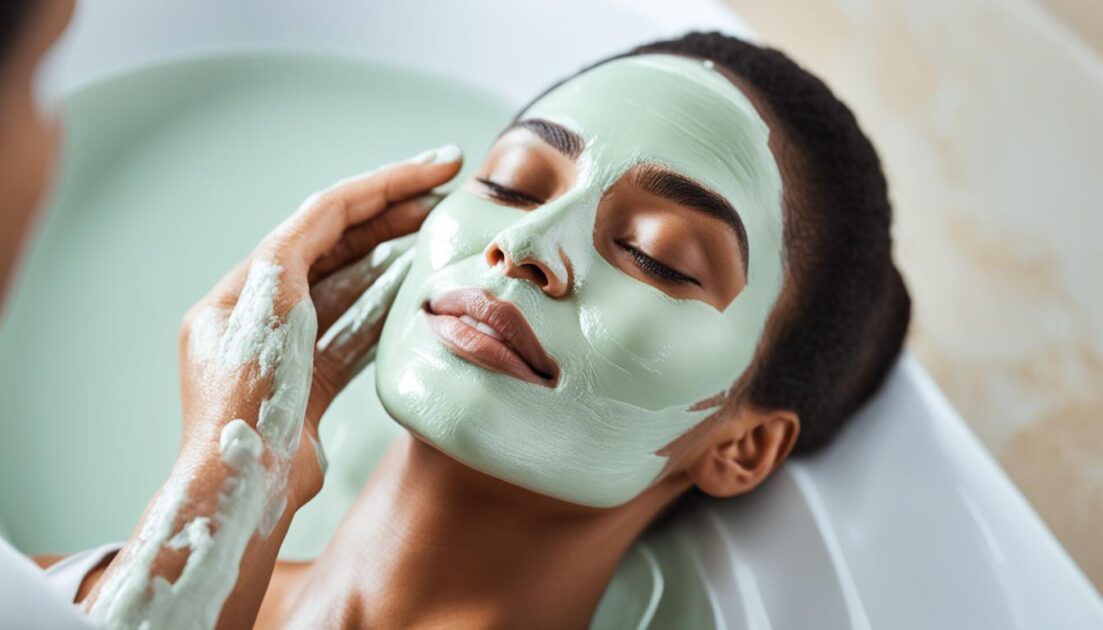
Kaolin clay, also known as china clay or white clay, is a versatile natural ingredient that offers numerous benefits for the skin. From improving skin tone to controlling oil production, kaolin clay can be used in various skincare routines. In this article, we will explore the different ways to use kaolin clay and discuss its benefits for different skin types. Whether you’re looking to address oily skin, acne, or simply enhance your natural beauty, kaolin clay can be a valuable addition to your skincare routine.
Key Takeaways:
- Kaolin clay is a versatile natural ingredient that offers numerous benefits for the skin.
- It can be used to improve skin tone, control oil production, and address skin concerns like oily skin and acne.
- There are various ways to incorporate kaolin clay into your skincare routine, such as using it in face masks, hair masks, and soap.
- Kaolin clay is suitable for all skin types, including sensitive skin.
- When using kaolin clay, it’s important to follow the proper instructions and consider your specific skin needs.
Kaolin Clay for Skin Whitening
Kaolin clay, renowned for its skin whitening properties, is a powerful natural ingredient that can help transform your skin. With its detoxifying effect, kaolin clay effectively eliminates grime and pollutants from the skin pores, leaving your skin fresh and rejuvenated.
But that’s not all – kaolin clay offers a multitude of benefits for your skin. It minimizes sebum production, making it an excellent choice for controlling acne and oily skin. Additionally, kaolin clay acts as a natural sunscreen, protecting your skin from harmful ultraviolet rays.
To utilize the skin brightening potential of kaolin clay and address dark spots, you can create a fine paste by combining it with other ingredients. After cleansing your skin, gently apply the paste and let it sit for about 10-15 minutes. Then, rinse it off with warm water, revealing a brighter, more radiant complexion.
For an extra boost in brightening your skin, you can consider incorporating kaolin clay in your skincare routine, such as using it as a face mask or adding it to your favorite DIY skincare recipes. The versatility of kaolin clay makes it suitable for all skin types, including sensitive skin.
“Kaolin clay has been my go-to ingredient for skin whitening. Its gentle yet effective properties help in brightening my complexion and reducing dark spots. I love how my skin feels refreshed and revitalized after using kaolin clay.”
– Jessica, skincare enthusiast
The Science Behind Kaolin Clay’s Skin Whitening
Kaolin clay’s skin whitening abilities can be attributed to its unique composition and properties. The clay’s fine particles gently exfoliate the skin, sloughing off dead skin cells and revealing a fresh layer of skin beneath. This helps to even out skin tone and reduce the appearance of dark spots and pigmentation.
Additionally, kaolin clay has natural skin brightening agents that work to improve overall skin complexion. It absorbs excess oil, ensuring a matte, oil-free finish. This makes it an excellent choice for those with oily skin or anyone looking to control shine.
The properties of kaolin clay also promote blood circulation in the skin, resulting in a healthy and radiant glow. By unclogging pores and removing impurities, it allows the skin to breathe and enhances its natural luminosity.
Expert Tips for Using Kaolin Clay for Skin Whitening
To make the most of kaolin clay’s skin whitening benefits, here are some expert tips:
- Combine kaolin clay with natural skin brightening ingredients like lemon juice, turmeric, or papaya for an extra boost in fading dark spots.
- Ensure that you cleanse your skin thoroughly before applying the kaolin clay paste to maximize its effectiveness.
- For sensitive skin, it’s recommended to perform a patch test before using kaolin clay to ensure there are no adverse reactions.
- Use kaolin clay masks 1-2 times a week for best results. Overuse may cause dryness, so it’s important to strike a balance.
With regular use, kaolin clay can help you achieve a brighter, more even skin tone, leaving you feeling confident and radiant.
Kaolin Clay for Acne
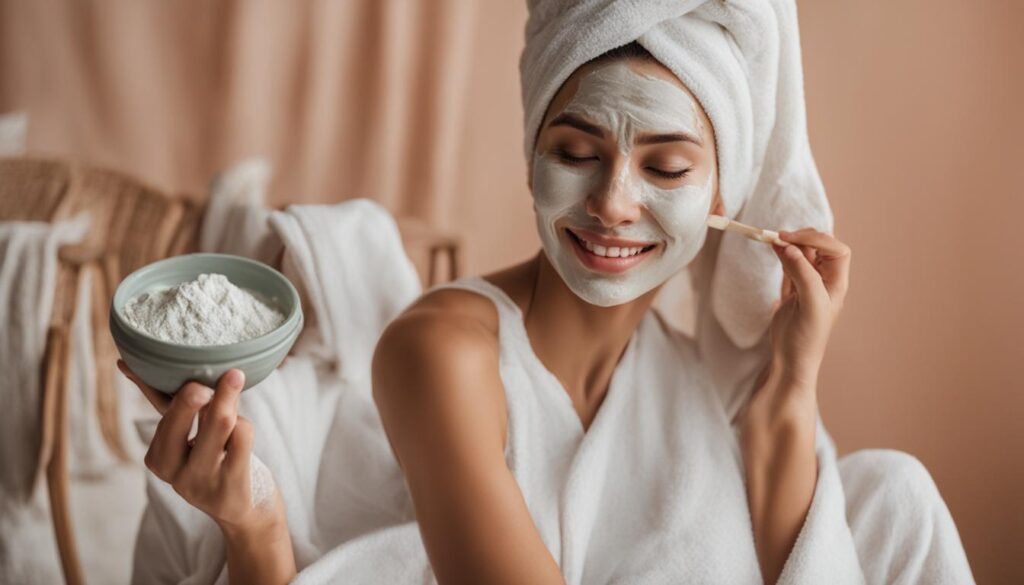
Kaolin clay is a natural skincare powerhouse that offers effective solutions for acne-prone skin. This non-toxic, white cosmetic clay is renowned for its ability to gently exfoliate dead skin cells and remove acne-causing bacteria from the pores. With its oil-absorbing, antibacterial, and antiseptic properties, kaolin clay can help improve the appearance of acne and promote clearer, healthier skin.
Using kaolin clay for acne is simple and can be done by creating a fine paste with other beneficial ingredients. One such combination is a blend of kaolin clay, jojoba oil, tea tree oil, and rose water. This powerful paste helps control excess oil, soothes inflammation, and fights against acne-causing bacteria.
To make this kaolin clay acne mask:
- In a small bowl, mix two tablespoons of kaolin clay powder with one tablespoon of jojoba oil.
- Add a few drops of tea tree oil and enough rose water to create a smooth paste. Mix well.
- Apply the paste to freshly cleansed skin, focusing on areas prone to acne.
- Leave the mask on for 10-15 minutes, allowing it to work its magic.
- Rinse off the mask with lukewarm water and pat your skin dry.
This kaolin clay acne mask can be used once or twice a week to help reduce breakouts, unclog pores, and promote a clearer complexion. Remember to follow up with a gentle moisturizer to keep your skin hydrated and balanced.
By incorporating kaolin clay into your skincare routine, you can take advantage of its remarkable properties to combat acne and achieve a healthier, more radiant complexion.
Kaolin Clay Therapy for Face
Kaolin clay therapy offers multiple benefits for the face. Its oil-absorbing, antibacterial, and antiseptic properties make it an excellent treatment for improving the overall health and appearance of the skin. By incorporating kaolin clay therapy into your skincare routine, you can provide nourishment and detoxification to your face, leaving it feeling refreshed and rejuvenated.
To create a kaolin clay therapy paste, combine kaolin clay with other beneficial ingredients like wheat germ oil, glycerin, and rose water. These ingredients work together to enhance the therapeutic properties of the clay, delivering a potent treatment for your skin. Wheat germ oil is rich in vitamins A and E, which help nourish and moisturize the skin, while glycerin acts as a humectant, attracting moisture to keep the skin hydrated. Rose water has soothing and toning properties that can help calm irritation and promote a youthful complexion.
Once you have prepared your kaolin clay therapy paste, gently apply it to your cleansed face, avoiding the delicate eye and lip areas. Allow the therapy paste to sit on your skin for about 10-15 minutes, allowing the clay to work its magic. During this time, the clay will absorb excess oil, unclog pores, and remove impurities, leaving your skin feeling clean and revitalized.
To remove the kaolin clay therapy paste, rinse your face with lukewarm water and pat dry with a soft towel. Follow up with your regular skincare routine, such as toner, serum, and moisturizer, to seal in the benefits of the therapy. For best results, use kaolin clay therapy for face once or twice a week as part of your overall skincare regimen.
Experience the transformative effects of kaolin clay therapy on your face and discover the wonders it can do for your skin. Incorporate this natural and effective treatment into your skincare routine and enjoy a healthier, more radiant complexion.
Kaolin Clay in Soap
When it comes to handmade soaps, kaolin clay is an exceptional ingredient that offers numerous benefits. Not only does it cleanse and purify the skin, but it also adds a touch of opaqueness, silkiness, and creaminess to the soap, elevating your bathing experience to a new level of luxury.
One of the key advantages of using kaolin clay in soap is its ability to effectively remove dead skin cells, impurities, and dirt from the pores. Its gentle exfoliating properties ensure a thorough cleanse, leaving your skin feeling fresh and rejuvenated.
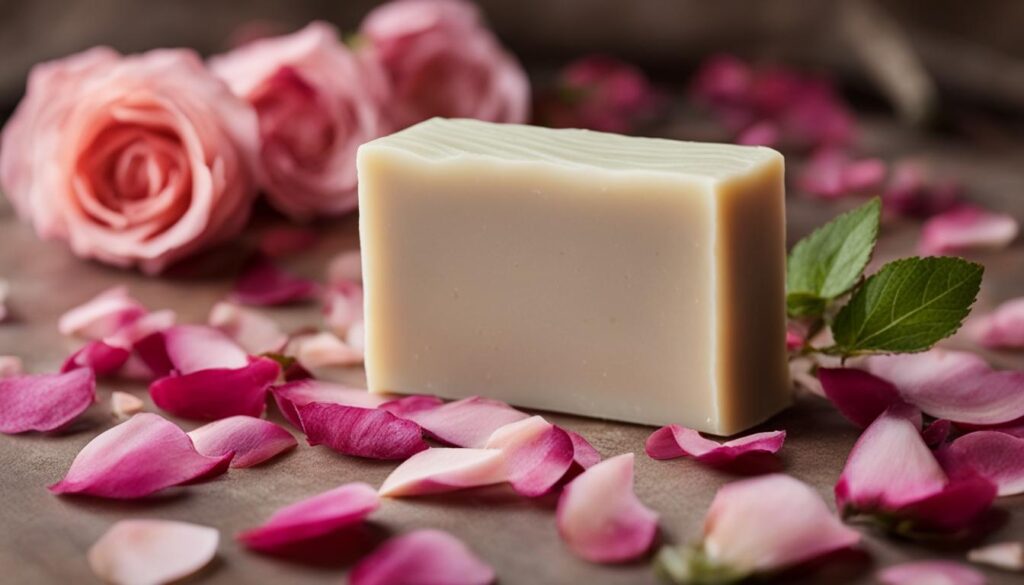
Furthermore, the inclusion of kaolin clay enhances the cleansing properties of the soap, making it ideal for those who seek a deep and invigorating clean. But that’s not all – kaolin clay also imparts a soft, matte finish to the skin, creating a velvety-smooth texture that you’ll love.
If you appreciate the craftsmanship of handmade soaps, make sure to look for products that feature kaolin clay as an ingredient. By incorporating kaolin clay in your daily cleansing routine, you can enjoy the benefits of improved skin texture, deep purification, and a luxurious bathing experience.
Kaolin Clay for Lips
Kaolin clay, being one of the gentlest facial clays, can also be used to exfoliate dead skin cells from the lips. This helps to achieve soft, supple, and pink lips.
To use kaolin clay for lips, you can combine it with ingredients like honey and olive oil to create a natural scrub. Gently massage the scrub onto your lips to remove any dry or flaky skin, and then rinse off to reveal smoother, healthier-looking lips.
Benefits of Using Kaolin Clay for Lips:
- Exfoliates dead skin cells
- Softens and smoothens lips
- Nourishes and hydrates
- Enhances natural lip color
“Using kaolin clay for lips is a natural and effective way to maintain healthy and beautiful lips. Its exfoliating properties help to remove dead skin cells, revealing softer and smoother lips. Additionally, kaolin clay helps to nourish and hydrate the lips, making them look plump and rejuvenated.”
| Ingredients: | Directions: |
|---|---|
| Kaolin clay | 1. Mix kaolin clay, honey, and olive oil in a bowl to form a paste. |
| Honey | 2. Gently massage the scrub onto your lips in circular motions for 1-2 minutes. |
| Olive oil | 3. Rinse off with warm water and pat dry. |
Kaolin Clay for Hair
Kaolin clay is not just beneficial for skincare, but it can also work wonders for your hair. Its cleansing and oil balancing properties make it highly effective in cleaning the scalp, reducing oily texture, and repairing damaged hair follicles. If you’re looking to revitalize your hair and achieve a healthier-looking mane, utilizing kaolin clay may be the solution you’ve been searching for.
To harness the benefits of kaolin clay for your hair, you can create a nourishing hair mask by mixing it with ingredients such as apple cider vinegar and essential oils. This powerful combination helps to remove impurities, excess oil, and product buildup from your scalp, promoting a cleaner and healthier environment for hair growth.
Here’s a simple recipe for a rejuvenating kaolin clay hair mask:
Kaolin Clay Hair Mask Recipe
- Combine 2 tablespoons of kaolin clay with 1 tablespoon of apple cider vinegar.
- Add a few drops of your favorite essential oils for added benefits and a pleasant aroma.
- Mix the ingredients thoroughly until you achieve a smooth paste.
- Apply the hair mask to your scalp, ensuring to cover all areas.
- Gently massage the mask into your scalp for 5-10 minutes to improve blood circulation.
- Leave the mask on for 15-20 minutes to allow the kaolin clay to work its magic.
- Rinse your hair thoroughly with plain water.
- Follow up with your regular shampoo and conditioner routine.
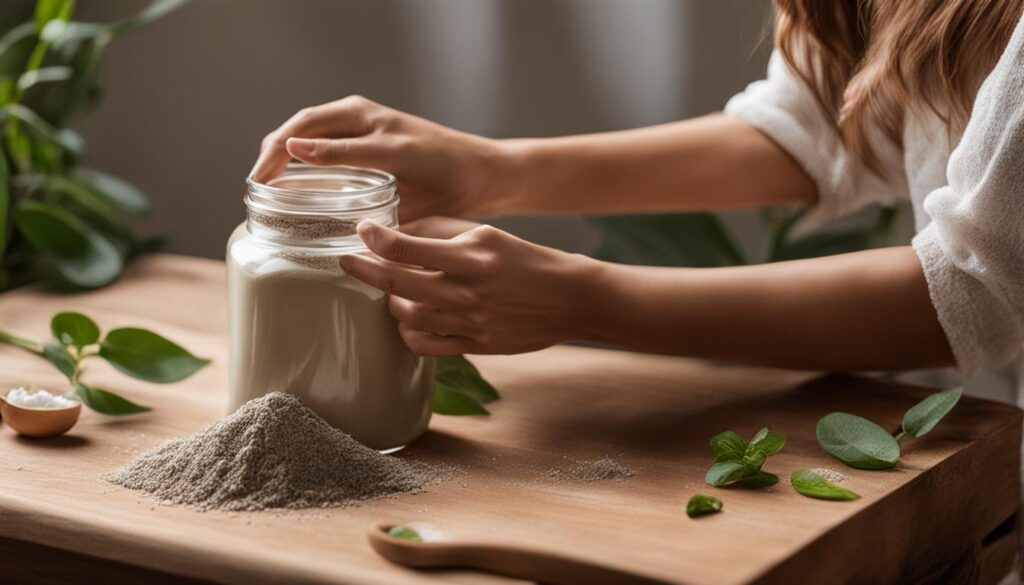
This hair mask can be used once a week to cleanse and revitalize your hair. The kaolin clay will help to balance the scalp’s oil production, reducing the greasiness that can weigh down your hair. Additionally, it will repair damaged hair follicles, promoting stronger and healthier hair growth.
By incorporating kaolin clay into your hair care routine, you can achieve revitalized and healthier-looking hair. Unlock the benefits of kaolin clay and experience the transformation it can bring to your hair.
Kaolin Clay vs. Multani Mitti
Kaolin clay and Multani Mitti (also known as Fuller’s Earth) are highly absorbent clays that offer similar benefits for the skin. However, there are differences between them in terms of origins and compositions.
Kaolin clay, also known as China clay, is the gentlest clay and is suitable for all skin types, including sensitive and dry skin. It is derived from the mineral kaolinite and is rich in minerals such as silica, calcium, magnesium, and zinc. Kaolin clay is known for its ability to detoxify the skin, unclog pores, and soothe irritation.
Multani Mitti, on the other hand, is a clay that originates from the region of Multan in Pakistan. It is primarily composed of aluminum magnesium silicate and is renowned for its oil-absorbing properties. Multani Mitti is ideal for oily skin as it helps control excess oil production, reduces acne, and tightens the skin.
While both clays have overlapping benefits such as exfoliation, skin tightening, and improving skin texture, they cater to different skin concerns. Kaolin clay is gentle and suitable for all skin types, making it versatile in addressing various skincare needs. Multani Mitti, with its strong oil-absorbing properties, is better suited for individuals with oily or acne-prone skin.
| Kaolin Clay | Multani Mitti |
|---|---|
| Gentle and suitable for all skin types | More suitable for oily or acne-prone skin |
| Detoxifies and unclogs pores | Controls excess oil production |
| Soothes and calms irritation | Reduces acne and tightens the skin |
Ultimately, the choice between kaolin clay and Multani Mitti depends on your specific skin type and concerns. Experimenting with both clays can help you determine which one works best for you. You can also consider using them in combination for targeted skincare routines that address different areas of concern.
Where to Buy the Best Kaolin Clay in India?
If you’re looking to harness the benefits of kaolin clay for your skincare routine, it’s essential to find a reliable source that offers the best quality product. That’s where Mystiq Living comes in. They are renowned for providing the best kaolin clay in India, meticulously crafted from white kaolin extracts in their purest and most natural form.
Mystiq Living’s kaolin clay is well-known for its remarkable properties, including skin whitening, cleansing, and moisturizing. Each jar of kaolin clay is carefully formulated to ensure maximum effectiveness in addressing various skin concerns.
By incorporating Mystiq Living’s kaolin clay into your skincare regimen, you can experience the benefits firsthand. Achieve a brighter complexion, enjoy thoroughly cleansed and detoxified skin, and indulge in deep hydration for a radiant and healthy glow.
If you’re ready to enhance your skincare routine with the best kaolin clay in India, look no further than Mystiq Living. They offer a reliable and effective product that caters to the diverse needs of individuals seeking natural skincare solutions.
Visit the Mystiq Living website today to explore their range of kaolin clay products and unlock the full potential of this incredible natural ingredient.
The Origins and Popularity of Kaolin Clay
Kaolin clay, with its rich history and versatility, has captured the attention of various industries and skincare enthusiasts. Let’s explore the origins, historical relevance, and the growing popularity of this remarkable natural ingredient.
The Origins: Discovering Kaolin Clay
The story of kaolin clay begins in the Kaoling hill of China, where it was first discovered centuries ago. Chinese artisans and potters recognized the unique properties of this clay and began utilizing it for pottery and ceramics due to its fine texture and heat resistance.
Historical Relevance: Kaolin Clay’s Impressive Adaptability
Over time, the uses of kaolin clay expanded far beyond pottery and ceramics. Its exceptional adaptability led to its adoption in various industries. Historically, kaolin clay has been praised for its medicinal properties and was used in ancient Chinese medicine to treat digestive issues, soothe irritated skin, and promote healing.
As its benefits became more widely known, kaolin clay’s applications extended to pharmaceuticals, where it was used as a filler in pills and ointments. Its gentle nature and ability to absorb excess oils made it a popular ingredient in skincare recipes, helping people achieve clear, radiant, and healthy-looking skin.
The Popularity: Embracing Kaolin Clay’s Benefits
Today, kaolin clay has gained immense popularity, particularly in the beauty and skincare industry. Its natural composition, rich in minerals such as silica, magnesium, and calcium, makes it a go-to choice for addressing various skin concerns.
Skincare enthusiasts have embraced kaolin clay for its ability to detoxify the skin, unclog pores, and control excess oil production. Its non-comedogenic properties make it suitable for all skin types, including sensitive skin. The gentle exfoliating action of kaolin clay helps remove dead skin cells, revealing a smoother and brighter complexion.
The long-lasting popularity of kaolin clay can be attributed to its effectiveness in improving skin tone, reducing acne and blemishes, and providing a natural, healthy glow. As consumers become more conscious of the ingredients in their skincare products, kaolin clay has become a sought-after option due to its natural origin and proven benefits.
As the demand for natural skincare solutions continues to rise, the popularity of kaolin clay shows no signs of diminishing. Its timeless origins and historical relevance, combined with its impressive skin-enhancing properties, ensure that kaolin clay remains a cherished ingredient among beauty enthusiasts around the world.
The Benefits of Kaolin Clay for Skin
Kaolin clay is a powerhouse ingredient that offers numerous benefits for the skin. Whether you have sensitive, dry, normal, or oily skin, incorporating kaolin clay into your skincare routine can help you achieve healthier, clearer, and more radiant skin.
One of the key benefits of kaolin clay is its ability to provide gentle exfoliation. It helps remove dead skin cells, unclog pores, and promote a smoother complexion. Additionally, kaolin clay is known for its oil-absorbing properties, making it an excellent choice for controlling excess oil and shine on the skin.
Another advantage of kaolin clay is its ability to control acne. It has anti-inflammatory, antibacterial, and cleansing properties that help reduce acne breakouts and inflammation. Kaolin clay also has a soothing effect on the skin, making it ideal for calming redness and irritation.
Moreover, kaolin clay has detoxifying properties that help draw out impurities and toxins from the skin, leaving it feeling refreshed and revitalized. It also helps improve skin tone and texture, giving you a more even complexion. Additionally, kaolin clay provides hydration to the skin, keeping it moisturized and plump.
One of the remarkable features of kaolin clay is its non-comedogenic nature, meaning it does not clog pores. This makes it suitable for all skin types, even those prone to breakouts or sensitivity. Whether you want to use it as a mask, cleanser, or ingredient in other skincare products, kaolin clay offers a versatile formulation that can be tailored to your specific needs.
Incorporating kaolin clay into your skincare routine can yield a multitude of benefits for your skin. From gentle exfoliation and oil control to acne reduction and improved skin tone, kaolin clay is a versatile and effective ingredient that can transform your skincare routine. Experience the power of kaolin clay and unlock the potential of healthier, clearer, and more radiant skin.
FAQ
How can I use kaolin clay for skin whitening?
To use kaolin clay for skin whitening, you can combine it with other ingredients to create a fine paste and apply it to cleansed skin.
How can I use kaolin clay for acne?
To use kaolin clay for acne, you can mix it with ingredients like jojoba oil, tea tree oil, and rose water to create a fine paste and apply it to the cleansed face.
What is kaolin clay therapy for the face?
Kaolin clay therapy involves combining kaolin clay with ingredients like wheat germ oil, glycerin, and rose water to create a fine paste. This homemade therapy can be applied to the cleansed face for nourishment and detoxification.
Can I use kaolin clay in soap?
Yes, kaolin clay can be used in soap to enhance its cleansing properties, provide a soft, matte finish, and add opacity, silkiness, and creaminess to the soap.
How can I use kaolin clay for lips?
To use kaolin clay for lips, you can combine it with ingredients like honey and olive oil to create a natural scrub. Gently massage the scrub onto your lips to remove dry or flaky skin, and then rinse off for smoother and healthier-looking lips.
How can I use kaolin clay for hair?
To use kaolin clay for hair, you can mix it with ingredients like apple cider vinegar and essential oils to create a hair mask. Apply the mask to the scalp for 15-20 minutes and then rinse with plain water for revitalized and healthier-looking hair.
What is the difference between kaolin clay and Multani Mitti?
Kaolin clay is the most gentle clay suitable for all skin types, while Multani Mitti is more suitable for oily skin due to its strong oil-absorbing properties. Both clays offer similar benefits and can be used interchangeably depending on your skin type and preferences.
Where can I buy the best kaolin clay in India?
Mystiq Living offers the best quality kaolin clay in India, made from white kaolin extracts in their natural and purest form, known for its skin whitening, cleansing, and moisturizing properties.
What is the historical relevance of kaolin clay?
Kaolin clay has a long history and has been used for various purposes throughout the years, starting from its origin in the Kaoling hill in China. Its uses expanded from pottery and ceramics to skincare, cosmetics, pharmaceuticals, and various industries.
What are the benefits of kaolin clay for the skin?
Kaolin clay provides gentle exfoliation, absorbs excess oil, controls acne, soothes and calms the skin, detoxifies, improves skin tone, provides hydration, is non-comedogenic, and offers versatile formulation. These benefits make kaolin clay suitable for all skin types, including sensitive, dry, normal, and oily skin.


