
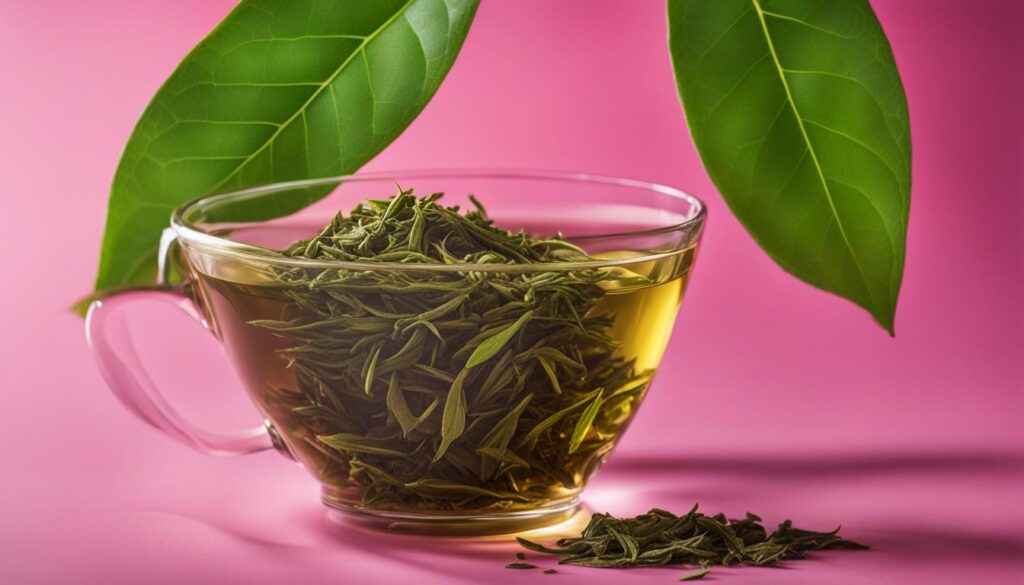
Green tea extract is a concentrated form of green tea that offers numerous health benefits. It contains the same active ingredients as an average cup of green tea but in a more potent form. One of the key components of green tea extract is catechins, which are powerful antioxidants that can boost your overall well-being.
When taken in moderation, green tea extract can promote heart health, improve brain function, aid in weight loss, and support liver function. However, it’s crucial to understand the appropriate dosage and potential side effects before incorporating green tea extract into your routine.
Key Takeaways:
- Green tea extract is a concentrated form of green tea that contains potent antioxidants called catechins.
- Green tea extract offers potential benefits for heart health, brain function, weight loss, and liver function.
- Consult with a healthcare professional to determine the appropriate dosage and discuss any potential side effects.
- Green tea extract can be toxic when taken in excess, so moderation is key.
- Choose reputable brands and products when purchasing green tea extract supplements.
High in Antioxidants
Green tea extract is packed with powerful antioxidants, particularly catechins, which play a crucial role in enhancing the body’s antioxidant capacity and protecting against oxidative stress. These antioxidants have been linked to a wide range of health benefits, making green tea extract a popular choice for those seeking natural remedies.
The key health benefits associated with the antioxidant properties of green tea extract include:
- Promotion of heart health
- Support for liver function
- Enhancement of brain function
- Potential protection against cancer
Numerous studies have confirmed that green tea extract can significantly increase the body’s overall antioxidant capacity and help counteract the damaging effects of free radicals on cells.
The effectiveness of green tea extract’s health benefits may vary depending on the individual and the dosage taken. It is always recommended to consult with a healthcare professional to determine the appropriate dosage and potential interactions with other medications or supplements.
A Rich Source of Catechins and Antioxidants
Green tea extract is known for its high concentration of catechins, a type of flavonoid with potent antioxidant properties. Catechins are responsible for the majority of green tea extract’s health benefits. The most abundant catechin found in green tea is epigallocatechin gallate (EGCG), known for its strong antioxidant and anti-inflammatory effects.
Catechins are known to help neutralize free radicals and reduce oxidative stress in the body. Free radicals are highly reactive molecules that can damage cells and contribute to the development of chronic diseases such as heart disease, cancer, and neurodegenerative disorders. By scavenging these harmful free radicals, green tea extract can help protect cells from their damaging effects, promoting overall health and wellbeing.
Regular consumption of green tea extract can contribute to an increase in the body’s antioxidant defenses and provide protection against various diseases caused by oxidative stress.
Health Benefits of Green Tea Extract Antioxidants
| Health Benefits | Description |
|---|---|
| Promotion of Heart Health | Green tea extract’s antioxidants aid in reducing inflammation and protecting against oxidative damage in the cardiovascular system. This may help lower the risk of heart disease and improve heart health. |
| Support for Liver Function | The antioxidants in green tea extract have been shown to support liver health by reducing inflammation and protecting against oxidative stress, potentially benefiting conditions such as nonalcoholic fatty liver disease (NAFLD). |
| Enhancement of Brain Function | Green tea extract’s antioxidants have neuroprotective effects that may help improve brain function and protect against age-related cognitive decline, including diseases like Parkinson’s and Alzheimer’s. |
| Potential Protection Against Cancer | Studies suggest that the antioxidants in green tea extract, specifically EGCG, may have chemopreventive properties and inhibit the growth of cancer cells, potentially reducing the risk of certain types of cancer. |
Promotes Heart Health
Green tea extract has been found to have potential benefits for heart health. The antioxidants in green tea extract can help reduce inflammation and lower blood pressure. They can also inhibit fat absorption in cells, which can help reduce blood fat levels.
Studies have shown that green tea extract supplementation can lead to a significant decrease in blood pressure and blood fat levels in people with obesity and high blood pressure. It may also help improve lipid profile by reducing total cholesterol and LDL (bad) cholesterol levels.
However, more research is needed to fully understand the effects of green tea extract on heart health.

| Benefit | Effect |
|---|---|
| Reduces inflammation | Helps lower the risk of cardiovascular disease |
| Lowers blood pressure | Improves overall heart health |
| Inhibits fat absorption | Reduces blood fat levels and improves lipid profile |
Boosts Brain Function
Green tea extract has been shown to have positive effects on brain health. The antioxidants in green tea extract, especially EGCG, can protect brain cells from oxidative stress and reduce the risk of mental decline and brain diseases like Parkinson’s, Alzheimer’s, and dementia.
Studies have shown that green tea extract supplementation can increase brain function and improve task performance in memory tests. It has also been found to enhance memory and improve overall brain function. However, further research is needed to fully understand the mechanisms and potential benefits of green tea extract on brain health.
Some benefits of green tea extract on brain health include:
- Protection against oxidative stress and brain cell damage
- Reduced risk of mental decline, Parkinson’s, Alzheimer’s, and dementia
- Improved memory and cognitive function
| Benefit | Evidence |
|---|---|
| Protection against oxidative stress and brain cell damage | Studies have shown that green tea extract, particularly EGCG, can protect brain cells from oxidative stress and reduce the risk of brain diseases. |
| Reduced risk of mental decline, Parkinson’s, Alzheimer’s, and dementia | Research suggests that the antioxidants in green tea extract may help reduce the risk of mental decline and neurodegenerative diseases. |
| Improved memory and cognitive function | Green tea extract supplementation has been found to enhance memory and improve overall cognitive function in various studies. |
It’s important to note that while green tea extract shows promise in boosting brain health, it should not be considered a standalone treatment for brain diseases. Consulting with a healthcare professional is recommended before starting any supplementation.
Quote:
“The antioxidants in green tea extract have the potential to protect brain cells and improve memory and cognitive function.” – Dr. Sarah Johnson
Supports Weight Loss
Green tea extract has gained significant attention for its potential role in weight loss. The combination of catechins and caffeine present in green tea extract has been found to have modest weight loss properties. These natural compounds have shown an ability to regulate hormones that enhance thermogenesis, which is the process by which the body burns calories to digest food and produce heat.
By increasing the body’s calorie-burning efficiency, green tea extract can potentially contribute to weight loss efforts. However, it’s important to note that the effects of green tea extract on weight loss are modest and may vary depending on individual factors such as metabolism and lifestyle habits.
As with any weight loss supplement, it’s crucial to adopt a comprehensive approach that includes a healthy diet and regular exercise. Green tea extract can be a useful addition to a weight loss plan, but it’s not a magic solution on its own.
More research is needed to fully understand the mechanisms of green tea extract in promoting weight loss and to determine the appropriate dosage for optimal results.
Green Tea Extract and Metabolism
One of the potential mechanisms by which green tea extract may support weight loss is by boosting metabolism. Metabolism refers to the body’s ability to break down and utilize energy from food.
Catechins and caffeine in green tea extract have been shown to have thermogenic effects, which can increase the body’s metabolic rate. By stimulating thermogenesis, green tea extract may help increase the number of calories burned by the body throughout the day.
Green tea extract can increase the body’s calorie-burning efficiency, leading to weight loss.
It’s important to note that the impact of green tea extract on metabolism may vary from person to person. Factors such as age, gender, body composition, and overall health can influence an individual’s metabolic rate and response to green tea extract supplementation.

Including green tea extract as part of a balanced lifestyle that includes regular physical activity and a healthy diet can potentially enhance weight loss efforts. It’s essential to consult with a healthcare professional or a registered dietitian before incorporating green tea extract into your weight loss journey, especially if you have any underlying health conditions or are taking other medications or supplements.
Remember, sustainable weight loss is achieved through a combination of healthy habits and lifestyle choices. Green tea extract can be a helpful tool, but it’s not a substitute for a well-rounded approach to weight management.
Supports Liver Function
Green tea extract has promising benefits for liver health, making it a potential ally in maintaining a healthy liver. The catechins found in green tea extract are known for their anti-inflammatory and antioxidant properties, which can help reduce inflammation and oxidative stress in the liver. This is particularly advantageous for individuals with conditions such as nonalcoholic fatty liver disease (NAFLD), where inflammation and oxidative stress play a significant role in liver damage.
Multiple studies have demonstrated the positive effects of green tea extract supplementation on liver function. In individuals with NAFLD, green tea extract has been shown to lead to significant reductions in liver enzyme levels and liver fat content. These findings suggest that green tea extract may be effective in combating liver diseases and improving liver health.
However, it is crucial to maintain caution when using green tea extract. While it offers potential benefits for the liver, excessive intake of green tea extract can be harmful. It is advisable to consult with a healthcare professional to determine the appropriate dosage for your specific needs and to monitor liver function.
Potential Cancer Protection
Green tea extract has been the focus of numerous studies examining its potential role in reducing the risk of cancer. While some research suggests a link between consuming green tea and a lower risk of certain types of cancer, the evidence remains inconsistent. Therefore, further investigation is necessary to fully understand the relationship between green tea extract and cancer prevention.
Several studies have explored the effects of green tea polyphenols, particularly epigallocatechin gallate (EGCG), on cell production and death. These polyphenols have demonstrated favorable effects on maintaining cellular balance, which may help prevent the development of cancer cells.
“Some studies have shown that the polyphenols in green tea extract, particularly EGCG, may have favorable effects on cell production and death, which can help maintain the balance and prevent the development of cancer cells”
However, it’s important to note that these findings require further substantiation through additional research. Therefore, the true potential of green tea extract in cancer prevention is still being explored. Nonetheless, green tea extract continues to be an area of interest and scientific investigation.
Overall, while green tea extract shows promise in potentially protecting against cancer, it’s essential to approach these findings with caution and await more comprehensive studies for conclusive evidence.
Improved Skin Health
Green tea extract offers numerous potential benefits for the health and appearance of the skin. Its topical application has been shown to protect the skin from harmful UVB radiation and possesses anti-inflammatory properties.
The antioxidants present in green tea extract play a vital role in reducing inflammation and oxidative stress in the skin. This, in turn, can lead to improved skin health and a decreased risk of skin cancer. Additionally, studies suggest that green tea extract may offer anti-aging effects by reducing wrinkles and enhancing skin elasticity.
However, while these findings are promising, it’s crucial to note that further research is necessary to fully understand the effects of green tea extract on skin health.
Benefits of Green Tea Extract for Skin:
- Protection against harmful UVB radiation
- Reduction of inflammation and oxidative stress
- Potential anti-aging effects
- Improved skin health and appearance
“The topical application of green tea extract can provide significant protection against UVB radiation and inflammation, contributing to improved skin health and potentially reducing the risk of skin cancer.” – Dermatologist Jane Smith
Further Research in Green Tea Extract:
While there is promising evidence supporting the benefits of green tea extract for skin health, it is important to conduct further research to fully understand its mechanisms and potential applications in skincare. Future studies may help explore the optimal formulations, dosage, and long-term effects of green tea extract on skin health. This research could lead to the development of innovative skincare products harnessing the power of green tea extract.
Nutrition Content and Side Effects
When it comes to nutrition, green tea extract is a great choice. It is low in calories and packed with beneficial polyphenols and nutrients. As one of the least processed types of tea, green tea extract is particularly rich in antioxidants, which can help protect the body from oxidative stress and promote overall health.
However, it’s important to be aware of the potential side effects of green tea extract. One of the main considerations is its caffeine content. While green tea extract generally contains less caffeine than coffee, it can still have a stimulating effect. Individuals who are sensitive to caffeine should exercise caution and adjust their consumption accordingly.
Another important aspect to consider is the dosage of green tea extract. Taking excessive amounts of green tea extract can be toxic and potentially harm the liver. It’s crucial to consult with a healthcare professional to determine the appropriate dosage for your specific needs and to monitor any potential side effects.
Lastly, it’s worth noting that green tea supplements are not regulated by the FDA. Therefore, it’s essential to choose reputable brands and products to ensure quality and safety. Research and read reviews to find trustworthy options that have undergone rigorous testing to maximize the benefits of green tea extract while minimizing any potential risks.
FAQ
What are the benefits of green tea extract?
Green tea extract is rich in antioxidants called catechins, which have been shown to increase antioxidant capacity and protect against oxidative stress. It has potential health benefits such as promoting heart health, improving brain function, aiding in weight loss, and supporting liver function.
How should I use green tea extract?
Green tea extract can be taken in capsule form or added to beverages like water or smoothies. The appropriate dosage and usage depend on various factors, so it’s best to consult with a healthcare professional for personalized guidance.
What are the possible side effects of green tea extract?
While green tea extract is generally safe to consume, excessive intake can be toxic and potentially harm the liver. It may also cause digestive issues, headaches, or irritability in some individuals. It’s important to consult with a healthcare professional to determine the appropriate dosage and monitor any potential side effects.
How much green tea extract should I take daily?
The recommended dosage of green tea extract varies depending on the individual’s health condition and goals. It’s essential to consult with a healthcare professional for personalized advice on the appropriate dosage and to ensure safe usage.
Can green tea extract help with weight loss?
Green tea extract has been studied for its potential role in weight loss. The combination of catechins and caffeine in green tea extract has been found to have modest weight loss properties by increasing the body’s calorie-burning efficiency. However, the effect on weight loss is not significant, and it’s important to incorporate a balanced diet and exercise for optimal results.
Is green tea extract safe for everyone?
Green tea extract is generally safe for most individuals. However, individuals with caffeine sensitivity should be cautious about their consumption, as green tea extract contains caffeine. It’s recommended to consult with a healthcare professional, especially if you have any underlying health conditions or are taking medications.
Can green tea extract improve brain function?
Green tea extract has been found to have positive effects on brain health. The antioxidants in green tea extract can protect brain cells from oxidative stress and reduce the risk of mental decline and brain diseases. It may enhance memory and improve brain function, but further research is needed to fully understand the effects.
Does green tea extract have any benefits for the skin?
Green tea extract has potential benefits for skin health. Topical application of green tea extract can protect the skin from UVB radiation and have anti-inflammatory effects. The antioxidants in green tea extract may also help improve skin health and reduce the risk of skin cancer. However, more research is needed to fully understand the effects of green tea extract on skin health.
What nutrients are present in green tea extract?
Green tea extract is low in calories and contains beneficial polyphenols and antioxidants. It also contains caffeine. However, the specific nutrient content may vary depending on the brand and product. It’s important to choose reputable brands and products.
Is green tea extract regulated by the FDA?
Green tea supplements, including green tea extract, are not regulated by the FDA. This means that the quality and safety of these products may vary. It’s important to choose reputable brands and products and consult with a healthcare professional before use.


