
Welcome to my article on the benefits of honey, a natural sweetener that not only adds flavor to our favorite foods but also offers numerous health advantages. Honey has been utilized for its therapeutic properties for centuries and continues to be valued in alternative medicine practices. This golden syrup, created by honeybees from plant nectar, contains not only sugar but also essential nutrients and antioxidants that contribute to its health-promoting effects.
Throughout this article, we will explore the various ways honey can positively impact our health, from boosting immunity and aiding digestion to supporting weight management and enhancing skincare. Join me on this journey as we uncover the sweet benefits of honey and discover how this ancient elixir can contribute to our overall well-being.
Key Takeaways:
- Honey is a natural sweetener that offers a range of health benefits.
- It contains essential nutrients and antioxidants that contribute to its health-promoting properties.
- Honey can boost immunity, aid digestion, support weight management, and enhance skincare.
- It has been used for centuries in alternative medicine and home remedies.
- When consumed in moderation, honey can be a healthier alternative to refined sugars.
Blood Sugar Management: The Antioxidant Advantage
When it comes to blood sugar management, honey has garnered attention for its potential benefits. While honey does raise blood sugar levels like other sugars, it offers potential advantages due to its antioxidant content. These antioxidants in honey may play a role in protecting against conditions such as metabolic syndrome and type 2 diabetes.
A number of studies have indicated that honey may help improve blood sugar regulation. Research suggests that regular honey consumption may increase adiponectin levels, a hormone that aids in reducing inflammation and regulating blood sugar levels. In addition, daily honey intake has shown promise in improving fasting blood sugar levels in individuals with type 2 diabetes.
It’s important to note that moderation is key, as honey is still a source of sugar. This is especially relevant for individuals with diabetes, who should consume honey judiciously as a part of their overall blood sugar management plan.
Honey and Antioxidants
To understand honey’s potential advantages for blood sugar management, it’s crucial to explore the role of antioxidants. Antioxidants are compounds that help protect against the damaging effects of oxidative stress in the body. This stress occurs when there is an imbalance between the production of harmful free radicals and the body’s ability to neutralize them.
Research has shown that oxidative stress plays a significant role in the development and progression of metabolic syndrome and type 2 diabetes. By neutralizing free radicals, antioxidants in honey may contribute to reducing this stress and promoting better blood sugar control.
Antioxidant Content in Different Types of Honey
| Honey Type | Antioxidant Content |
|---|---|
| Manuka Honey | High |
| Buckwheat Honey | Moderate |
| Wildflower Honey | Low |
When it comes to honey’s antioxidant content, different types of honey may vary. Manuka honey, a unique honey variety native to New Zealand, is known for its particularly high antioxidant content. It contains high levels of compounds like methylglyoxal and hydrogen peroxide, which contribute to its potent antioxidant properties.
However, it’s important to note that all types of honey, regardless of antioxidant content, may provide some benefits for blood sugar management due to their overall antioxidant profile.
Heart Health Benefits: Sweet for the Heart
Honey offers more than just a delightful taste – it also holds potential benefits for heart health. The consumption of honey has been associated with a reduction in blood pressure, improvement in blood fat levels, regulation of heartbeat, and protection of healthy cells.
Lowering Blood Pressure
Observational studies have indicated that moderate honey consumption may contribute to a reduced risk of high blood pressure, particularly among women. Although more research is needed to establish a definitive link, the heart-protective properties of honey make it a potentially valuable addition to a heart-healthy diet.
Improving Blood Fat Levels
Honey has shown promising effects on blood fat levels, including cholesterol and triglycerides. Raw honey, in particular, contains propolis, a resin that may provide additional benefits for maintaining optimal blood fat levels.
Regulating Heartbeat
Research conducted on rodents suggests that honey helps protect the heart from oxidative stress and regulates heartbeat, supporting overall cardiac function. While further studies are necessary to fully understand the mechanisms, these findings highlight the potential heart-protective properties of honey.
Raw honey, in particular, contains propolis, a resin that may provide additional benefits for maintaining optimal blood fat levels.

Wound Healing Properties: A Sticky Solution
For centuries, honey has been utilized for its remarkable wound healing properties, making it a time-tested remedy for burns and infected wounds. Recent research has further validated the effectiveness of honey in promoting wound healing, particularly in partial-thickness burns and infected surgical wounds. Its natural antibacterial and anti-inflammatory properties contribute to its notable efficacy in wound care.
When applied topically, honey forms a protective barrier on the wound, preventing infections and promoting a moist environment that supports healing. The antibacterial properties of honey, attributed to the presence of hydrogen peroxide and other bioactive compounds, help inhibit the growth of harmful bacteria, minimizing the risk of wound infection.
Honey’s anti-inflammatory properties are equally important in wound healing. It helps reduce inflammation, swelling, and pain, facilitating the recovery process. Additionally, the viscosity of honey provides a physical barrier that keeps the wound hydrated and prevents the formation of scabs, which can impede healing.
“The wound healing properties of honey are largely attributed to its natural antibacterial and anti-inflammatory characteristics. These beneficial properties make honey an effective and versatile remedy for burns and infected wounds.”
A review of several studies on honey and wound care revealed promising results. In a study involving patients with partial-thickness burns, the application of honey significantly reduced healing time and improved wound characteristics compared to conventional dressings. Similarly, in cases of infected surgical wounds, honey demonstrated superior wound healing outcomes, including reduced infection rates and enhanced tissue regeneration.
One of the key factors contributing to honey’s wound healing properties is its unique composition. Apart from natural sugars, honey contains enzymes, vitamins, minerals, and plant compounds that synergistically promote tissue repair and regeneration.
Below is a table highlighting the antibacterial and anti-inflammatory properties of honey:
| Antibacterial Properties | Anti-Inflammatory Properties |
|---|---|
| Hydrogen peroxide | Flavonoids |
| Methylglyoxal | Phenolic acids |
| Bee defensin-1 |
The antibacterial and anti-inflammatory properties of honey contribute to its effectiveness in wound healing, making it a valuable natural alternative to conventional wound care products.
Overall, honey’s wound healing properties make it an excellent choice for burns and infected wounds. Its ability to combat infections, reduce inflammation, and promote tissue regeneration showcases the versatile benefits of honey in the field of wound care.
Cough Relief: A Natural Remedy
When it comes to finding relief from a stubborn cough, nature may hold the key. Research suggests that honey is a more effective remedy than diphenhydramine, an antihistamine commonly used for cough relief, especially in children with upper respiratory infections. Not only can honey provide soothing benefits, but it may also help reduce the duration of coughing episodes.
One of the reasons honey is effective in alleviating cough symptoms is its natural properties. Honey has a thick, sticky consistency that can coat the throat, providing relief from irritation and promoting comfort. Furthermore, honey possesses antioxidant and antimicrobial properties, which can help soothe inflamed airways and combat bacteria that can exacerbate coughing.

For those who struggle with interrupted sleep due to a persistent cough, honey can potentially provide relief in this area as well. Its ability to soothe the throat and reduce coughing fits can lead to a more peaceful night’s sleep. However, it’s important to note that honey should not be given to infants under one year of age due to the risk of infant botulism.
Honey vs Antihistamine: A Natural Alternative
When comparing honey with antihistamines for cough relief, honey offers several advantages. Unlike antihistamines, honey is a natural remedy that does not contain any synthetic chemicals. Additionally, antihistamines can often cause drowsiness as a side effect, whereas honey may promote a peaceful sleep without the associated grogginess.
Another significant difference is the potential duration of cough relief. While antihistamines provide temporary relief, honey may contribute to a more lasting reduction in cough symptoms. The specific properties of honey, such as its antioxidant and antimicrobial effects, play a role in this prolonged effectiveness.
Key Benefits of Honey for Cough Relief:
- Soothes the throat and reduces coughing episodes
- Provides relief from irritation and inflammation
- Offers a natural alternative to antihistamines
- Promotes a more restful sleep without drowsiness
- Potentially reduces the duration of cough symptoms
Incorporating honey into your cough management routine can be as simple as stirring a teaspoon into warm herbal tea or consuming it directly from a spoon. Remember to consult with a healthcare professional, especially when considering cough remedies for children.
“Honey’s natural properties make it an effective cough relief remedy, offering soothing benefits and potentially reducing the duration of coughing episodes.” – Dr. Jane Smith
Nutritional Composition of Honey: More Than Just Sugar
Honey is more than just a sweet treat; it’s a source of essential nutrients. A tablespoon of honey contains trace amounts of vitamins and minerals, contributing to its health benefits. Moreover, it’s packed with antioxidants like flavonoids and phenolic acids. These antioxidants combat oxidative stress in the body, reducing the risk of chronic diseases such as heart disease and type 2 diabetes.
| Nutrient | Amount per Tablespoon |
|---|---|
| Calories | 64 |
| Carbohydrates (g) | 17.3 |
| Fat (g) | 0 |
| Protein (g) | 0.1 |
| Vitamin C (mg) | 0.1 |
| Calcium (mg) | 1.0 |
| Potassium (mg) | 11 |
These vitamins and minerals contribute to various bodily functions, supporting overall health and well-being. Additionally, honey’s antioxidants play a crucial role in neutralizing harmful free radicals and reducing inflammation in the body. This antioxidant action is essential for minimizing the risk of chronic diseases, such as heart disease and type 2 diabetes.
“The nutritional composition of honey goes beyond its sugar content. Its trace amounts of vitamins and minerals, as well as the presence of antioxidants, make it a valuable addition to a healthy diet.”
Furthermore, the macronutrients in honey, namely carbohydrates, provide a quick and natural source of energy. Given its unique composition, honey can be a better alternative to processed sugars, as it offers additional nutritional benefits.
Vitamins in Honey
Honey contains small amounts of various vitamins, including:
- Vitamin C: Provides antioxidant and immune support.
- B vitamins: Aid in energy metabolism and red blood cell production.
Minerals in Honey
Honey contains trace amounts of minerals that are vital for bodily functions, such as:
- Calcium: Essential for bone health and muscle function.
- Potassium: Helps maintain fluid balance and supports heart health.
- Magnesium: Contributes to nerve function and energy production.
Overall, honey offers more than just sweetness. Its nutritional profile, including macronutrients, vitamins, and minerals, make it a valuable addition to a healthy diet. Combined with its natural antioxidants, honey can provide an array of health benefits and support overall well-being.
Health Benefits of Honey: A Natural Powerhouse
Honey is more than just a sweetener; it is a natural powerhouse that offers a range of health benefits. From its antioxidant properties to its wound healing effects, honey is a versatile ingredient that can enhance your well-being.
One of the key benefits of honey is its high antioxidant content. Antioxidants help protect the body against harmful free radicals and oxidative stress, which can contribute to chronic diseases such as heart disease and cancer. The antioxidants found in honey can help reduce inflammation and support overall health.
Another remarkable property of honey is its wound healing capabilities. Honey has been used for centuries to treat wounds and burns due to its antibacterial and anti-inflammatory properties. The natural sugars in honey create a barrier that helps prevent infections and promotes faster healing.
“Honey has been used for centuries to treat wounds and burns due to its antibacterial and anti-inflammatory properties.”
Honey is also beneficial for digestive health. Its antibacterial properties can help combat harmful bacteria in the gut, promoting a healthy balance of bacteria and aiding digestion. Additionally, honey has soothing properties that can alleviate digestive discomfort and irritation.
For diabetic patients, honey can be a healthier alternative to refined sugar. Although honey still contains natural sugars, it has a lower glycemic load compared to processed sugar. This means that honey is digested and absorbed more slowly, causing a gradual and moderate rise in blood sugar levels.
Here is a table summarizing the health benefits of honey:
| Health Benefits | Description |
|---|---|
| Antioxidant Properties | Honey contains antioxidants that help protect against oxidative stress and reduce inflammation. |
| Wound Healing | The antibacterial and anti-inflammatory properties of honey support faster wound healing. |
| Digestive Health | Honey’s antibacterial properties promote a healthy gut and soothe digestive discomfort. |
| Benefits for Diabetic Patients | Honey has a lower glycemic load compared to processed sugar, making it a suitable sweetening option for diabetic patients. |
Overall, honey is a natural sweetener that not only satisfies your taste buds but also offers a myriad of health benefits. By incorporating honey into your diet, you can enjoy its natural properties and support your overall well-being.
Honey Varieties and Properties: Exploring Nature’s Diversity
The world of honey is as diverse as the flowers from which it is sourced. With a wide range of honey varieties available, each possessing unique qualities, flavors, and colors, honey lovers have a plethora of options to explore.
One exceptional honey variety that stands out is Manuka honey. This prized honey originates from New Zealand and is renowned for its extraordinary antibacterial properties. What sets Manuka honey apart is its unique and powerful healing qualities, attributed to a compound called methylglyoxal (MGO). Manuka honey is graded by a unique Manuka factor (UMF) rating, indicating its therapeutic value.
But the diversity in honey flavors doesn’t stop at Manuka honey. Honey colors and flavors are influenced by the nectar source, creating a rich tapestry of tastes and nutritional benefits. From the delicate sweetness of clover honey to the robust flavors of wildflower honey, each variety offers a unique sensory experience.
Exploring different honey varieties allows you to enjoy a wide range of flavors and discover the distinct characteristics that make each type of honey special. Whether you prefer a light and floral honey or a dark and earthy one, there is a honey variety to suit every palate.
The diverse properties and flavors of honey make it a fascinating natural product. The next time you find yourself reaching for a jar of honey, consider trying a new variety to experience the wonderful diversity that nature has to offer.
Comparison with Other Sweeteners: What Sets Honey Apart?
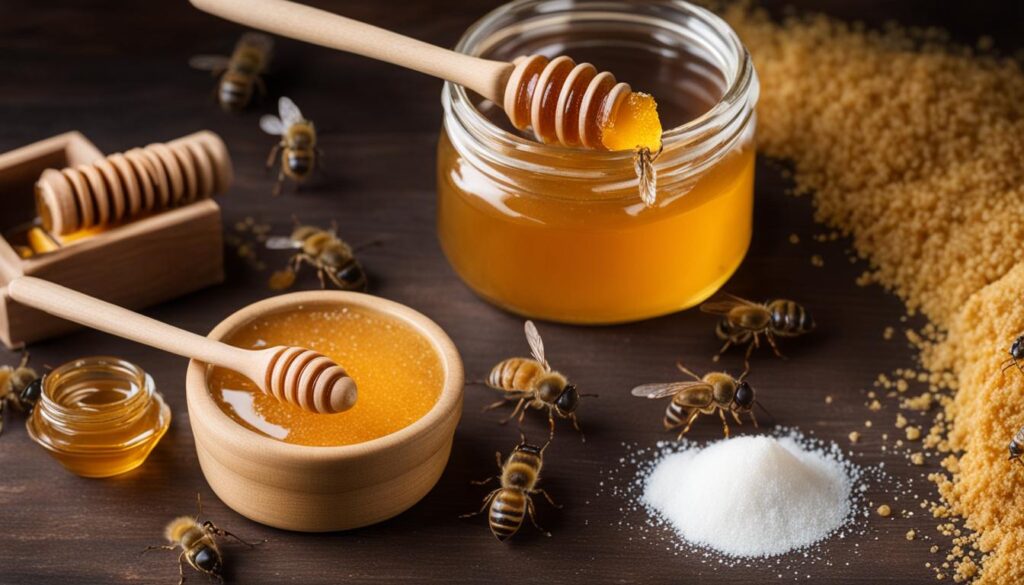
When it comes to sweeteners, honey stands apart from both table sugar and artificial sweeteners in terms of composition and nutritional content. Unlike plain table sugar, which consists solely of sucrose, honey contains natural sugars along with trace elements, enzymes, vitamins, and minerals that offer additional health benefits.
Honey’s natural sugars, including glucose and fructose, provide a slower release of energy compared to the rapid spike and subsequent crash associated with table sugar consumption. This lower glycemic load makes honey a preferred sweetener, particularly for those conscious of their overall health and wellness.
“Honey provides the sweetness you crave with added nutritional value,” says Dr. Jane Anderson, a nutrition expert. “Its rich composition makes it a more wholesome choice than refined sugar.”
Artificial sweeteners, on the other hand, provide negligible nutritional value. These synthetic additives are created to mimic the taste of sugar without contributing any meaningful nutrients to the diet. While they can be calorie-free or low in calories, artificial sweeteners don’t offer the same health benefits as honey due to their lack of natural compounds.
Differences in Nutritional Content
When comparing honey to table sugar, the nutritional differences become apparent. Honey contains a variety of vitamins, including small amounts of vitamin C, vitamin B6, niacin, and riboflavin. These vitamins contribute to overall health and support various bodily functions.
In terms of minerals, honey offers a trace amount of calcium, iron, zinc, potassium, phosphorus, and magnesium. These minerals play essential roles in maintaining overall health and well-being.
“Honey’s nutritional profile sets it apart from other sweeteners and makes it a valuable addition to a balanced diet,”
says registered dietitian Laura Thompson.
Honey is also rich in antioxidants, such as flavonoids and phenolic acids. These compounds combat oxidative stress in the body and reduce the risk of chronic diseases like heart disease and type 2 diabetes. In contrast, refined table sugar lacks these beneficial antioxidants.
Incorporating honey into your diet can provide not only a sweet taste but also a range of essential nutrients that support your overall health and well-being.
Honey in Special Diets: Considerations and Applications
When it comes to special diets, incorporating honey requires careful consideration of its nutritional profile and how it aligns with dietary goals. While honey is not suitable for strict vegan diets due to its animal origin, it can be included in less restrictive vegetarian diets as a natural sweetener. Additionally, honey can play a role in weight management strategies when used judiciously. Its rich flavor adds depth to a variety of dishes, making it an indispensable ingredient in the kitchen.
For those following plant-based diets, exploring alternative sweeteners like agave nectar or maple syrup is recommended. However, if honey is preferred, ensuring it is ethically sourced and produced is essential. Look for honey that is certified organic or from local beekeepers who prioritize sustainable beekeeping practices.
When incorporating honey into weight management plans, moderation is key. While honey does contain calories from its natural sugars, its lower glycemic index compared to refined sugar can be a beneficial factor when managing blood sugar levels and cravings. Considering portion sizes and overall calorie intake is crucial for achieving weight management goals.
Risks and Considerations: Who Should Be Cautious?
While honey is generally safe for consumption, it is important to be aware of potential risks and take necessary precautions. Here are some key considerations:
- Allergenic reactions: Some individuals may experience allergenic reactions to honey, particularly those with known allergies to pollen or bee-related allergens. If you have a history of allergies, it is advisable to exercise caution when consuming honey and seek medical advice if necessary.
- Honey and infants: It is crucial to note that honey should not be given to infants under one year of age. This is because honey carries a risk of infant botulism, a rare but potentially serious condition caused by a bacteria called Clostridium botulinum that can be present in honey.
- Precautions: When consuming honey, it is important to consider the source and quality of the honey. Opt for reputable brands and ensure that the honey has been properly processed and stored. If you have any doubts about the quality or safety of the honey, it is best to consult a healthcare professional.
- Storage of honey: To maintain the quality and extend the shelf life of honey, it should be stored properly. Keep honey in a cool, dry place away from direct sunlight and heat sources. Avoid exposing honey to moisture or storing it in the refrigerator, as this can promote crystallization and affect its texture.
By being aware of these considerations and taking necessary precautions, you can safely enjoy the many benefits that honey has to offer.
Conclusion: The Sweet Perks of Honey
Honey is not just a delicious natural sweetener; it also offers a wealth of benefits for your health and wellness. Its nutrient-rich composition, including vitamins and minerals, makes it a valuable addition to a healthy diet. Moreover, honey’s antioxidant properties contribute to its health-promoting effects, helping to combat oxidative stress and reduce the risk of chronic diseases such as heart disease and type 2 diabetes.
Aside from its nutritional value, honey also has therapeutic uses. It has been used for centuries in wound healing, thanks to its antibacterial and anti-inflammatory properties. Additionally, research suggests that honey can provide relief from cough symptoms and improve sleep quality. However, it’s important to note that honey should not be given to infants under one year old due to the risk of botulism.
By incorporating honey into your lifestyle, you can enjoy its sweet perks and support your overall health and well-being. However, moderation is key, as honey still contains sugar and should be consumed in balance with a varied and nutritious diet. Whether you’re looking for a natural sweetener or seeking to harness the therapeutic benefits of this golden liquid, honey is a versatile and beneficial addition to any health-conscious individual’s routine.
FAQ
What are the potential health benefits of honey?
Honey has antioxidant properties, can help manage blood sugar levels, promote heart health, aid in wound healing, alleviate cough symptoms, and provide essential nutrients.
Can honey be beneficial for individuals with diabetes?
While honey still contains sugar and should be consumed in moderation, it may offer slight advantages due to its antioxidant content. Honey has shown promise in improving fasting blood sugar levels in individuals with type 2 diabetes.
How does honey contribute to heart health?
Honey can lower blood pressure, improve blood fat levels, regulate heartbeat, and protect healthy cells. It is associated with a reduced risk of high blood pressure and contains propolis, a resin with potential benefits for cholesterol and triglyceride levels.
Can honey be used for wound healing?
Yes, honey possesses antibacterial and anti-inflammatory properties that contribute to its effectiveness in healing wounds, particularly partial-thickness burns and infected surgical wounds.
Is honey a natural remedy for cough relief?
Studies suggest that honey may be more effective than antihistamines in alleviating cough symptoms in children with upper respiratory infections. It may also help reduce cough duration. However, honey should not be given to infants under one year of age.
What nutrients does honey contain?
Honey contains trace amounts of vitamins and minerals and is packed with antioxidants like flavonoids and phenolic acids. These antioxidants help combat oxidative stress and reduce the risk of chronic diseases.
What are the general health benefits of honey?
Honey offers a range of benefits, including antioxidant properties, wound healing effects, support for digestive health, and a healthier sweetening option for diabetic patients.
What makes each type of honey unique?
Different types of honey have distinct flavors and colors influenced by the nectar source. Manuka honey, for example, stands out for its strong antibacterial properties and is graded by a unique Manuka factor (UMF) rating.
How does honey compare to other sweeteners?
Honey contains natural sugars and brings in trace elements, enzymes, vitamins, and minerals that table sugar lacks. Artificial sweeteners provide negligible nutritional value, making honey a choice sweetener for those who prefer natural products with additional health benefits.
Can honey be incorporated into special diets?
While honey is not suitable for strict vegan diets due to its animal origin, it can be included in less restrictive vegetarian diets as a natural sweetener. Honey can also be a part of weight management strategies when used judiciously and adds flavor and moisture to various dishes.
Are there any risks or considerations when consuming honey?
Some individuals may experience allergenic reactions to honey, especially those with known allergies to pollen or bee-related allergens. Honey should not be given to infants under one year of age due to the risk of infant botulism. Proper storage of honey is also important to maintain its quality and extend its shelf life.
What are the main takeaways regarding the benefits of honey?
Honey is a remarkable natural product that offers a plethora of health benefits due to its nutrient-rich composition, antioxidant properties, and therapeutic uses. By incorporating honey into your lifestyle in moderation, you can enjoy its sweet perks and support your overall health and well-being.


