
Welcome to my article on the amazing benefits of shea butter for your skin and hair. Shea butter is a natural skincare ingredient that offers a plethora of benefits, ranging from moisturizing and hydrating to soothing and healing. Additionally, shea butter is a versatile product that can be used in various forms, such as moisturizers, creams, and hair treatments. Let’s explore the many properties and uses of shea butter and discover why it is a must-have for your personal care routine.
Shea butter is derived from the nuts of the shea tree, which is native to Africa. It is known for its high concentration of fatty acids, antioxidants, and vitamins that nourish and protect the skin and hair. These nutrients provide a range of benefits, including improving skin tone, softening and plumping the skin, reducing inflammation, and adding moisture and shine to the hair.
Key Takeaways:
- Shea butter is a natural skincare ingredient with numerous benefits for both skin and hair.
- It is rich in fatty acids, antioxidants, and vitamins that nourish and protect the skin.
- Shea butter can improve skin tone, soften and plump the skin, and reduce inflammation.
- For the hair, it adds moisture, shine, and controls frizz.
- Choose products with unrefined or raw shea butter for maximum benefits.
Benefits of Shea Butter for Skin
Shea butter is a natural moisturizer that provides numerous benefits for the skin. Its emollient properties help to hydrate the skin and lock in moisture, making it an excellent choice for dry and dehydrated skin.
One of the advantages of using shea butter is its versatility in skincare. It can be used as a moisturizer for the body and face, allowing for all-over hydration. Additionally, shea butter can function as an anti-aging and anti-wrinkle cream, helping to improve the appearance of fine lines and wrinkles. It also serves as an effective aftersun product, soothing and nourishing sun-damaged skin.
What sets shea butter apart is its rich composition of antioxidants and vitamins. These nutrients work together to improve skin tone and texture and slow down the breakdown of collagen, which is responsible for maintaining the skin’s elasticity.
Shea butter is a powerhouse of hydration, providing the skin with the necessary nutrients to keep it soft, supple, and healthy.
Aside from its moisturizing properties, shea butter has notable anti-inflammatory benefits. It can calm and heal dry and irritated skin, making it suitable for conditions such as eczema and psoriasis.
To fully enjoy the benefits of shea butter, it is advisable to choose products made with organic shea butter or unrefined shea butter. These formulations retain the highest levels of vitamins and antioxidants, ensuring maximum effectiveness.
Overall, shea butter is a natural and nourishing ingredient that promotes healthy and radiant skin.
Benefits of Shea Butter for Skin:
- Intensely moisturizes and locks in moisture
- Suitable for body and facial moisturization
- Functions as an anti-aging and anti-wrinkle cream
- Provides aftersun soothing and nourishment
- Improves skin tone and texture
- Slows down collagen breakdown
- Calms and heals dry and irritated skin
Benefits of Shea Butter for Hair
Shea butter is a versatile ingredient that offers numerous benefits for hair health. Whether you have curly, straight, thick, or fine hair, shea butter can help nourish, moisturize, and style your locks. Here are some key advantages of using shea butter for your hair:
1. Moisture and Shine
Shea butter is a natural moisturizer that provides intense hydration to dry and damaged hair. Its rich fatty acids and emollient properties help to seal in moisture, leaving your hair soft, supple, and shiny.
2. Anti-Frizz Properties
Frizz can be a common concern for many people, especially those with curly or wavy hair. Shea butter acts as an effective anti-frizz agent, taming unruly hair and keeping it smooth and manageable.
3. Scalp Health
Shea butter can help soothe and nourish the scalp, reducing dryness, flaking, and redness. It has anti-inflammatory properties that can alleviate scalp irritation and promote a healthier environment for hair growth.
4. Leave-In Conditioner
For those with inflamed scalps or damaged hair, shea butter can be used as a leave-in conditioner. Simply apply a small amount of melted shea butter to your scalp and hair, focusing on the ends. This deep conditioning treatment can repair split ends, strengthen the hair shaft, and make your hair more resistant to breakage.
5. Lightweight and Non-Greasy
Despite its rich and creamy texture, shea butter is surprisingly lightweight and non-greasy when applied to the hair. It won’t weigh your hair down or make it feel heavy, allowing for natural movement and bounce.
6. Night Treatment
If you have fine hair that tends to get weighed down easily, you can use shea butter as a deep treatment by applying it at night and rinsing it out in the morning. This way, you can still benefit from its moisturizing and nourishing properties without compromising the volume and texture of your hair.
7. Quote:
“Shea butter is a game-changer for my hair. It adds moisture, shine, and strength, making my curls more defined and manageable.” – Emily, shea butter enthusiast.
8. Recommended Products
| Product | Description |
|---|---|
| Shea Moisture Raw Shea Butter Deep Treatment Masque | A nourishing hair mask enriched with raw shea butter to deeply moisturize and repair damaged hair. |
| Cantu Shea Butter Leave-In Conditioning Repair Cream | A lightweight leave-in conditioner that hydrates and detangles hair while adding shine and manageability. |
| Carol’s Daughter Black Vanilla Moisture & Shine Hair Smoothie | A creamy hair smoothie infused with shea butter and other natural ingredients to quench dry, dull hair and enhance shine. |
With its incredible moisturizing, styling, and scalp-nourishing properties, shea butter has become a go-to ingredient in many hair care products. Whether you’re looking to moisturize, style, or repair your hair, incorporating shea butter into your hair care routine can lead to healthier, more beautiful locks.

How to Use Shea Butter for Skin
Shea butter is a versatile skincare ingredient that can be used directly on the skin or incorporated into skincare products. Here are some tips on how to effectively use shea butter for your skin:
1. Apply after bathing
For maximum hydration, apply shea butter-containing products to your skin immediately after bathing when your skin is still damp. This helps to seal in moisture and keep your skin feeling soft and supple.
2. Deep hydration for dry skin
If you have dry skin, you can apply shea butter at night as a deep hydration treatment. Simply massage a small amount of shea butter onto your face and body before going to bed. The rich emollient properties of shea butter will help to nourish and moisturize your skin while you sleep.
3. Choose products with unrefined shea butter
When selecting shea butter products, opt for those that contain unrefined or raw shea butter. Unrefined shea butter retains more of its natural vitamins and antioxidants, ensuring that your skin gets the maximum benefits.
4. Popular shea butter products
There are many high-quality shea butter products available in the market. Here are a few popular options:
| Product | Description |
|---|---|
| Kiehl’s Midnight Recovery Omega-Rich Botanical Night Cream | A luxurious night cream infused with shea butter to deeply nourish and hydrate the skin while you sleep. |
| Burt’s Bees Ultimate Care Shea Butter Hand Cream | A rich hand cream formulated with shea butter, botanical oils, and other natural ingredients to moisturize and soften dry hands. |
Using shea butter for your skin can help keep it moisturized, nourished, and healthy. Whether you choose to use it directly or in products, the natural properties of shea butter provide numerous benefits for your skin’s overall well-being.
How to Use Shea Butter for Hair
Shea butter offers a variety of uses for hair care. Whether you have inflamed scalp or damaged hair, shea butter can serve as a versatile solution. Here are a few ways to incorporate shea butter into your hair care routine:
- Leave-in conditioner: Melt raw shea butter and gently massage it into your scalp and hair. Leave it in overnight and rinse it out in the morning. This will help to moisturize and nourish your hair, leaving it soft and manageable.
- Deep treatment: Apply shea butter throughout your hair, from roots to ends. Cover your head with a shower cap and apply heat using a hair dryer or a warm towel. Leave it on for 15-20 minutes to allow the shea butter to deeply penetrate your hair. Rinse thoroughly to reveal revitalized and replenished locks.
- Curl styler: For those with curly hair, shea butter can be used to style and define your curls. Simply take a small amount of shea butter and apply it to your hair, focusing on the ends and areas prone to frizz. This will help to tame and manage your curls, giving them a natural shine.
By incorporating shea butter into your hair care routine, you can benefit from its moisturizing properties, which help to restore and maintain the health of your hair.
| Benefits of Using Shea Butter for Hair | How to Use Shea Butter |
|---|---|
| Moisturizes hair and scalp | Apply as a leave-in conditioner or deep treatment |
| Reduces frizz and adds shine | Use a small amount to style curls |
| Controls flaking and reduces dryness | Massage into scalp and hair |
When using shea butter on your hair, it’s important to choose high-quality shea butter products that are free from additives or chemicals. Look for shea butter-based hair products that are specifically formulated for your hair type and concerns.
Shea Butter for Different Hair Types
Shea butter is a versatile ingredient that can provide benefits for various hair types. However, it’s crucial to select products that cater to specific hair textures. Knowing how to choose the right shea butter product based on hair type allows for optimal hydration and control without weighing down the hair.
For individuals with coarse, thick hair, products with a higher concentration of shea butter in the ingredient list are ideal. These formulations provide intense hydration and help manage frizz and unruly strands effectively. Look for products that emphasize shea butter as a primary ingredient to maximize the moisturizing benefits.
On the other hand, for individuals with finer hair, it is recommended to select products with shea butter lower on the ingredient list. This prevents the hair from becoming weighed down or greasy. It’s essential to strike a balance between moisturizing the hair and maintaining volume and body.
When considering shea butter products for different hair types, it’s also worth examining other oils present in the formulation. Castor oil, for example, can provide additional benefits such as promoting hair growth and improving scalp health. By selecting products that combine beneficial oils with shea butter, individuals can customize their hair care routine to best suit their specific needs.
By understanding how shea butter interacts with different hair types, individuals can make informed decisions about the products they choose. Whether it’s thick and coarse or fine and delicate hair, shea butter can be a valuable ingredient in maintaining healthy, hydrated locks.
Precautions and Allergies
Shea butter is generally safe to use; however, it is important to be aware of a few precautions and potential allergies when incorporating it into your skincare and haircare routine.
Tree Nut Allergies and Patch Test
Individuals with tree nut allergies should exercise caution when using shea butter. Although rare, some people with tree nut allergies may have an allergic reaction to shea butter, as it is derived from nuts. To ensure safety, it is recommended to perform a patch test before using shea butter. Apply a small amount of shea butter on a small area of your skin and wait for 24 hours to observe any adverse reactions. If you experience any redness, itching, or irritation, discontinue use immediately and consult a healthcare professional.
Acne-Prone Skin and Clogged Pores
While shea butter offers many benefits for the skin, it is important to note that it may not be suitable for acne-prone skin. Shea butter is a rich and thick moisturizer, which can potentially clog pores and lead to breakouts in individuals with acne-prone skin. If you have acne-prone skin, it is advisable to choose non-comedogenic or oil-free skincare products that do not contain shea butter or to seek guidance from a dermatologist.

| Allergy Precautions | Acne-Prone Skin |
|---|---|
| Perform a patch test if you have tree nut allergies | Use with caution, as it may clog pores |
| Discontinue use if allergic reactions occur | Choose non-comedogenic or oil-free skincare products |
| Consult a dermatologist for guidance |
“While shea butter is generally safe to use, individuals with tree nut allergies should perform a patch test before using shea butter. Additionally, shea butter should be used with caution on acne-prone skin to avoid clogging pores.”
Types of Shea Butter
There are two main types of shea butter – West African and East African.
East African shea butter is more yellow in color, has a lower melting point, and contains a higher concentration of leic acid. It has a soft and creamy texture, making it suitable for sensitive, aging, and dry skin.
On the other hand, West African shea butter has a higher concentration of vitamin A, a higher melting point, and a denser consistency. It is more suitable for scars, blemishes, wrinkles, and stretch marks.
It is important to choose unrefined shea butter, as it maintains the highest amount of bioactive nutrients.
Shea Butter Products for Skin and Hair
When it comes to harnessing the power of shea butter for your skin and hair, there is a wide range of high-quality products available. Whether you’re looking for a moisturizer, cream, or specific treatments, these shea butter-infused products offer numerous benefits. Here are some recommended options for both skin and hair:
Shea Butter Moisturizers for Skin
“Embryolisse Lait Creme Sensitive is a gentle and nourishing moisturizer that contains shea butter to hydrate and protect sensitive skin. First Aid Beauty Ultra Repair Cream is a cult-favorite moisturizer that combines shea butter with other soothing ingredients to calm and hydrate dry, irritated skin. For post-procedure recovery, Alastin Soothe + Protect Recovery Balm is formulated with shea butter and other key ingredients to promote healing and provide intense moisturization.”
Shea Butter Products for Hair Care
“Shea Moisture offers a wide range of hair care products infused with shea butter, including leave-in conditioners and deep treatments. These products provide weightless moisture, shine, and frizz control for all hair types. Another option is Shaeri Organic Prickly Pear Seed Oil Shampoo, which combines shea butter with nourishing oils for added hydration and rejuvenation. Love Beauty and Planet’s Shea Butter & Sandalwood range is also worth considering, as it offers a selection of shea butter-infused products formulated to nourish and revitalize the hair.”
With these recommended shea butter products, you can effectively enhance your skincare and hair care routines. Remember to always choose products that contain high-quality, unrefined shea butter for maximum benefits.
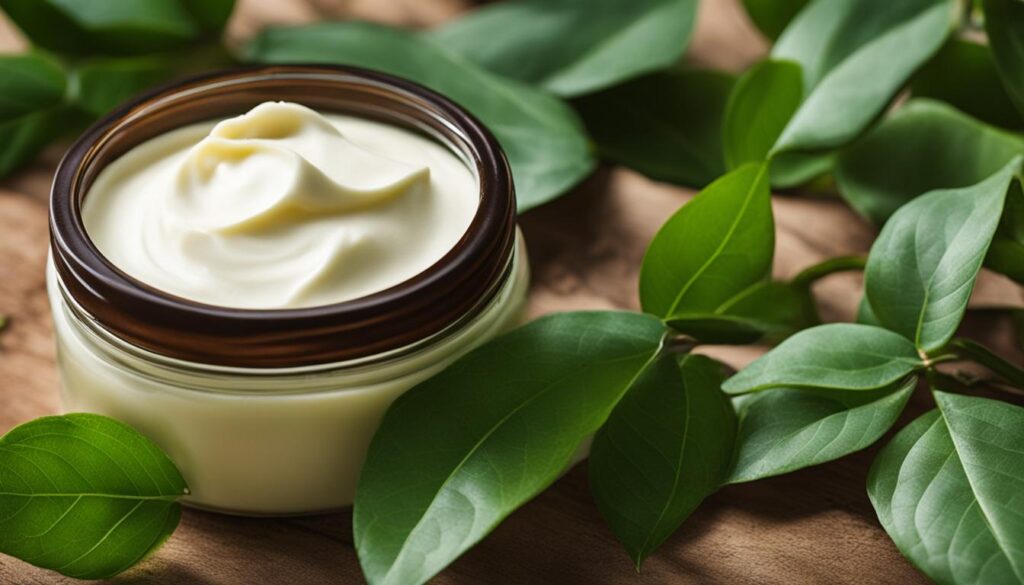
Shea Butter Products for Skin and Hair
| Product | Type | Benefit |
|---|---|---|
| Embryolisse Lait Creme Sensitive | Moisturizer | Hydrates and protects sensitive skin |
| First Aid Beauty Ultra Repair Cream | Moisturizer | Calm and hydrate dry, irritated skin |
| Alastin Soothe + Protect Recovery Balm | Moisturizer | Promotes healing and intense moisturization for post-procedure recovery |
| Shea Moisture | Hair care | Offers a range of shea butter-infused products for leave-in conditioning and deep treatments |
| Shaeri Organic Prickly Pear Seed Oil Shampoo | Hair care | Combines shea butter with nourishing oils for added hydration and rejuvenation |
| Love Beauty and Planet Shea Butter & Sandalwood | Hair care | Nourishes and revitalizes the hair with shea butter-infused products |
Conclusion
In conclusion, shea butter is a healthy and versatile ingredient that offers numerous benefits for both skin and hair. Its natural moisturizing properties make it an excellent choice for hydrating and locking in moisture. Packed with fatty acids, antioxidants, and vitamins, shea butter helps improve skin tone, soften and plump the skin, and slow down collagen breakdown. Additionally, it has anti-inflammatory properties that can soothe and heal dry and irritated skin.
When it comes to hair care, shea butter adds moisture, shine, and anti-frizz properties. It also controls scalp flaking and reduces dryness and redness. However, it’s important to note that individuals with oily skin should avoid using shea butter, and those with tree nut allergies should perform a patch test before use.
To fully experience the benefits of shea butter, it is recommended to choose high-quality, unrefined shea butter products. Whether you are looking for a moisturizer, anti-aging cream, or aftersun product for your skin, or a leave-in conditioner or deep treatment for your hair, there are various shea butter products available in the market to suit your needs.
Embrace the power of shea butter and discover the natural skincare and haircare benefits it has to offer. Incorporating shea butter into your beauty routine can enhance the health and appearance of your skin and hair, leaving them nourished, moisturized, and radiant.
FAQ
Is shea butter healthy for the skin and hair?
Yes, shea butter is healthy for both the skin and hair. It provides numerous benefits, such as hydration, moisture retention, improvement in skin tone, softening and plumping of the skin, reduction in collagen breakdown, and soothing and healing of dry and irritated skin. For hair, shea butter adds moisture, shine, and anti-frizz properties while controlling scalp flaking and reducing dryness and redness.
What are the benefits of shea butter for the skin?
Shea butter is beneficial for the skin as it helps to moisturize and lock in moisture. It is often used as a moisturizer for the body and face, an anti-aging and anti-wrinkle cream, and an aftersun product. The emollient properties of shea butter make it effective in softening and nourishing the skin. It contains antioxidants and vitamins that can improve skin tone and slow down collagen breakdown. Shea butter also has anti-inflammatory benefits and can be calming and healing for dry and irritated skin.
What are the benefits of shea butter for the hair?
Shea butter provides numerous benefits for hair health. It adds moisture, shine, and anti-frizz properties, making it effective as a styler for all hair types. Shea butter can also help control scalp flaking and reduce overall dryness and redness. It is a lightweight product that won’t clog pores and can be used as a leave-in conditioner for inflamed scalps or damaged hair. Shea butter can repair split ends and make hair more resistant to breakage.
How can shea butter be used for the skin?
Shea butter can be applied directly to the skin or used in skincare products. It is recommended to apply shea butter-containing products after bathing, when the skin is still damp, to lock in moisture. For deep hydration, shea butter can be applied at night to dry skin. It is important to choose products with unrefined or raw shea butter for high vitamin and antioxidant content.
How can shea butter be used for the hair?
Shea butter can be used on the hair in various ways. It can be applied as a leave-in conditioner for inflamed scalps or damaged hair. Simply melt raw shea butter and massage it into the scalp and hair, leaving it in overnight before rinsing in the morning. For a deep treatment, apply shea butter to the hair, cover with a shower cap, and apply heat for 15-20 minutes before rinsing. Shea butter can also be used to style curls and tame frizz by applying a small amount to the hair.
How should shea butter be used for different hair types?
Shea butter can be beneficial for different hair types. For coarse, thick hair, products with shea butter higher on the ingredient list provide the most hydration and control. For finer hair, products with shea butter lower on the ingredient list are recommended to avoid weighing down the hair. It is important to consider other oils in the product and choose products that best suit individual hair needs.
Are there any precautions or allergies to consider when using shea butter?
Individuals with tree nut allergies should perform a patch test before using shea butter, as it is derived from nuts. Although rare, some people with tree nut allergies may have an allergic reaction to shea butter. Shea butter should also be used with caution on acne-prone skin, as it may clog pores.
What are the different types of shea butter?
There are two main types of shea butter – West African and East African. East African shea butter is more yellow in color, has a lower melting point, and contains a higher concentration of leic acid. It has a soft and creamy texture, making it suitable for sensitive, aging, and dry skin. On the other hand, West African shea butter has a higher concentration of vitamin A, a higher melting point, and a denser consistency. It is more suitable for scars, blemishes, wrinkles, and stretch marks. Choosing unrefined shea butter ensures the highest amount of bioactive nutrients.
What are some shea butter products available for skin and hair?
There are numerous shea butter products available for both skin and hair. Some recommended skin moisturizers include Embryolisse Lait Creme Sensitive, First Aid Beauty Ultra Repair Cream, and Alastin Soothe + Protect Recovery Balm. For hair care, Shea Moisture offers a range of products such as leave-in conditioners and deep treatments. Other options for hair care include Shaeri Organic Prickly Pear Seed Oil Shampoo and Love Beauty and Planet Shea Butter & Sandalwood range. It is important to choose products with high-quality, unrefined shea butter for maximum benefits.


