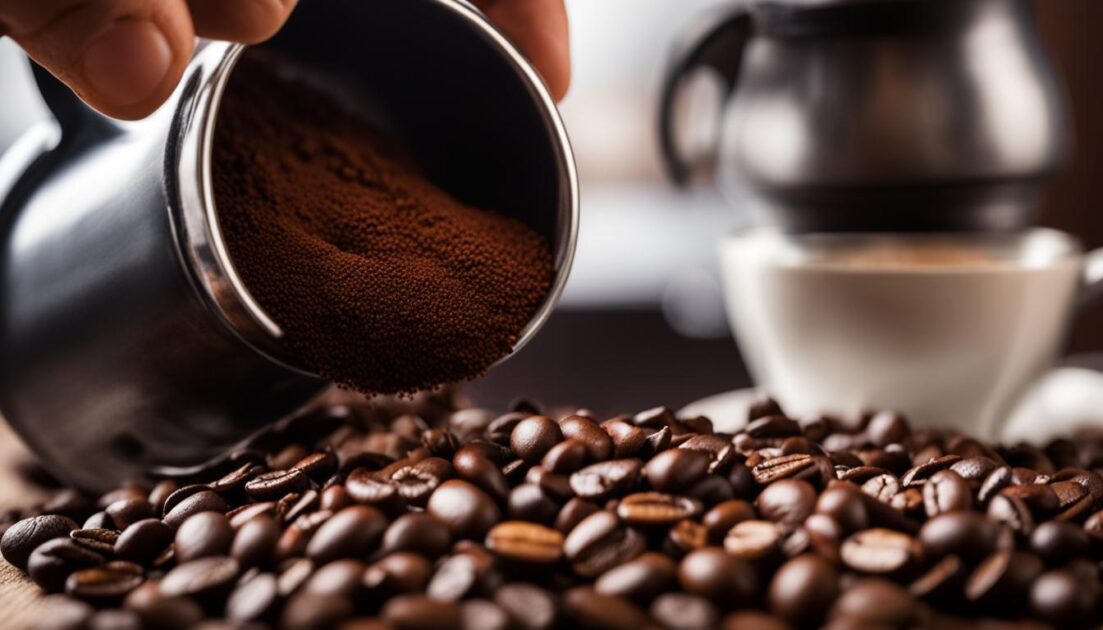
To brew the perfect cup of coffee at home, you have several methods to choose from. Whether you prefer a drip coffee maker, French press, pour-over, Aeropress, espresso machine, Moka pot, or cold brew, there is a technique that will suit your taste preferences. Each method has its own advantages and can be adjusted to achieve the desired flavor profile. With the right equipment, quality beans, and attention to detail, you can elevate your home brewing experience to barista-level perfection.
Key Takeaways:
- There are various methods to brew coffee at home, including drip coffee makers, French presses, pour-overs, Aeropresses, espresso machines, Moka pots, and cold brew.
- Each brewing method has its advantages and can be adjusted to achieve the desired flavor profile.
- Invest in quality equipment, use freshly roasted beans, and pay attention to details like the coffee-to-water ratio, water temperature, and grind size.
- Experiment with different brewing methods to find your preferred technique.
- By mastering the art of brewing coffee at home, you can enjoy barista-level coffee without leaving your kitchen.
Using a Drip Coffee Maker
If you want a convenient and foolproof method of making coffee, using a drip coffee maker is a great option. Start by using freshly roasted beans and filtered water for the best flavor.
Pro Tip: Choosing high-quality beans is essential to achieve a rich and delicious cup of coffee.
When brewing with a drip coffee maker, it’s important to pay attention to the coffee-to-water ratio, water temperature, and coffee grind size. These factors greatly impact the taste and quality of your brew.
Coffee-to-Water Ratio
The coffee-to-water ratio refers to the amount of coffee grounds relative to the water used for brewing. A general guideline is to use a ratio of 1-to-16, or 16 grams of water for every gram of coffee.
Pro Tip: Adjust the ratio according to your preference. If you prefer a stronger brew, increase the amount of coffee grounds; for a milder flavor, decrease the amount.
Water Temperature
The water temperature plays a crucial role in extracting the flavors from the coffee grounds. Aim for a water temperature between 195 to 205 degrees Fahrenheit for optimal extraction.
Pro Tip: Using water that is too hot can result in over-extraction, leading to a bitter taste. Conversely, using water that is too cold may result in under-extraction, resulting in a weak and lackluster cup of coffee.
Coffee Grind Size
The grind size of your coffee beans also affects the brewing process. For a drip coffee maker, a medium-coarse grind is recommended. This allows for a balanced extraction and prevents the filter from clogging.
Pro Tip: If your coffee tastes weak, try adjusting the grind size. Finer grounds will result in a stronger flavor, while coarser grounds will produce a milder taste.
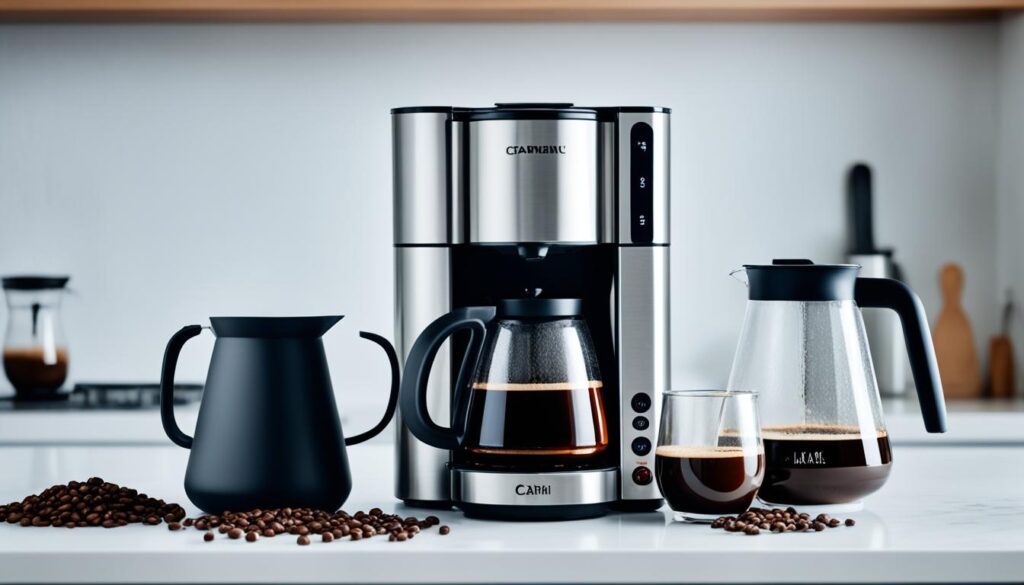
With these important factors in mind, using a drip coffee maker can help you achieve a consistently delicious cup of coffee right in the comfort of your home.
Brewing with a French Press
The French press method is perfect for those who enjoy rich, full-bodied coffee. With the right technique and attention to detail, you can brew a perfect cup of coffee right at home. Here’s how:
- Add Coarsely Ground Coffee: Start by adding coarsely ground coffee to the French press carafe. The coarser grind allows for better extraction and prevents over-extraction.
- Pour Hot Water: Next, pour hot water over the coffee grounds. Aim for a water temperature of around 194°F to ensure optimal flavor extraction.
- Let It Steep: Allow the coffee to steep for about four minutes. This allows the flavors to develop and create a rich, full-bodied cup of coffee.
- Press the Plunger: After steeping, slowly press down the plunger to separate the coffee grounds from the brewed coffee. This ensures a clean and sediment-free cup.
To enhance the flavor and clarity of the coffee, you can strain it through a fine-mesh filter or the French press plunger. This helps remove any remaining grounds and produces a smoother cup.
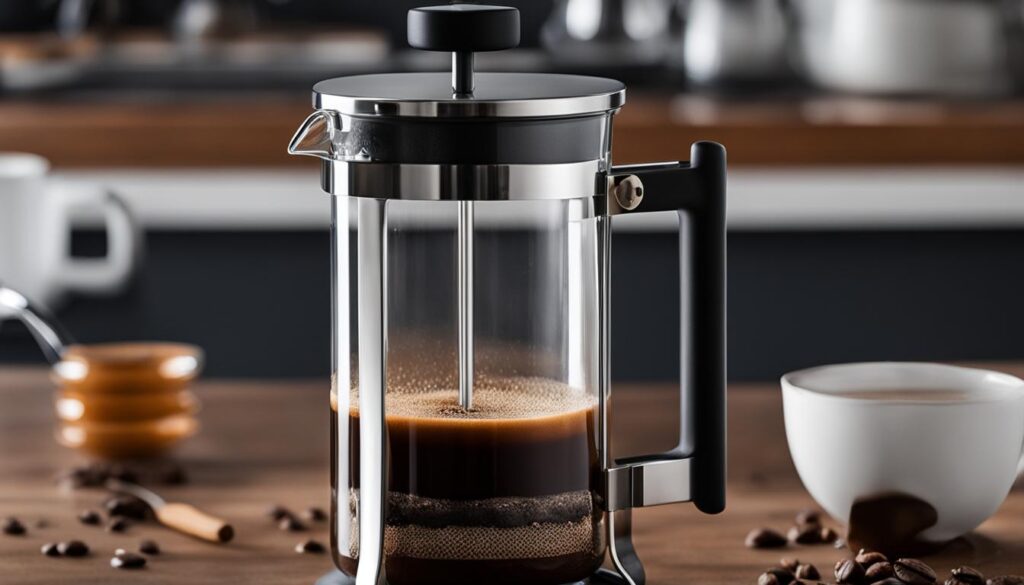
The French press method allows you to have full control over the brewing process, from the coffee grind size to the water temperature. Experimentation is key to finding the perfect combination that suits your taste preferences. With a French press, you can enjoy a delicious and robust cup of coffee from the comfort of your own home.
Mastering the Pour-Over Method
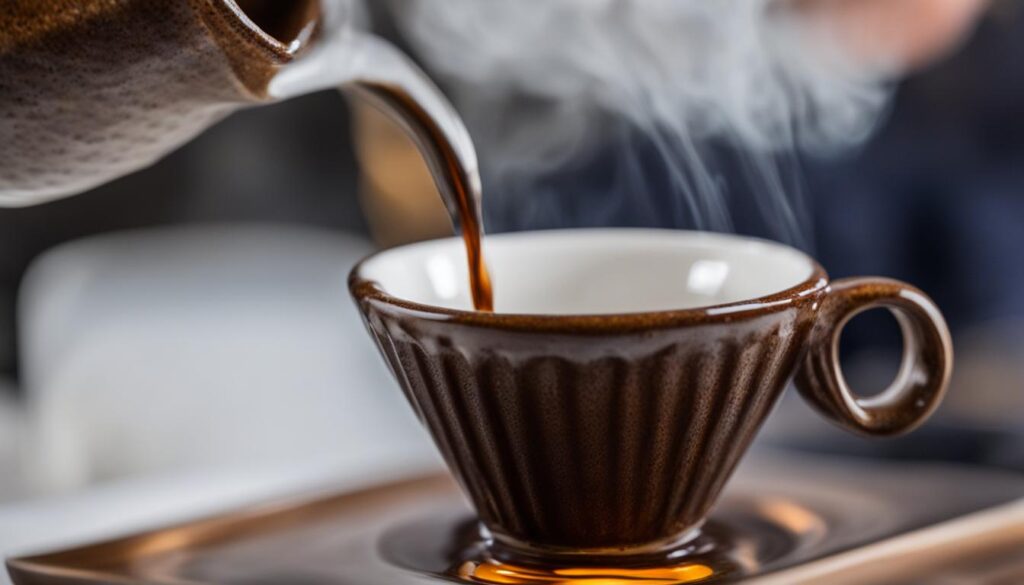
For a delicate and lighter-bodied coffee with complete control over the flavor, the pour-over method is a favorite among baristas. Place a filter cone over a coffee cup or carafe, add ground coffee, and slowly pour hot water over it in a circular motion. The key lies in finding the right grind size, water temperature, and coffee-to-water ratio. Use a burr grinder for better precision and aim for a brew time between two and a half to four minutes. Practice and patience are crucial for a perfect pour-over cup of coffee.
| Factors | Recommendation |
|---|---|
| Coffee-to-Water Ratio | 1:16 (1 gram of coffee per 16 grams of water) |
| Water Temperature | Between 195 and 205 degrees Fahrenheit |
| Coffee Grind Size | Medium-fine |
| Brew Time | 2.5 to 4 minutes |
Exploring Other Brewing Methods
When it comes to brewing the perfect cup of coffee at home, there are more options than just the traditional drip coffee maker and French press. If you’re looking to explore alternative brewing methods, consider giving the Aeropress, Espresso Machine, Moka Pot, or Cold Brew a try.
The Aeropress is a compact and simple device that allows you to brew a smooth and flavorful cup of coffee. Its unique design allows for full immersion and pressure extraction, resulting in a low-acidity brew.
If you prefer strong and concentrated coffee or love espresso-based drinks, an espresso machine is a must-have. With its ability to extract rich flavors and deliver the perfect crema, you can enjoy coffee shop-quality beverages in the comfort of your home.
For those who crave a rich and full-bodied coffee without the need for an espresso machine, the Moka Pot is an excellent choice. This stovetop brewer produces a strong and concentrated coffee that is reminiscent of espresso.
If you’re looking for a refreshing and smooth coffee experience, Cold Brew is the way to go. This slow extraction method involves steeping coffee grounds in cold water for an extended period, resulting in a smooth and full-bodied coffee concentrate that can be diluted to taste.
Each of these alternative brewing methods requires specific coffee-to-water ratios, water temperatures, and brewing times to achieve the best results. Be sure to experiment with different variables to find your preferred brewing technique. Whether you’re craving a smooth and low-acidity cup or a strong and bold espresso, these alternative brewing methods offer a range of flavors and experiences to suit every coffee lover’s preferences.
FAQ
How do I make coffee grounds at home?
To make coffee grounds at home, you will need quality coffee beans and a coffee grinder. Simply place the beans in the grinder and pulse until you achieve the desired grind size. Remember to adjust the grind size based on your brewing method—coarser for French press, medium-coarse for drip coffee makers, and finer for espresso.
What is the best coffee-to-water ratio for a drip coffee maker?
For a drip coffee maker, a common coffee-to-water ratio is 1-to-16. This means using 16 grams of water for every gram of coffee. However, you can adjust this ratio to suit your taste preferences.
What is the ideal water temperature for brewing coffee with a French press?
The ideal water temperature for brewing coffee with a French press is around 194°F. Avoid using water that is too hot, as it can lead to over-extraction and a bitter taste.
How do I master the pour-over method?
To master the pour-over method, start by using a burr grinder to achieve a consistent grind size. Use a coffee-to-water ratio of your preference, but a common starting point is 1-to-17. Aim for a water temperature between 195 to 205 degrees Fahrenheit and pour the water in a circular motion over the coffee grounds. Patience and practice will help you achieve a perfect pour-over cup.
What are some alternative brewing methods to explore?
There are several alternative brewing methods to explore, including the Aeropress, espresso machine, Moka pot, and cold brew. Each method requires specific coffee-to-water ratios, water temperatures, and brewing times. Experiment with these methods to find your preferred brewing technique.


