
Welcome to my DIY guide on how to make almond oil at home. Almond oil is a versatile and beneficial ingredient for skincare, haircare, and overall health. By making your own almond oil, you can ensure its quality and enjoy the cost-effective benefits of homemade products. In this article, I will provide you with a step-by-step process for extracting almond oil and share a homemade almond oil recipe. Let’s get started on this exciting journey of creating your own natural beauty essentials!
Key Takeaways:
- Making almond oil at home is a cost-effective and reliable alternative to store-bought options.
- To make almond oil, you will need raw almonds and a carrier oil of your choice.
- Grind the almonds into a fine powder and mix it with the carrier oil.
- Infuse the mixture for at least 48 hours and strain the oil from the powdered almonds.
- Store the homemade almond oil in a cool, dry place away from direct sunlight.
Benefits of Almond Oil for the Skin
Almond oil is a versatile ingredient that offers numerous benefits for skincare. Rich in vitamin E and oleic acids, almond oil provides moisturizing and nourishing properties, making it suitable for all skin types.
One of the key benefits of almond oil is its ability to soften dry or rough skin. With its emollient properties, almond oil deeply hydrates the skin, leaving it feeling smooth and supple. Regular use of almond oil can help alleviate dryness and prevent moisture loss.
Not only does almond oil provide hydration, but it also offers additional protection for the skin. Its natural antioxidant properties help neutralize free radicals, which can cause premature aging and damage to the skin cells. By incorporating almond oil into your skincare routine, you can support a more youthful and radiant complexion.
Almond oil can be used in various ways to enhance your skincare routine. As a daily moisturizer, simply massage a small amount of almond oil onto your face after cleansing. It absorbs quickly into the skin, leaving it feeling nourished without a greasy residue.
Additionally, almond oil can be used to create homemade facial masks and scrubs. When combined with ingredients such as honey, lemon juice, salt, or sugar, almond oil offers exfoliating and rejuvenating effects. These DIY treatments can help improve skin texture, brighten the complexion, and unclog pores.
Furthermore, almond oil makes a natural lip balm to keep your lips moisturized. Its emollient properties help lock in moisture, preventing dryness and chapping. Apply a small amount of almond oil to your lips as needed throughout the day for a hydrating and soothing effect.
Almond oil’s versatility and effectiveness have made it a popular choice in various skincare products, including cleansers, serums, and moisturizers. Its nourishing and moisturizing properties, combined with its antioxidant benefits, make almond oil a valuable addition to any skincare routine.

Key Benefits of Almond Oil for the Skin:
- Provides moisturizing and nourishing properties
- Softens dry or rough skin
- Offers additional protection against free radicals
- Absorbs quickly without a greasy residue
- Can be used to make facial masks and scrubs
- Soothes and moisturizes lips
- Popular choice in various skincare products
“Almond oil is a versatile ingredient that deeply hydrates and nourishes the skin, leaving it feeling soft, smooth, and protected.” – Skincare Expert
Benefits of Almond Oil for Haircare
Almond oil is not only beneficial for the skin but also for haircare. It can be used as a conditioner to nourish and moisturize the hair. Simply apply a small amount of almond oil to wet hair, comb it through, and leave it on for about 30 minutes before washing it out. Regular use of almond oil as a conditioner can result in healthier hair and protection against split ends. Additionally, almond oil can be used as a hair oil to keep the hair looking sleek and to protect it from damage. It is important not to use almond oil on the hair more than once every day or two to avoid excessive oiliness.

| Benefit | Description |
|---|---|
| Conditioning | Almond oil moisturizes and nourishes the hair, making it an excellent natural conditioner. |
| Healthier Hair | Regular use of almond oil as a conditioner can improve hair health, making it stronger and less prone to breakage. |
| Split End Protection | Almond oil helps protect the hair against split ends, promoting overall hair health and appearance. |
| Hair Oil | Using almond oil as a hair oil can add shine and manageability to the hair, keeping it looking sleek and healthy. |
Making Almond Oil with a Blender
Another method for making almond oil at home is using a blender. This method is suitable for those who have a blender and more time available. To make almond oil with a blender, start by placing raw almonds in the blender and blending them at low speed. Gradually increase the speed until the almonds are thoroughly crushed. Add olive oil to the crushed almonds while blending to achieve the desired consistency. Transfer the mixture to a container and let it sit for two weeks at room temperature. After the two-week period, strain the mixture using a strainer or gauzy fabric to separate the oil from the rest of the mixture. The resulting homemade almond oil is ready to use.
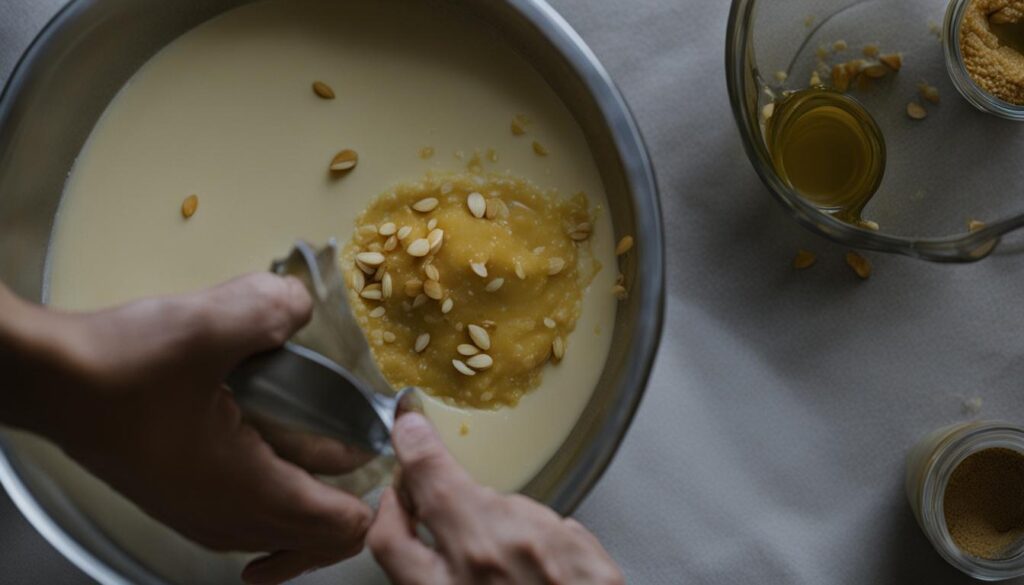
Homemade Almond Oil Recipe using a Blender
| Ingredients | Ratio |
|---|---|
| Raw almonds | 1 part |
| Olive oil (or carrier oil of choice) | 2 parts |
Note: The ratio can be adjusted depending on the desired amount of almond oil.
Instructions
- Place raw almonds in a blender and blend at low speed.
- Gradually increase the speed until the almonds are thoroughly crushed.
- Add olive oil (or carrier oil of choice) while blending to achieve the desired consistency.
- Transfer the mixture to a container and let it sit for two weeks at room temperature.
- After the two-week period, strain the mixture using a strainer or gauzy fabric to separate the oil from the rest of the mixture.
- The resulting homemade almond oil is now ready to use.
Using a blender for almond oil extraction allows for a thorough crushing of the almonds, resulting in a quality oil. The two-week infusion period ensures that the oil absorbs the almond’s beneficial properties. Straining the mixture removes any remaining almond particles, leaving behind a pure and smooth oil.
Making Almond Oil with an Oil Press
An alternative method for making almond oil at home is using an oil press. This method is faster than using a blender and does not require a waiting period. To make almond oil with an oil press, place roasted almonds in the designated funnel of the press. Turn the lever to start pressing the almonds and collect the oil in a container placed below. The resulting almond oil can be used immediately, but if you prefer a clearer oil, let it sit overnight for the particles to settle. However, keep in mind that using an oil press requires special equipment and may be more expensive.
Using an oil press to extract almond oil offers a more efficient and seamless process compared to other methods. The press allows for the quick extraction of oil from roasted almonds, resulting in high-quality almond oil with minimal effort. However, it is important to note that an oil press may not be readily available to everyone, as it requires special equipment and may be more expensive than other DIY methods.
Tips for Using an Oil Press
- Ensure the almonds are roasted before pressing to enhance the flavor and facilitate oil extraction.
- Follow the manufacturer’s instructions for operating the oil press to achieve optimal results.
- Place a container below the oil press to collect the freshly extracted almond oil.
- If you prefer a clearer oil, allow it to sit overnight, allowing any sediment to settle at the bottom.
- Store the almond oil in a clean glass jar or bottle and keep it in a cool, dry place away from direct sunlight.
While using an oil press offers a more straightforward process for making almond oil at home, it is essential to consider your resources and budget when deciding on the extraction method. Each method has its own advantages and disadvantages, so choose the one that best suits your needs and preferences. Regardless of the method chosen, the end result will be a high-quality almond oil that can be used for a variety of skincare, haircare, and culinary purposes.
Storing and Using Almond Oil
Proper storage is essential to maintain the quality of homemade almond oil. Store the oil in a cool, dry place away from direct sunlight. It is recommended to use the almond oil within six months to ensure its freshness and effectiveness.
Almond oil can be used for various skincare purposes, such as a daily moisturizer, facial mask, or facial scrub. Its moisturizing and nourishing properties make it suitable for all skin types. Simply apply a small amount of almond oil to your face and gently massage it in. For a rejuvenating facial mask, mix almond oil with honey and apply it to your face. Leave it on for 10-15 minutes before rinsing off with warm water. To exfoliate your skin, combine almond oil with sugar or salt to create a natural scrub.
When it comes to haircare, almond oil is a fantastic conditioner. Apply a few drops of almond oil to your damp hair, focusing on the ends. Leave it on for 30 minutes before shampooing as usual. Not only will almond oil moisturize and nourish your hair, but it will also help protect it from damage.
Furthermore, almond oil can be used as a key ingredient in homemade lip balm. Combine almond oil with shea butter, coconut oil, and beeswax in a double boiler. Once melted, pour the mixture into small containers and let it cool. Apply the lip balm whenever your lips feel dry or chapped for smooth and hydrated lips.
Almond Oil Skincare and Haircare Uses
| Skincare Uses | Haircare Uses |
|---|---|
| Moisturizer | Nourishing Conditioner |
| Facial Mask | Protective Hair Oil |
| Facial Scrub | – |
| Lip Balm Ingredient | – |
The versatility of almond oil makes it a valuable ingredient in natural skincare and haircare routines. With proper storage and creative applications, you can enjoy the benefits of almond oil for healthy and radiant skin and hair.
Considerations and Tips for Making Almond Oil at Home
When making almond oil at home, there are several important factors to consider to achieve optimal results. Whether you’re using the almond oil extraction process with a blender or an oil press, following these tips will ensure a successful homemade almond oil recipe.
Use Fresh and Dry Almonds
For the best outcome, it’s crucial to use fresh and dry almonds. Fresh almonds will yield a higher quality oil with enhanced flavor and nutrients. Additionally, ensure that the almonds are completely dry to prevent moisture from affecting the extraction process.
Leave the Skins On
When using almonds for oil extraction, it is recommended to leave the skins on. The almond skins contain additional nutrients and contribute to the flavor of the oil. By keeping the skins intact, you’ll maximize the nutritional benefits and enhance the overall taste of your homemade almond oil.
Blender Speed and Gradual Increase
If you’re using a blender for the almond oil extraction process, start at a low speed and gradually increase it. This technique prevents excessive build-up and ensures a smooth blending process. It’s important to achieve a fine almond powder consistency before proceeding with the rest of the extraction process.
Roasted Almonds for Oil Press
If you’re using an oil press to make almond oil, it’s recommended to use roasted almonds. Roasting the almonds enhances their flavor and facilitates the oil extraction process. The heat from roasting helps release the oils, resulting in a higher yield and richer flavor for your homemade almond oil.
Store Almond Oil in Clean Glass Jars or Bottles
After you’ve successfully extracted the almond oil, it’s crucial to store it properly to maintain its freshness and prevent contamination. Store your homemade almond oil in clean glass jars or bottles that are airtight and sealable. This ensures that the oil remains pure and uncontaminated, preserving its quality for an extended period.
Perform a Patch Test
Before using almond oil for skincare or haircare purposes, it’s essential to perform a patch test. Apply a small amount of almond oil on a small area of your skin and observe for any adverse reactions or allergies. This precautionary step ensures that the almond oil is suitable for your skin type and helps avoid any potential allergic reactions.
Embrace the Process and Experiment
Creating your own almond oil can be a rewarding and enjoyable experience. Embrace the process and don’t be afraid to experiment with different recipes and applications. You can personalize your homemade almond oil by adding essential oils or other natural ingredients to enhance its properties and fragrance. Let your creativity guide you and enjoy the satisfaction of using a product you made yourself.
Conclusion
Learning how to make almond oil at home provides a cost-effective and customizable alternative to store-bought options. By following a simple process using raw almonds and a carrier oil, you can create your own homemade almond oil.
Almond oil offers numerous benefits for the skin and hair, making it an excellent addition to your natural skincare and haircare routines. Its rich content of vitamin E and oleic acids provides moisturizing and nourishing properties, suitable for all skin types. Almond oil can soften dry or rough skin, protect the lips, and even be used in facial masks and scrubs.
When it comes to haircare, almond oil can be used as a conditioner to nourish and moisturize the hair, resulting in healthier hair and protection against split ends. It can also be used as a hair oil to keep the hair sleek and protected. Homemade almond oil can be stored in a cool, dry place and used within six months to ensure its freshness and effectiveness.
Whether you choose to make almond oil with a blender or an oil press, both methods yield high-quality results. So, take control of your beauty routine with homemade almond oil and experience its multiple benefits for your skin, hair, and overall well-being.
FAQ
How do I make almond oil at home?
To make almond oil at home, grind raw almonds into a fine powder and mix it with a carrier oil in a ratio of 1 part almond powder to 2 parts carrier oil. Let the mixture infuse for at least 48 hours, then strain the oil from the powdered almonds. Transfer the resulting almond oil to a glass jar and store it in a cool, dry place away from direct sunlight.
What are the benefits of almond oil for the skin?
Almond oil offers moisturizing and nourishing properties, making it suitable for all skin types. It can help soften dry or rough skin and provide extra protection. Almond oil can be used as a daily moisturizer, in facial masks and scrubs, and as a natural lip balm to keep lips moisturized.
How can almond oil benefit haircare?
Almond oil can be used as a conditioner to nourish and moisturize the hair. Regular use can result in healthier hair and protection against split ends. Additionally, almond oil can be used as a hair oil to keep the hair looking sleek and to protect it from damage.
How can I make almond oil using a blender?
Place raw almonds in a blender and blend them at low speed. Gradually increase the speed and add olive oil to achieve the desired consistency. Let the mixture sit for two weeks, then strain it to separate the oil from the rest of the mixture.
How can I make almond oil using an oil press?
Place roasted almonds in an oil press and turn the lever to start pressing the almonds. Collect the oil in a container placed below. Let the oil sit overnight for clearer results, then use as desired.
How should I store and use almond oil?
Store almond oil in a cool, dry place away from direct sunlight. Use within six months to ensure freshness. Almond oil can be used for various skincare and haircare purposes, such as a daily moisturizer, facial mask, hair conditioner, or natural lip balm.
What should I consider when making almond oil at home?
Use fresh and dry almonds, leave the skins on for added nutrients and flavor, start at low speed when using a blender, and use roasted almonds when using an oil press. Store the oil in clean glass jars or bottles to avoid contamination.
What are some additional tips for making almond oil at home?
Perform a patch test first to ensure you are not allergic to almond oil, and enjoy the process of making your own almond oil by experimenting with different recipes and applications.
What are the key takeaways about making almond oil at home?
Learning how to make almond oil at home provides a cost-effective and customizable alternative to store-bought options. Almond oil offers numerous benefits for the skin and hair, allowing you to take control of your beauty routine with homemade almond oil.


