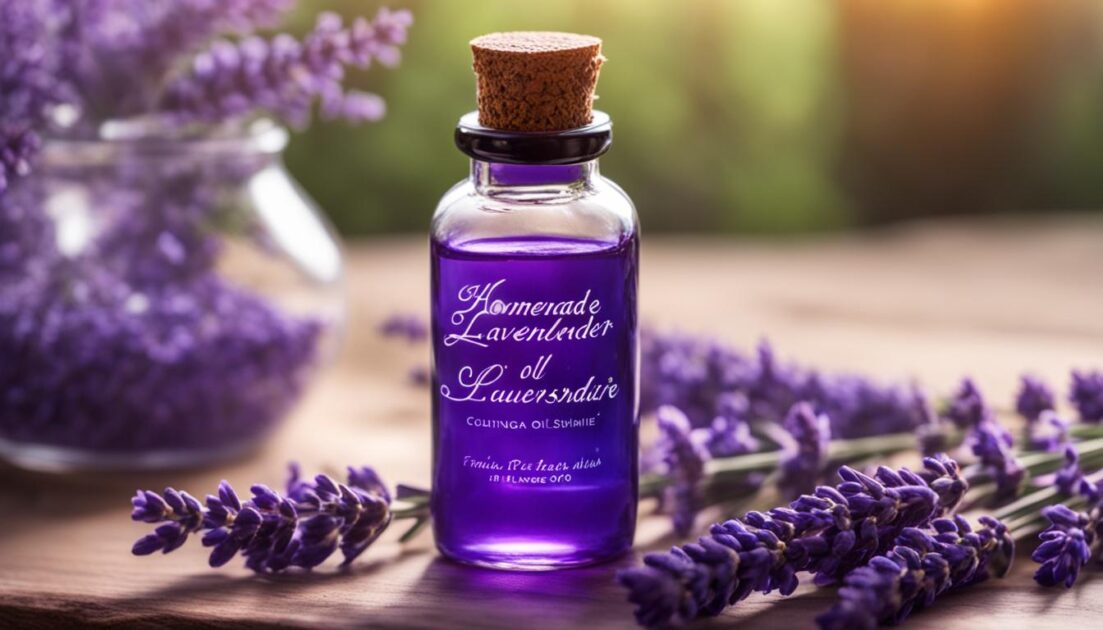
Making homemade lavender oil is an easy and satisfying DIY project. With just a few ingredients and some patience, you can create your own lavender-infused oil with a soothing aroma. This recipe uses dried lavender and a carrier oil like coconut oil. The process involves infusing the lavender in the oil for a period of time to extract its beneficial properties. The resulting lavender oil can be used for various purposes, including skincare, relaxation, and homemade cleaning products.
Key Takeaways:
- Making homemade lavender oil is a simple and enjoyable DIY project.
- You can create lavender-infused oil using dried lavender and a carrier oil.
- The process involves infusing the lavender in the oil to extract its beneficial properties.
- Homemade lavender oil can be used for skincare, relaxation, and homemade cleaning products.
- It’s important to use properly dried lavender and store the oil correctly to maintain its quality and shelf life.
Benefits of Lavender Oil
Lavender oil is a versatile essential oil with numerous benefits and uses. Known for its calming and soothing properties, lavender oil is a popular choice for relaxation and stress relief. Its pleasant aroma and therapeutic qualities make it a valuable natural remedy.
Relaxation and Stress Relief: Lavender oil is renowned for its ability to promote relaxation and alleviate stress. Its calming scent is believed to have a positive impact on the nervous system, helping to reduce anxiety and improve sleep quality.
Skincare: Lavender oil offers various benefits for the skin. It contains antimicrobial properties that can help combat acne-causing bacteria, making it beneficial for individuals with acne-prone skin. Additionally, lavender oil has anti-inflammatory properties that can reduce redness and inflammation associated with skin conditions like eczema and sunburns.
Hair Care: Lavender oil can be beneficial for hair health. It has been used to promote hair growth and reduce hair loss. The antimicrobial properties of lavender oil can also help combat dandruff and improve scalp health.
Relief from Minor Wounds and Inflammation: Lavender oil has properties that can aid in wound healing and reduce inflammation. When applied to minor cuts, burns, or insect bites, lavender oil can help soothe and promote healing.
Lavender oil offers a natural and holistic approach to various areas of well-being, including skincare, relaxation, and hair care. Incorporating lavender oil into your daily routine can provide both physical and mental benefits.

Continue reading to learn how to choose the right type of lavender for making lavender oil and the proper methods for harvesting and drying lavender.
Choosing the Right Lavender
When it comes to making lavender oil, selecting the right type of lavender is key. There are various lavender varieties available, each with its own unique qualities and characteristics. The top three types of lavender commonly used for oil extraction are English lavender, French lavender, and Spanish lavender.
English Lavender (Lavandula angustifolia)
English lavender, also known as Lavandula angustifolia, is the most popular choice for making lavender oil. This variety is highly valued for its pleasant fragrance and therapeutic properties. Its soothing scent and calming effects make it a favorite in aromatherapy and relaxation practices.
French Lavender (Lavandula stoechas)
French lavender, or Lavandula stoechas, is another lavender variety used for oil extraction. It has a distinct scent and flavor that differs from English lavender. French lavender is known for its vibrant purple flowers and is often used in perfumes and floral arrangements.
Spanish Lavender
Spanish lavender, also known as Lavandula dentata, is another lavender variety with its own unique scent and characteristics. It has a slightly different aroma compared to English and French lavender, with a touch of spice and citrus notes. Spanish lavender is often used in culinary applications and the production of herbal remedies.
Each lavender variety brings its own nuances to the final lavender oil. The choice of lavender depends on personal preference and the desired fragrance and therapeutic properties.
Did You Know? Lavender oil extraction methods can vary depending on the desired end product. Steam distillation is commonly used to extract lavender essential oil, while oil infusion is used for lavender-infused oil.
Harvesting and Drying Lavender
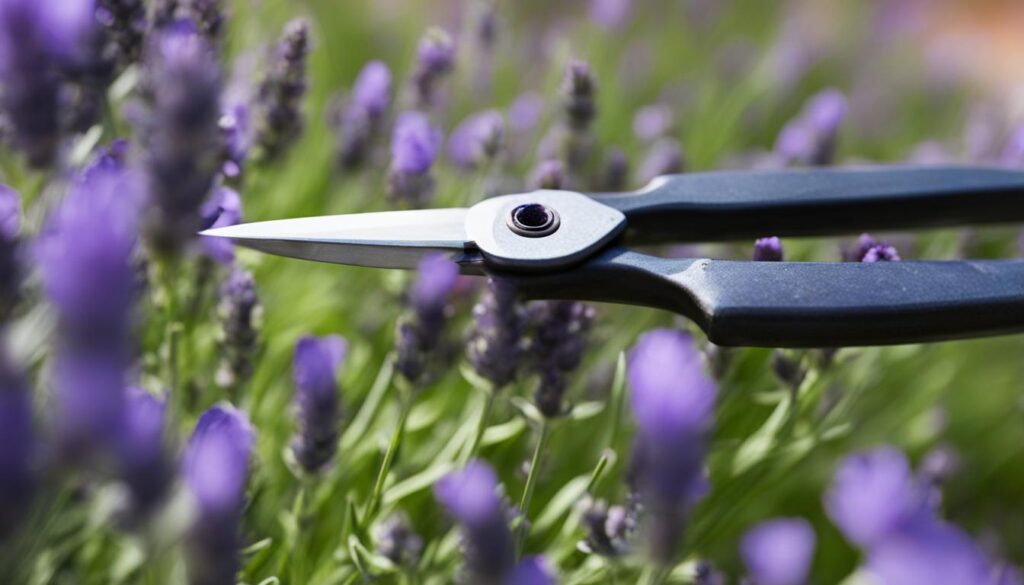
To make lavender oil, the first step is to harvest and dry the lavender. Harvesting lavender at the right time is crucial to ensure optimal fragrance and oil content. It is best to cut the lavender stems once the flowers have fully bloomed. This is when the lavender is at its most potent.
After harvesting, it’s important to dry the lavender properly to preserve its qualities and prevent mold in the infused oil. The traditional method is to hang the lavender stems upside down in a dry, dark place for 2 to 4 weeks until they are fully dried. This allows the moisture to evaporate slowly and ensures that the lavender retains its aroma and oil.
For those looking for quicker drying methods, there are alternatives available. One option is to use an oven at a low temperature, around 100 to 110°F (40 to 43°C), to speed up the drying process. Another option is to use a food dehydrator set to a low temperature. These methods can reduce the drying time to a few hours.
Regardless of the method chosen, it’s essential to make sure that the lavender is thoroughly dried before proceeding to the next step. This ensures that there is no moisture left in the lavender, which could lead to the growth of mold in the infused oil.
Infusing Lavender into Oil
The process of infusing lavender into oil is a simple and effective way to capture the soothing aroma and beneficial properties of lavender. With just a few steps, you can create your own lavender-infused oil that can be used for various purposes, such as skincare, massage, or aromatherapy. Here’s a step-by-step guide to infusing lavender into oil:
- Choose a glass jar that is large enough to hold your desired amount of lavender and carrier oil.
- Fill the jar with dried lavender flowers, leaving some headspace at the top.
- Pour your chosen carrier oil, such as olive oil or sweet almond oil, into the jar, completely covering the lavender.
- Secure the lid tightly to prevent any air from entering.
- Place the jar in a cool, dark place, like a pantry or cupboard.
- Allow the mixture to infuse for 7 to 10 days, shaking the jar gently every day to promote thorough infusion.
- After the infusion period, strain the oil using a fine-mesh strainer or cheesecloth to remove the lavender flowers.
- Transfer the infused oil to a clean glass jar or bottle for storage.
It’s important to note that the infusion time can vary depending on your preference and the strength of aroma and properties you desire from the lavender oil. If you prefer a stronger infusion, you can extend the infusion time up to a few weeks. Experiment with different infusion times to find the perfect balance for your needs.
Now that you know how to infuse lavender into oil, you can create your own personalized lavender oil with ease. Whether you use it for skincare, relaxation, or homemade products, your lavender-infused oil will provide a natural and aromatic touch to enhance your daily routine.
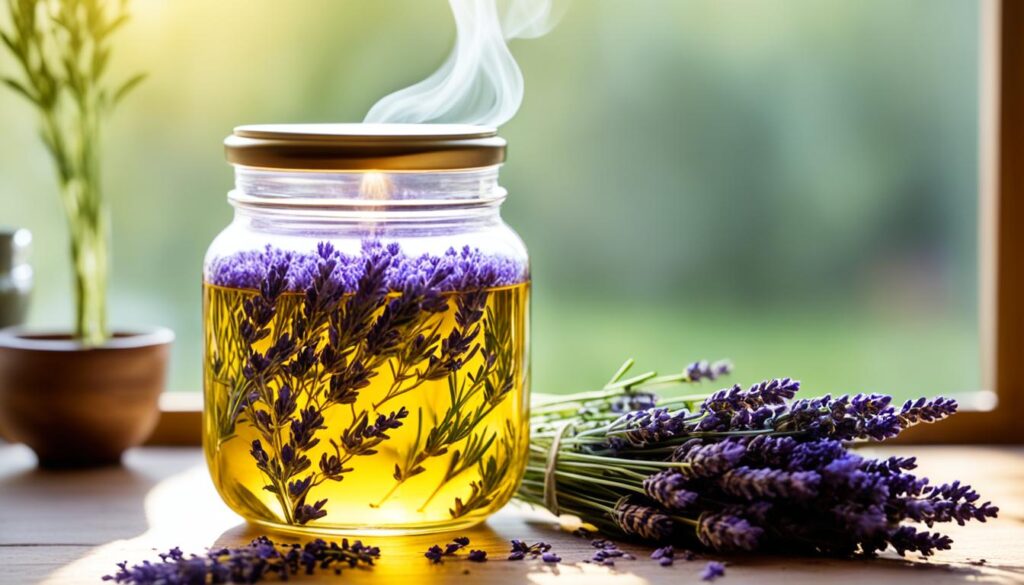
Tips for Infusing Lavender into Oil:
- Use high-quality dried lavender flowers for the best results.
- Choose a carrier oil that is suitable for your intended use. For example, if you plan to use the lavender oil on your skin, opt for a lightweight, non-comedogenic oil.
- Store the infused oil in a cool, dark place to prolong its shelf life.
- Label your infused oil with the infusion date for easy reference.
- Consider adding a few drops of vitamin E oil to the infusion for its natural preservative properties.
Using Homemade Lavender Oil
Homemade lavender oil is a versatile product with various uses. Whether you want to enhance your skincare routine, enjoy a relaxing massage, or create homemade products, lavender oil can be a valuable addition to your daily life.
Skincare Benefits of Lavender Oil
Lavender oil offers numerous benefits for the skin. Its anti-inflammatory and antibacterial properties make it an effective remedy for acne, reducing redness, and balancing oil production. To incorporate lavender oil into your skincare routine, dilute it with a carrier oil, such as jojoba or almond oil, and gently massage it onto clean skin. Be sure to perform a patch test before applying it to a larger area.
Relaxation and Stress Relief
Lavender oil is well-known for its calming and soothing effects. Whether you’re dealing with stress, anxiety, or trouble sleeping, lavender oil can help create a sense of relaxation. Add a few drops of lavender oil to an aromatherapy diffuser or create a calming massage oil by diluting it with a carrier oil like coconut or grapeseed oil. Enjoy the gentle aroma and let the stress melt away.
Homemade Products with Lavender Oil
Lavender oil can be a fragrant and therapeutic addition to your homemade creations. Whether you’re making soaps, candles, bath salts, or lotions, lavender oil adds a delightful scent and potential benefits. Add a few drops of lavender oil to your DIY recipes to infuse them with a calming and soothing aroma. Let your creativity soar and create personalized products that nourish both your body and mind.
| Skincare Benefits | Relaxation and Stress Relief | Homemade Products |
|---|---|---|
| – Reduces acne – Balances oil production – Soothes inflammation – Provides antibacterial properties |
– Promotes relaxation – Relieves stress and anxiety – Supports quality sleep |
– Adds fragrance – Enhances therapeutic properties – Personalizes homemade products |
Storing and Shelf Life of Lavender Oil
Proper storage is crucial for maintaining the quality and maximizing the shelf life of lavender oil. To ensure its longevity, it is advisable to store lavender oil in a cool, dark place. This helps to prevent oxidation and preserve the oil’s delightful aroma and therapeutic properties.
When it comes to choosing a container for storing lavender oil, opt for glass jars or bottles. Glass containers are less likely to react with the oil compared to plastic or metal containers, ensuring the integrity of the oil remains intact over time.
The shelf life of lavender oil can vary depending on the carrier oil used in the extraction process. However, when stored correctly, lavender oil can typically last for up to 1 year. It is essential to monitor the oil for any changes in smell or appearance. If it develops an off smell or turns cloudy, it’s best to discard it, as it may have exceeded its shelf life or undergone spoilage.
FAQ
How can I make homemade lavender oil?
To make homemade lavender oil, you’ll need dried lavender and a carrier oil like coconut oil. Fill a glass jar with dried lavender and cover it completely with the carrier oil. Store the jar in a cool, dark place for 7 to 10 days to allow the oil to absorb the lavender’s aroma and properties. After the infusion period, strain the oil and transfer it to a clean glass jar for storage.
What are the benefits of lavender oil?
Lavender oil is known for its calming and soothing properties. It can help with relaxation and stress relief. It is also beneficial for the skin, aiding in the treatment of acne, eczema, and sunburns. Additionally, lavender oil can promote hair growth and reduce dandruff.
How do I choose the right lavender for making lavender oil?
English lavender, also known as Lavandula angustifolia, is commonly used for making lavender oil due to its pleasant fragrance and therapeutic properties. French lavender (Lavandula stoechas) and Spanish lavender are also used, but they may have a different scent and flavor compared to English lavender.
How do I harvest and dry lavender for oil-making?
Harvest lavender stems once the flowers have bloomed and hang them upside down in a dry, dark place for 2 to 4 weeks. Alternatively, you can use quicker drying methods such as using an oven or a food dehydrator. Ensure the lavender is thoroughly dried before using it to prevent moisture and mold in the infused oil.
How long should I infuse the lavender into the oil?
After filling the jar with dried lavender and carrier oil, store it for 7 to 10 days in a cool, dark place to allow the oil to absorb the lavender’s properties. Shake the jar every day to ensure proper infusion.
How can I use homemade lavender oil?
Homemade lavender oil can be used topically on the skin for acne, dryness, and inflammation. It can also be used as a massage oil for relaxation and stress relief. Additionally, you can add it to homemade products like soaps, candles, and bath salts for added fragrance and therapeutic properties. Dilute the oil before use and perform a patch test for allergic reactions.
How should lavender oil be stored and what is its shelf life?
Store lavender oil in a cool, dark place to prevent oxidation and preserve its aroma and properties. Glass jars or bottles are recommended for storing lavender oil. The shelf life of lavender oil can vary depending on the carrier oil used, but it generally lasts up to 1 year if stored correctly. Discard the oil if it develops an off-smell or appearance.


