Peppermint oil is a popular essential oil known for its refreshing and soothing properties. Making peppermint oil at home is a simple and cost-effective way to enjoy its benefits. In this guide, I will take you through the step-by-step process of creating homemade peppermint oil using fresh peppermint leaves and a carrier oil. With this easy DIY tutorial, you’ll be able to create your own natural, aromatic peppermint oil at home.
Key Takeaways:
- Learn how to make peppermint oil at home with this simple guide.
- Discover the step-by-step process using fresh peppermint leaves and a carrier oil.
- Create your own natural and aromatic peppermint oil for various uses.
- Enjoy the refreshing and soothing properties of homemade peppermint oil.
- Save money by making your own peppermint oil instead of buying it.
Gathering Fresh Peppermint Leaves
The first step in making homemade peppermint oil is gathering fresh peppermint leaves. You have two options for sourcing these leaves – you can either pick them from your own garden or purchase them from a local store.
If you decide to pick the leaves yourself, choose broad, green leaves that are free from any signs of damage or disease. It’s best to harvest the leaves just before the peppermint plant begins to flower, as the leaves will be at their most potent during this time.
Ensure you only pluck the leaves and avoid taking the stems, as this can harm the plant’s growth. Once you have gathered enough leaves, it’s essential to wash them thoroughly with cool water to remove any dirt or debris that may be present.
After rinsing, allow the leaves to air dry completely. This ensures that excess moisture is removed, preventing any potential mold or spoilage when infusing the leaves in oil.
Infusing the Peppermint Leaves in Carrier Oil
Once the peppermint leaves are dry, it’s time to infuse them in a carrier oil. Infusing peppermint leaves in a carrier oil is a crucial step in creating homemade peppermint oil. Choose a mild, unscented carrier oil to ensure that the peppermint aroma is not overwhelmed. Some popular options include:
- Olive oil
- Grapeseed oil
- Almond oil
- Wheat germ oil
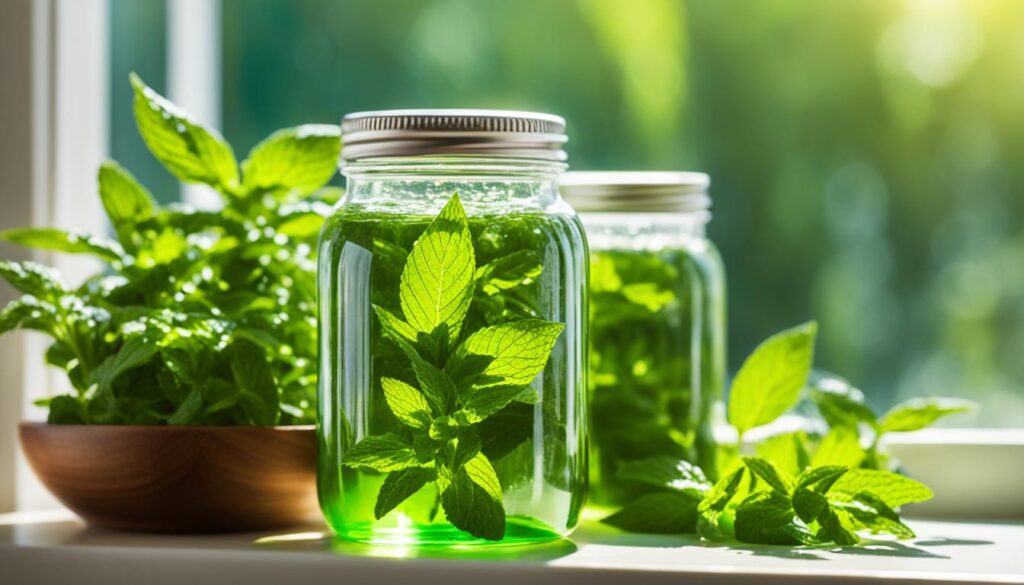
To start the infusion process, place the crushed peppermint leaves in a clean glass jar or container. Make sure the container is large enough to accommodate the leaves and the carrier oil. Next, cover the leaves with your chosen carrier oil, ensuring that all the leaves are completely submerged. The ratio of carrier oil to peppermint leaves will determine the concentration of the final oil. Allow some room at the top of the container for the contents to move around during the infusion process.
Seal the jar tightly and place it in a warm, dark place. This environment helps to extract the aroma and beneficial properties of the peppermint leaves. Let the infusion sit for 24-48 hours to allow the carrier oil to absorb the essence of the peppermint leaves. The longer you let it infuse, the stronger the peppermint oil concentration will be.
Expert tip:
For the best results, gently shake the container once or twice a day to help distribute the infused oils evenly. This step ensures that the carrier oil absorbs the maximum amount of peppermint extract, enhancing the potency of the final homemade peppermint oil.
| Carrier Oil | Recommended Infusion Time |
|---|---|
| Olive oil | 24 hours |
| Grapeseed oil | 48 hours |
| Almond oil | 24-48 hours |
| Wheat germ oil | 48 hours |
After the desired infusion time has passed, it’s time to move on to the next step of the process: straining and storing the peppermint oil. This step ensures that the final product is free from any plant material, resulting in a clear and pure homemade peppermint oil.
Straining and Storing the Peppermint Oil
After the infusion period, it’s time to strain the oil and separate it from the peppermint leaves. To do this, you’ll need a piece of cheesecloth or muslin cloth and a bowl.
I believe in the power of homemade remedies, and straining the peppermint oil is a crucial step to ensure its purity and effectiveness.
Place the cheesecloth or muslin cloth over the bowl, creating a sieve. Carefully pour the infused oil through the cloth, allowing it to filter out any plant material. The cloth will catch the leaves, leaving you with clean and pure peppermint oil.
- Pro tip: For maximum extraction, gently squeeze the cloth to extract as much oil as possible.
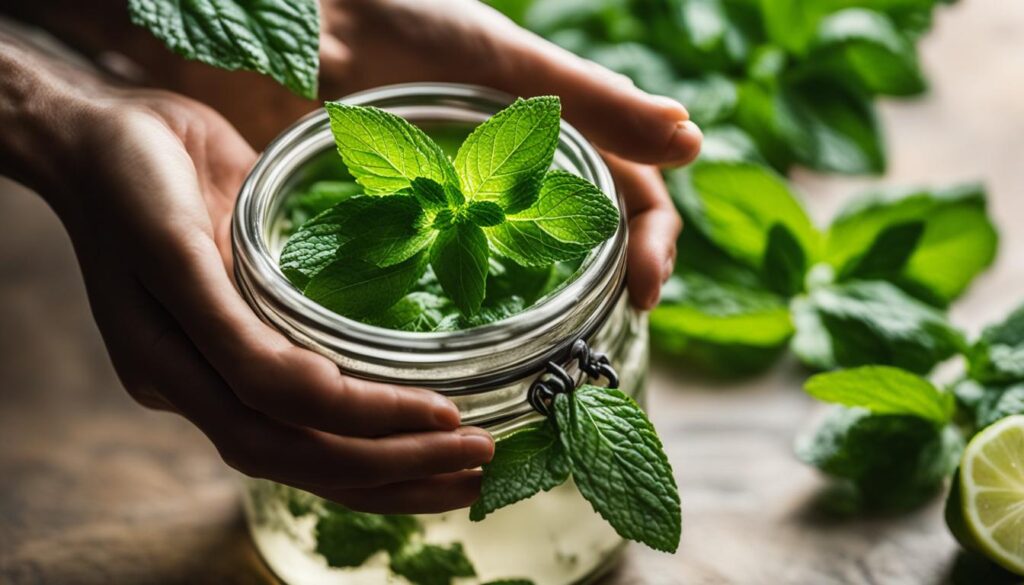
Once you’ve strained the oil, discard the used peppermint leaves. They have served their purpose, and you can now focus on storing the precious peppermint oil.
To maintain the quality and potency of your homemade peppermint oil, it’s important to store it correctly. Transfer the strained oil into a dark-colored glass bottle. Dark glass helps protect the oil from sunlight, preserving its beneficial properties.
- Pro tip: Look for amber or cobalt blue glass bottles, as they provide excellent protection against UV light.
Seal the bottle tightly to prevent air and moisture from entering. This will help extend the shelf life of your homemade peppermint oil.
I swear by the benefits of homemade peppermint oil, and proper storage is key to enjoying those benefits for an extended period.
Store the bottle in a cool, dark place, such as a pantry or cabinet. Avoid exposing the oil to direct sunlight or extreme temperature changes, as they can degrade its quality. When stored properly, homemade peppermint oil can typically last up to 3-6 months.
Peppermint Oil Shelf Life Estimates
| Storage Conditions | Shelf Life |
|---|---|
| Cool, dark place | 3-6 months |
| Refrigerated | 6-12 months |
Keep in mind that the shelf life of peppermint oil can vary depending on the quality of the ingredients used and the presence of any plant material left behind after straining. If the oil develops an off odor or strange color, it’s best to discard it and make a fresh batch.
Benefits and Uses of Homemade Peppermint Oil
Homemade peppermint oil offers numerous benefits and a wide range of uses, making it a versatile addition to your natural remedy collection. The refreshing and invigorating properties of peppermint oil make it a popular choice for various applications.
Topical Application:
Peppermint oil can be used topically to provide relief for common ailments. It is known for its analgesic properties, making it an effective natural remedy for soothing headaches, migraines, and muscle pain. When applied to the skin, diluted peppermint oil has a cooling effect that helps reduce itching and discomfort associated with insect bites, rashes, and minor burns. However, it’s important to dilute the oil with a carrier oil, such as almond oil or coconut oil, to prevent skin irritation.
Aromatherapy:
The invigorating scent of peppermint oil makes it an excellent choice for aromatherapy. Just a few drops of peppermint oil in a diffuser can help enhance mood, increase focus, and promote relaxation. The fresh and minty aroma can uplift your spirits and provide a sense of mental clarity, making it an ideal choice for both home and office environments.
Homemade Cleaning Products:
Incorporating peppermint oil into your DIY cleaning products can enhance their effectiveness and leave your home smelling fresh. Its antibacterial and antifungal properties make peppermint oil a natural and safe alternative to chemical-laden cleaning agents. Add a few drops of peppermint oil to your homemade surface cleaners, bathroom sprays, or floor mopping solutions to enjoy its cleaning power and pleasant aroma.
Natural Insect Repellent:
Peppermint oil can be used as a natural insect repellent, keeping pesky bugs at bay without the use of harmful chemicals. The strong fragrance of peppermint oil acts as a deterrent to mosquitoes, ants, spiders, and other pests. To create your homemade insect repellent spray, mix peppermint oil with water or a carrier oil, and spritz it around doorways, windows, and outdoor areas.
With its numerous benefits and versatile uses, homemade peppermint oil is a valuable addition to any natural health and wellness routine. However, it is important to use it responsibly and in moderation. Enjoy the benefits of this delightful essential oil, but always remember to dilute it properly and consider any sensitivities or allergies you or your family members may have.
| Benefit | Uses |
|---|---|
| Soothes headaches and muscle pain | Topical application |
| Relieves itching and minor burns | Topical application |
| Enhances mood and promotes relaxation | Aromatherapy |
| Boosts mental clarity and focus | Aromatherapy |
| Natural and safe alternative for cleaning | Homemade cleaning products |
| Repels mosquitoes and other pests | Natural insect repellent |
Tips and Precautions for Making Peppermint Oil
When it comes to making homemade peppermint oil, there are a few tips and precautions that can help ensure a successful and safe process. First and foremost, it’s crucial to harvest the peppermint leaves at the right time. Aim to gather the leaves in the morning, after the dew has evaporated but before the temperature rises too high. This timing will help preserve the essential oils and maximize their potency.
Another tip to consider is muddling or crushing the peppermint leaves before infusing them in oil. This simple step can actually increase the oil yield, allowing you to extract more of the aromatic and beneficial properties from the leaves. By breaking down the leaves, the oil is able to penetrate the plant material more effectively during the infusion process.
Efficient distillation is also key to obtaining high-quality peppermint oil. It’s important to carefully follow the instructions for your specific setup and choose quality materials. This will help ensure that the distillation process is effective and that you end up with a potent and pure peppermint oil.
Lastly, when working with essential oils, including homemade peppermint oil, it’s crucial to prioritize safety precautions. These oils can be potent and may cause skin irritation or allergic reactions if not handled properly. Always dilute the peppermint oil before use and conduct a patch test on a small area of skin before applying it to a larger area. This will help you determine if you have any sensitivities or reactions to the oil.
FAQ
How can I make peppermint oil at home?
Making homemade peppermint oil is a simple process. You gather fresh peppermint leaves, infuse them in a carrier oil of your choice, strain the oil, and store it in a dark glass bottle.
Where can I get fresh peppermint leaves for making peppermint oil?
You can either pick fresh peppermint leaves from your own garden or purchase them from a local store or farmers market.
What carrier oil should I use to infuse the peppermint leaves?
It is best to use a mild, unscented carrier oil like olive oil, grapeseed oil, almond oil, or wheat germ oil. These oils will not overpower the natural aroma of the peppermint leaves.
How long does it take to infuse the peppermint leaves in the carrier oil?
The peppermint leaves should be left in the carrier oil for 24-48 hours in a warm, dark place to allow the oil to extract the aroma and properties of the leaves.
How do I separate the peppermint oil from the leaves?
After the infusion period, you can strain the oil by pouring it through a piece of cheesecloth or muslin cloth into a bowl. Squeeze the cloth to extract as much oil as possible and discard the used peppermint leaves.
How should I store the homemade peppermint oil?
Transfer the strained peppermint oil into a dark-colored glass bottle to protect it from sunlight. Seal the bottle tightly and store it in a cool, dark place.
What are the benefits and uses of homemade peppermint oil?
Homemade peppermint oil can be used topically to soothe headaches, muscle pain, and itching. It is also used in aromatherapy to enhance mood and promote relaxation. Additionally, it can be incorporated into homemade cleaning products and serve as a natural insect repellent.
How long does homemade peppermint oil last?
Homemade peppermint oil can typically last up to 3-6 months, depending on the quality of the ingredients and the presence of any plant material left behind. If the oil develops an off odor or strange color, it’s best to discard it and make a fresh batch.
Are there any precautions I should take when making peppermint oil at home?
Yes, there are a few precautions to keep in mind. Harvest the peppermint leaves at the right time, muddle or crush them before infusing, follow the instructions for your specific distillation setup, and observe safety precautions when handling essential oils. Always dilute the oil before use and conduct a patch test before applying it to a larger area of skin.


