
Making olive oil at home is a rewarding and relatively simple process. By following these steps, you can learn how to extract your own olive oil without any specialized equipment.
Key Takeaways:
- Learn how to make olive oil at home using simple steps
- Extract your own olive oil without specialized equipment
- Control the entire process from start to finish
- Enjoy the benefits of fresh, high-quality olive oil
- Enhance your culinary creations with homemade olive oil
Why Make Your Own Olive Oil?
Making your own olive oil allows you to control the entire process from start to finish. It gives you the opportunity to use fresh olives and ensures that your oil is of the highest quality. Additionally, homemade olive oil is a great source of healthy monounsaturated fats, with antioxidant and anti-inflammatory properties that may reduce the risk of strokes and other cardiovascular events.
Making your own olive oil comes with numerous benefits:
- Control: When you make your own olive oil, you have complete control over the production process. From selecting the olives to determining the extraction method, you can ensure that your oil meets your desired standards.
- Quality: Using fresh olives allows you to capture the true essence of the fruit and produce oil that is rich in flavor and aroma. You can avoid the additives and preservatives often found in store-bought oils.
- Health Benefits: Homemade olive oil is packed with monounsaturated fats, which are known for their positive impact on heart health. These fats can help reduce bad cholesterol levels and lower the risk of heart disease.
- Rich in Antioxidants: Olive oil contains powerful antioxidants that protect your cells from damage caused by free radicals. These antioxidants have also been linked to a reduced risk of chronic diseases, including certain types of cancer.
- Anti-Inflammatory Properties: The anti-inflammatory properties of olive oil can help reduce inflammation in the body, which is a common underlying factor in many chronic diseases.
- Versatility: Homemade olive oil can be used in a variety of culinary applications, from dressing salads to marinating meats and vegetables. Its rich flavor adds depth and complexity to dishes.
Making your own olive oil is not only a rewarding experience but also offers numerous health benefits. By producing your own oil, you can enjoy the freshest, highest-quality product while reaping the nutritional advantages that olive oil has to offer.
“Making your own olive oil allows you to have complete control over the process, ensuring the use of fresh olives and the highest quality oil.”
Ingredients and Equipment Needed
To make delicious homemade olive oil, you’ll need the following ingredients and equipment:
Ingredients:
- Fresh olives, preferably within 24 hours of picking
Equipment:
- A blender or food processor
- A fine mesh strainer or cheesecloth
- A dark glass bottle with a lid or stopper
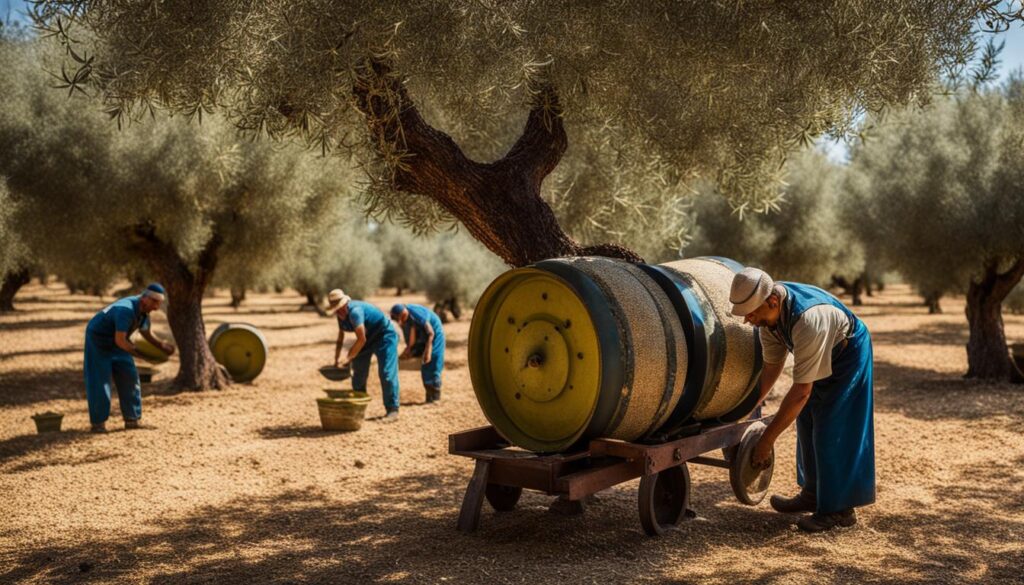
First and foremost, you’ll need fresh olives to extract the oil. It’s best to use olives that have been picked within 24 hours to ensure optimal flavor and quality. If you can’t find fresh olives locally, don’t worry! You can easily order them online and have them delivered right to your doorstep.
When it comes to equipment, a blender or food processor is essential for turning the olives into a smooth paste. This process helps to release the oil from the olives. Additionally, you’ll need a fine mesh strainer or cheesecloth to separate the liquid from any solids or impurities. Finally, a dark glass bottle with a tight-fitting lid or stopper is essential for storing your homemade olive oil. The dark glass helps to protect the oil from sunlight, which can degrade its quality over time.
With these ingredients and equipment in hand, you’re ready to embark on your olive oil-making journey!
The Olive Oil Making Process
When it comes to olive oil production, understanding the olive oil making process is key. This section will guide you through the steps involved in olive oil pressing and production, ensuring that you can create your own high-quality olive oil at home.
Step 1: Wash and Prepare the Olives
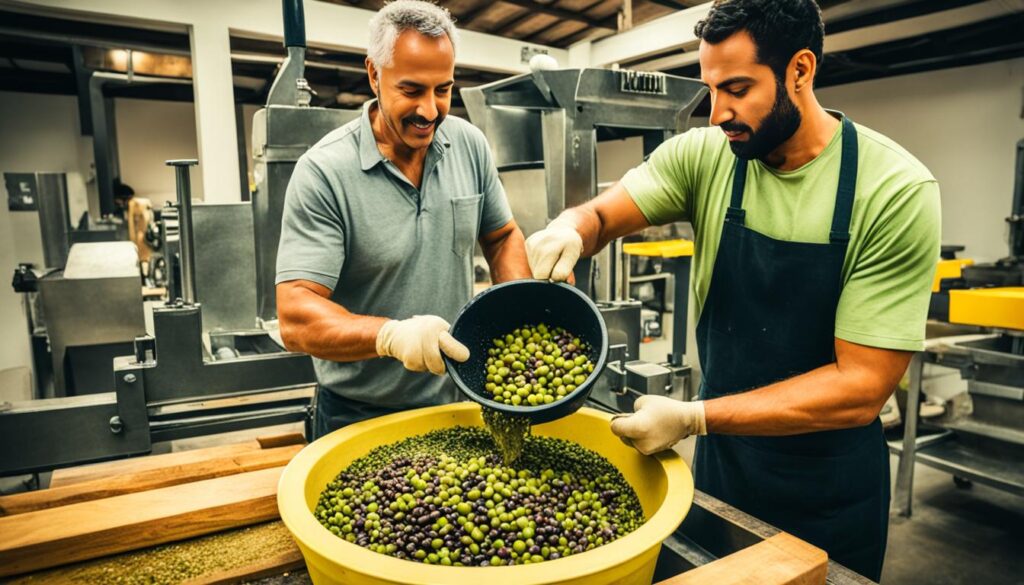
The first step in the olive oil making process is to wash the olives thoroughly and remove any debris. This ensures that your final product will be free from impurities and have a clean, fresh taste.
Step 2: Blend the Olives into a Paste
Next, you’ll need to blend the olives into a paste using a blender or food processor. This breaks down the olives and releases their natural oils, which will form the basis of your olive oil.
Step 3: Strain the Mixture
After blending, it’s time to strain the mixture to separate the oil from the water-soluble olive juice. This can be done using a fine mesh strainer or cheesecloth, ensuring that only the pure olive oil remains.
Step 4: Filter the Oil
For a smoother and clearer result, you can further filter the olive oil to remove any remaining particles. This step helps to enhance the overall quality and appearance of the oil.
Step 5: Bottle and Store
Finally, you’ll need to bottle your homemade olive oil and store it in a cool, dark place. This will help preserve its freshness and flavor over time. Use a dark glass bottle with a secure lid or stopper to protect the oil from light and air.
By following these steps, you can create your own olive oil with a rich, authentic flavor. Enjoy the satisfaction of producing your own olive oil at home and savor its unique taste in a wide range of culinary creations.
Tips for Maximizing Yield
If you want to maximize the yield of your homemade olive oil, there are a few techniques you can try. Firstly, applying heat to the olive paste can help extract more oil. The heat breaks down the cell walls of the olives, facilitating the release of oil during the pressing process. You can gently warm the paste in a double boiler or place it in the oven at a low temperature for a short period. However, be cautious not to overheat the paste, as excessive heat can affect the quality of the oil.
In addition to applying heat, further blending the olives can also increase the oil extraction. By blending the olives for a longer duration, you can break down the olives even further, allowing more oil to be released. The increased surface area of the olives exposes more oil to the pressing process.
Another technique to try is to add hot water to the olive mixture. The hot water helps to separate the oil from the olive juice, resulting in a higher overall yield. After adding the hot water, gently mix the olive paste to ensure the oil is evenly distributed.
Separating the Oil from the Olive Juice
Separating the oil from the olive juice is a crucial step in maximizing the yield of your homemade olive oil. Once you have blended the olives and added hot water, allow the mixture to sit for a short period. The oil will rise to the top, while the water and any remaining solid particles will settle at the bottom.
Carefully decant or skim off the oil from the top layer, taking care not to disturb the sediment at the bottom. To further separate the oil from any remaining water, you can use a fine mesh strainer or cheesecloth. The strainer will catch any large particles, while allowing the oil to pass through.
By applying these techniques and taking care during the pressing and separation process, you can maximize the yield of your homemade olive oil.
| Technique | Effect |
|---|---|
| Applying heat to the olive paste | Increases oil extraction by breaking down cell walls |
| Further blending the olives | Enhances oil release by increasing surface area |
| Adding hot water | Separates oil from olive juice, increasing overall yield |
Implementing these tips can help you get the most out of your olive oil extraction process, resulting in a higher yield of fresh, homemade olive oil to enjoy.
Storing and Shelf Life
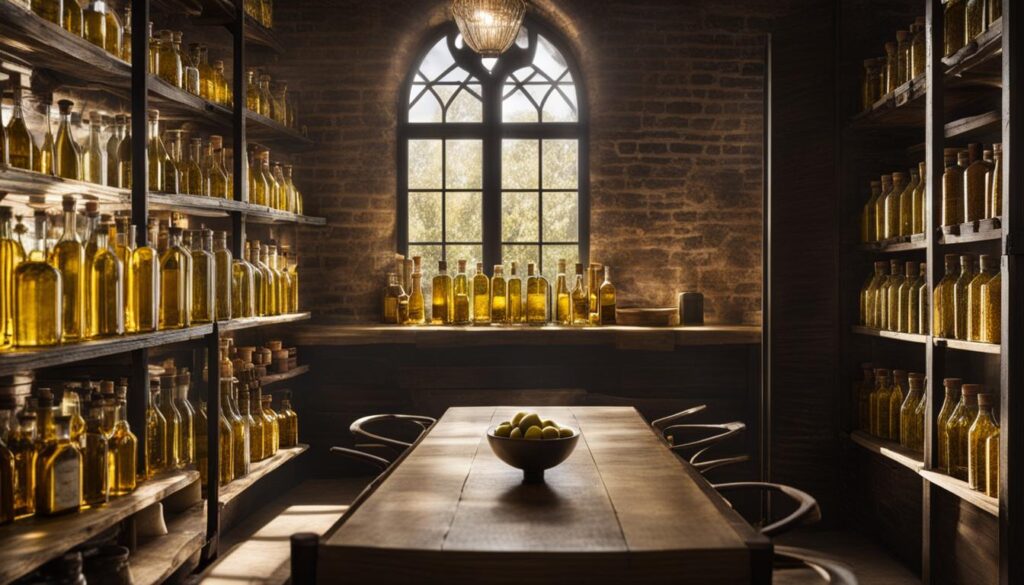
When it comes to homemade olive oil, proper storage is essential to ensure its freshness and longevity. To maintain the quality of your oil, it is recommended to store it in a dark glass bottle with a lid or stopper. This will help protect it from light exposure, which can result in oxidation and a shorter shelf life.
Keeping the oil in a cool, dark place is also crucial. Exposing olive oil to heat and sunlight can accelerate its degradation and lead to rancidity. By storing it in a dark cupboard or pantry away from direct heat sources such as stoves or ovens, you can help preserve its taste and aroma.
Olive oil is generally shelf-stable for up to two years, but its shelf life can vary depending on various factors. The quality of the oil and the effectiveness of the filtering process play a significant role in determining its longevity. Well-filtered oils with minimal water content tend to have a longer shelf life.
It’s important to note that as olive oil ages, its flavor profile may change, becoming less vibrant over time. However, even after its recommended shelf life, olive oil is generally safe to consume as long as it hasn’t developed off flavors or odors.
To ensure you are using your homemade olive oil while it is at its best, it’s a good idea to label your bottles with the date of production. This will help you keep track of its freshness and use the oldest bottles first.
With proper storage and careful attention to its shelf life, you can continue to enjoy the delightful aromas and flavors of your homemade olive oil for an extended period.
Enjoying Your Homemade Olive Oil
Now that you have successfully made your very own olive oil, it’s time to explore the delightful ways to enjoy this liquid gold. With its rich flavor and numerous health benefits, homemade olive oil can elevate your culinary creations to new heights.
One of the simplest ways to savor your homemade olive oil is by drizzling it over fresh salads, warm bread, or al dente pasta. The fruity aroma and distinctive taste of the oil can enhance the flavors of your dishes, adding a touch of freshness and complexity.
Beyond the traditional uses, homemade olive oil can also be a key ingredient in various recipes. From homemade salad dressings and marinades to sautéing vegetables and grilling seafood, the possibilities are endless. Its versatility and flavor profile make it an excellent choice for both savory and sweet dishes alike.
Aside from its delicious taste, homemade olive oil boasts an array of health benefits. Packed with monounsaturated fats and antioxidants, it may help reduce the risk of cardiovascular events and promote overall heart health. Additionally, it is known to possess anti-inflammatory properties and may have a positive impact on brain health.
FAQ
What equipment do I need to make homemade olive oil?
To make homemade olive oil, you will need a blender or food processor to blend the olives into a paste. You will also need a fine mesh strainer or cheesecloth to strain the liquid, and a dark glass bottle with a lid or stopper for storing the oil.
Can I use any type of olives to make olive oil?
Ideally, you should use fresh olives, preferably within 24 hours of picking, to make olive oil. However, if fresh olives are not available locally, you may be able to order them online.
What is the shelf life of homemade olive oil?
Homemade olive oil is generally shelf-stable for up to two years. However, the shelf life may vary depending on how well it is filtered and if all the water has been removed. It is recommended to store the oil in a cool, dark place to maintain its freshness.
How can I maximize the yield of homemade olive oil?
There are a few techniques you can try to maximize the yield of your homemade olive oil. Applying heat to the olive paste can help extract more oil, as well as further blending the olives and adding hot water to the mixture. Separating the oil from the olive juice can also increase the overall yield.
How can I use homemade olive oil in my cooking?
Homemade olive oil can be used in various ways. It can be drizzled over salads, bread, or pasta to add flavor and a touch of freshness. You can also use it as a cooking oil in your favorite recipes or as a finishing oil to enhance the flavors of your dishes.


