
Jojoba oil is a popular moisturizer known for its soothing properties. Learning how to make jojoba oil at home can give you control over the purity of the oil and even provide an opportunity for a small business venture. Here’s a step-by-step guide on how to make jojoba oil.
Key Takeaways:
- Jojoba oil is a moisturizer with soothing properties.
- Making jojoba oil at home allows for control over purity and customization.
- Jojoba oil can be used as a moisturizer or eye makeup remover.
- It is valued for its ability to moisturize without clogging pores.
- DIY jojoba oil is cost-effective, customizable, natural, and sustainable.
Sourcing and Cultivating Jojoba Plants
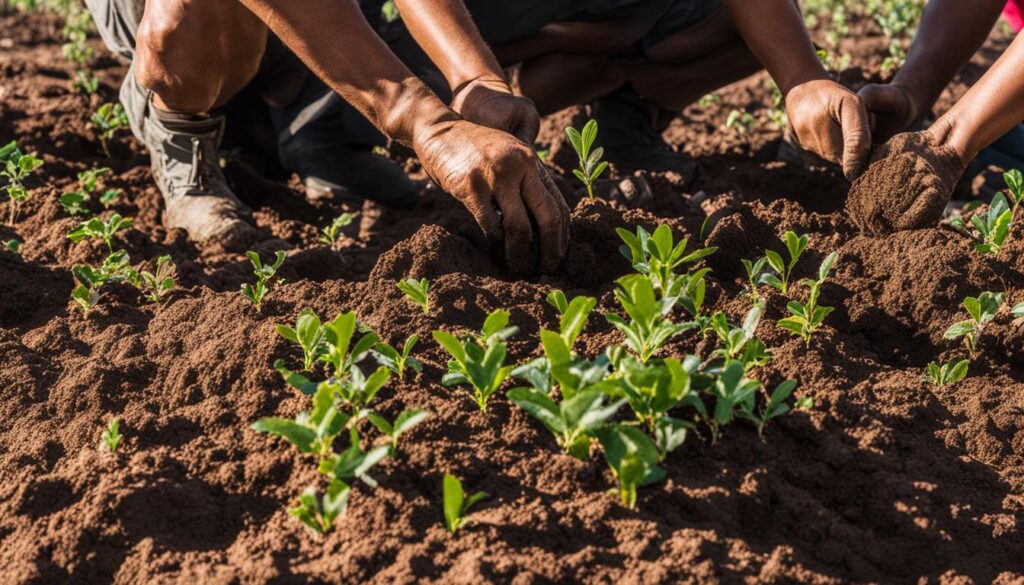
If you’re interested in making your own homemade jojoba oil, you’ll need to start by sourcing and cultivating jojoba plants. Whether you prefer to find them in the wild or purchase them from garden centers or nurseries, it’s essential to get your hands on these versatile plants to begin the process.
“Jojoba plants can be found in the wild or purchased from garden centers or nurseries.”
Once you have acquired the jojoba plants, the next step is to harvest the seeds. This typically happens in the summer when the seeds have ripened. The seeds are hard and light brown in color, making them easily identifiable.
After harvesting, it’s important to dry the seeds to reduce their moisture content. This can be done by spreading them out in a cool, dry place for one to two weeks. Proper drying ensures that the seeds are ready for further processing.
Did you know? Jojoba seeds are often mistaken for nuts, but they are actually wax-laden seeds.
| Advantages of sourcing jojoba plants | Disadvantages of sourcing jojoba plants |
|---|---|
|
|
Extracting Jojoba Oil
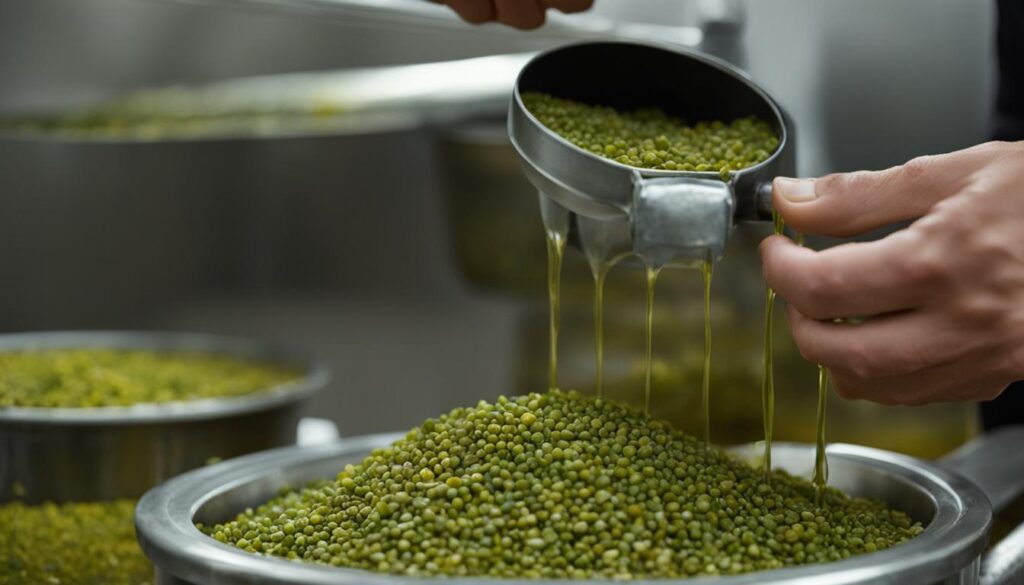
Once the seeds are dried, they can be poured into an expeller press or a seed press to extract the wax, which is commonly referred to as jojoba oil. The expeller press and seed press are both efficient methods for jojoba oil extraction.
The expeller press applies mechanical pressure to the dried seeds, forcing the oil out through small openings. This method is suitable for small-scale production and is often used by DIY enthusiasts. It ensures a high-quality extraction and retains the natural properties of jojoba oil.
The seed press, on the other hand, involves crushing the seeds to release the oil. The crushed seeds are then subjected to high-pressure extraction, resulting in the separation of the oil from the seed meal. This method is commonly used in commercial jojoba oil production due to its efficiency.
The extracted oil has a light, oil-like appearance and is rich in nutrients and beneficial properties. However, the remaining seed meal should be discarded as it contains toxic compounds and is not suitable for consumption or skincare purposes.
Wax Removal Process
To remove any remaining waxes and impurities from the extracted jojoba oil, a wax removal process is necessary. This process involves filtering the oil through an organic cotton cloth or using a centrifuge to separate the impurities from the oil.
During the wax removal process, it is essential to handle the oil with care to maintain its quality. The filtered jojoba oil is then ready for storage and use.
| Methods | Advantages | Disadvantages |
|---|---|---|
| Expeller Press | – High-quality extraction | – Suitable for small-scale production |
| Seed Press | – Efficient method | – Often used in commercial production |
Storing and Using Jojoba Oil
Once you’ve successfully extracted jojoba oil, it’s important to store it properly to maintain its quality. Jojoba oil has a long shelf life and can be safely stored for an indefinite period of time without turning rancid.
To ensure maximum freshness, store your jojoba oil in glass containers with airtight lids. This will prevent exposure to air, moisture, and sunlight, which can degrade the oil over time.
When using jojoba oil, its versatility shines through. Whether you’re looking for a natural moisturizer for your skin or a gentle makeup remover, jojoba oil has got you covered.
One of the key benefits of using jojoba oil is its ability to moisturize and protect the skin without clogging pores or causing acne. Its composition closely resembles that of human sebum, making it suitable for all skin types, including sensitive and acne-prone skin. Simply apply a small amount of jojoba oil onto clean skin, gently massaging it in until fully absorbed.
Additionally, jojoba oil can be used as a highly effective and gentle eye makeup remover. Its nourishing properties help to dissolve even stubborn waterproof makeup while conditioning delicate skin around the eyes. Apply a few drops of jojoba oil onto a cotton pad and gently swipe across closed eyelids, being careful not to tug or pull on the skin.
Overall, the benefits of using jojoba oil extend beyond skincare. Its versatile nature makes it a valuable addition to your beauty routine, offering a range of benefits for your skin and beyond.
Benefits and Tips for DIY Jojoba Oil
Making your own jojoba oil at home has numerous benefits and allows you to have full control over the ingredients. One of the key advantages of DIY jojoba oil is its customization potential. You can experiment with different proportions and combinations of ingredients to create a product that suits your specific skincare needs.
Jojoba oil, with its pH level similar to human skin, is known for its soothing properties. This makes it suitable for all skin types, including sensitive and acne-prone skin. Using DIY jojoba oil can help in maintaining the natural balance of your skin and providing the nourishment it needs.
Another advantage of DIY jojoba oil is that it can be used in various ways. You can apply it directly onto your skin as a moisturizer or use it as a key ingredient in homemade skincare products such as body lotions, lip balms, or facial scrubs. You can also combine it with other essential oils like lavender or tea tree oil to enhance its benefits.
In addition to its versatility, DIY jojoba oil is cost-effective, natural, and sustainable. By making your own oil, you not only save money in the long run but also reduce your reliance on store-bought products that may contain harmful chemicals or additives. Moreover, DIY jojoba oil allows you to contribute to a more sustainable lifestyle by reducing waste and supporting eco-friendly practices.
FAQ
What is jojoba oil?
Jojoba oil is a popular moisturizer known for its soothing properties.
Why should I learn how to make jojoba oil at home?
Learning how to make jojoba oil at home allows you to control the purity of the oil and even provides an opportunity for a small business venture.
Where can I find jojoba plants?
Jojoba plants can be found in the wild or purchased from garden centers or nurseries.
How do I extract jojoba oil from the seeds?
The seeds are dried for one to two weeks and then poured into an expeller press or a seed press to extract the wax, which is commonly referred to as jojoba oil.
How should I store the extracted jojoba oil?
The extracted jojoba oil should be stored in glass containers with airtight lids.
What are the benefits of using jojoba oil?
Jojoba oil can be used as a moisturizer for the skin or as an eye makeup remover. It soothes and moisturizes the skin without clogging pores or causing acne.
Can I customize DIY jojoba oil?
Making DIY jojoba oil allows for customization and control over the ingredients. Jojoba oil can be used alone or combined with other essential oils for additional benefits.
Is DIY jojoba oil cost-effective and sustainable?
Yes, DIY jojoba oil is cost-effective, customizable, natural, and sustainable, making it a great addition to your skincare routine.


