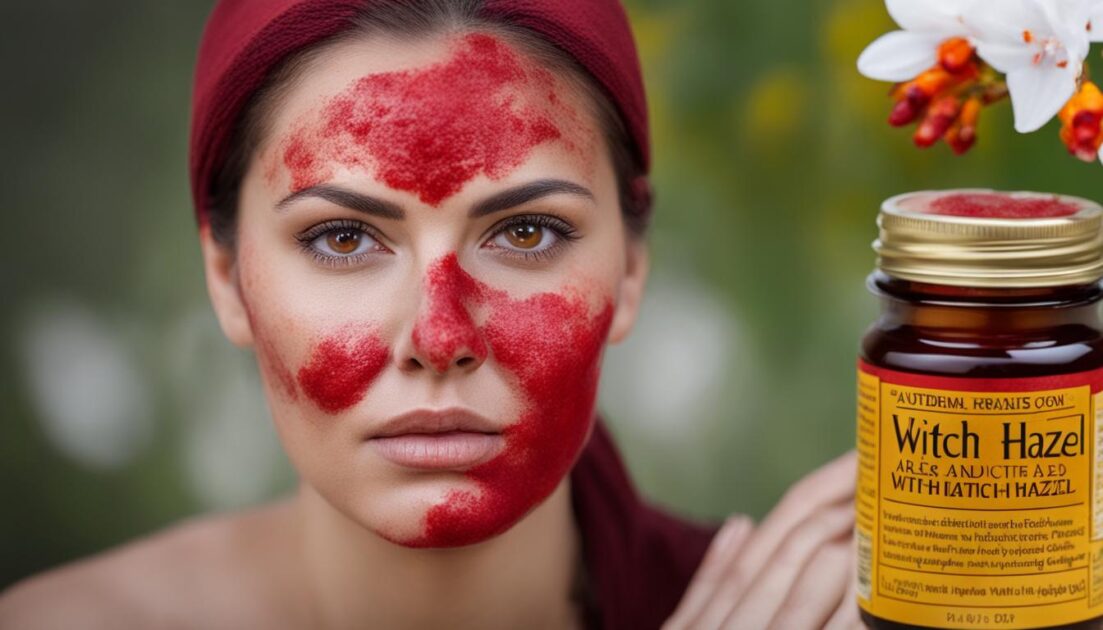
Hello, I’m here to discuss the potential side effects of witch hazel when used for skincare. While witch hazel is a popular natural remedy for various skin issues, it is essential to understand its benefits, as well as the risks it may pose to your skin.
Derived from the witch hazel plant, this natural remedy contains antioxidants and tannins that can provide temporary relief for skin problems. However, it’s important to note that long-term use of witch hazel may lead to sensitization and skin irritation. The tannins in witch hazel have a drying effect and can constrict the skin, potentially causing adverse effects.
If you have allergies to plants in the Compositae family, such as chamomile or yarrow, it is crucial to use witch hazel with caution. Allergic reactions to witch hazel can manifest as redness, itching, and inflammation. To minimize the risk of adverse reactions, it is advisable to perform a patch test before using witch hazel on a larger area of the skin.
Key Takeaways
- Witch hazel, a popular natural remedy for skin issues, has potential side effects.
- Long-term use of witch hazel may lead to sensitization and skin irritation.
- Individuals with allergies to plants in the Compositae family should use witch hazel with caution.
- Perform a patch test before using witch hazel on a larger area of the skin to minimize the risk of adverse reactions.
The Impact on Acne and Oily Skin
Witch hazel is often praised for its potential benefits in treating acne and managing oily skin. Its astringent properties are believed to help reduce oiliness and minimize the appearance of pores. However, it’s important to understand that prolonged use of witch hazel on acne-prone skin can actually worsen the condition and cause irritation.
The drying effects of tannins, naturally occurring compounds found in witch hazel, can disrupt the skin’s natural balance and aggravate acne. Additionally, the astringent properties of witch hazel may strip the skin of its natural moisture, leading to increased oil production as a rebound effect.
Instead of relying solely on witch hazel, individuals with acne and oily skin should consider alternative skincare solutions that are specifically formulated for their concerns. These products often contain active ingredients that target acne-causing bacteria, regulate sebum production, and promote a healthier skin barrier. Consulting with a dermatologist can provide personalized recommendations for effective acne management and oil control.
Common Side Effects of Witch Hazel
While witch hazel is generally considered safe for topical use, it can have certain side effects. Some common side effects of using witch hazel include:
- Skin dryness and tightness
- Skin irritation and redness
- Allergic reactions in individuals with sensitivities
It’s important to be mindful of these potential side effects and discontinue use if any adverse reactions occur.
Witch Hazel for Acne and Blemishes
While witch hazel may offer temporary relief from the symptoms of acne, it is not a definitive solution for treating the underlying causes of breakouts. Its astringent properties can help to temporarily tighten pores, reduce inflammation, and provide a cooling sensation. However, it does not address the root causes of acne, such as excess oil production, bacteria, and hormonal imbalances.
A comprehensive acne treatment plan often involves a combination of targeted skincare products, lifestyle changes, and, in some cases, medications. Dermatologists can provide customized recommendations based on an individual’s specific skin type, severity of acne, and medical history.
Witch Hazel for Oily Skin
While witch hazel may be recommended for oily skin due to its ability to temporarily control oil production and minimize the appearance of enlarged pores, it is not a long-term solution. Oily skin requires a comprehensive skincare routine that focuses on balancing sebum production, maintaining hydration, and promoting a healthy skin barrier.
Using targeted oil-free moisturizers, lightweight serums, and non-comedogenic products can help regulate oil production without overly drying out the skin or compromising its natural protective barrier.
| Pros of Witch Hazel for Acne and Oily Skin | Cons of Witch Hazel for Acne and Oily Skin |
|---|---|
| Temporary reduction in oiliness | Potential for skin dryness and irritation |
| Minimization of the appearance of pores | Ineffectiveness in treating the underlying causes of acne |
| Cooling and soothing sensation | Lack of long-term solution for oily skin |
While witch hazel may offer some benefits, it’s crucial to consider the potential drawbacks and incorporate a comprehensive skincare routine tailored to your specific skin concerns.
Safety Precautions and Allergic Reactions
Despite its natural origin, witch hazel can still cause skin irritations and allergic reactions in some individuals. The tannins and volatile oil present in witch hazel can be sensitizing to the skin, leading to redness, itching, and inflammation. People with allergies to plants in the Compositae family, such as chamomile or yarrow, may also be more prone to allergies from witch hazel.
To determine if you have any adverse reactions to witch hazel, it is important to perform a patch test before applying it to a larger area of the skin. Apply a small amount of witch hazel to a small, discreet patch of skin and observe for any signs of irritation or allergies.
If you experience any redness, itching, or swelling after the patch test or when using witch hazel, discontinue its use immediately. It is also advisable for individuals with sensitive skin or a history of allergies to opt for alternative skincare options that are specifically formulated for their needs.
| Allergic Reactions | Potential Risks |
|---|---|
| Skin Irritations | Chemical Sensitivity |
| Itching | Drying and Constricting the Skin |
| Redness | Disrupting Skin’s Natural Balance |
| Inflammation | Increased Oil Production |
If you are uncertain about using witch hazel or have any concerns about potential risks, consult with a dermatologist or healthcare professional who can provide personalized guidance based on your specific skin type and history of allergies. This will ensure safe and effective skincare practices.
Remember, while witch hazel may offer natural benefits, it is essential to be cautious and prioritize your skin’s health and well-being.
Witch Hazel as a Makeup Remover or Cleanser
Using witch hazel as a makeup remover or cleanser is not recommended. The adverse effects of witch hazel, such as skin sensitivity, make it unsuitable for regular use in these applications. The high concentration of tannins and alcohol in witch hazel can be irritating to the skin, leading to dryness and redness.
Furthermore, witch hazel may not effectively remove all types of makeup, especially long-wearing formulas. Its astringent properties can struggle to break down stubborn products, leaving behind residue on the skin.
Repeated use of witch hazel as a cleanser or makeup remover can have additional negative effects on the skin. The tugging and pulling involved in the process can contribute to skin sagging over time, especially if done vigorously or on delicate areas like the eye region.
It is highly recommended to opt for gentle and effective makeup removers and cleansers specifically formulated for your skin type. These products are designed to effectively remove makeup and cleanse the skin without causing irritation or compromising its natural balance.
The Importance of Choosing the Right Makeup Remover or Cleanser
When it comes to skincare, selecting the appropriate products is crucial. Using the wrong makeup remover or cleanser can disrupt the skin’s pH balance, clog pores, and contribute to various skin issues. Each product should be tailored to your skin type, concerns, and the specific purpose it serves in your skincare routine.
“Using witch hazel as a makeup remover or cleanser is not recommended. The irritating effects of tannins and alcohol can lead to dryness, redness, and ineffective makeup removal.” – Dr. Emily Johnson, Dermatologist
Here are some tips for choosing the right makeup remover or cleanser:
- Identify your skin type: Whether you have oily, dry, or combination skin, choose a product that is formulated to address your specific needs.
- Consider your skin concerns: If you have acne-prone skin, look for products that are non-comedogenic and designed to unclog pores. For sensitive skin, choose gentle, fragrance-free options.
- Read product labels: Look for ingredients that are beneficial for your skin type, such as hydrating ingredients for dry skin or exfoliating ingredients for oily skin.
- Seek recommendations: Consult with a dermatologist or skincare professional for personalized recommendations based on your skin type and concerns.
By choosing the right makeup remover or cleanser, you can effectively cleanse your skin without compromising its health and appearance.
| Common Concerns | Ideal Makeup Remover/Cleanser |
|---|---|
| Acne-prone skin | Non-comedogenic cleansers with salicylic acid or benzoyl peroxide to unclog pores |
| Dry skin | Hydrating cleansers with ingredients like hyaluronic acid, glycerin, or ceramides |
| Oily skin | Oil-free cleansers with gentle exfoliating ingredients like AHA or BHA |
| Sensitive skin | Fragrance-free and hypoallergenic cleansers with soothing ingredients like aloe vera or chamomile |
Witch Hazel for Puffy Eyes and Home Remedies
While witch hazel can provide temporary relief for puffy eyes caused by fluid retention, it is important to exercise caution and adhere to safety precautions when using it around the delicate eye area. Daily use of witch hazel near the eyes may lead to pro-aging effects due to chronic irritation.
Witch hazel is commonly employed in various home remedies for soothing a range of skin ailments, including insect bites, hemorrhoids, bruises, and nappy rash. However, it is crucial to note that the benefits of witch hazel in these home remedies are primarily for short-term use.
Prolonged and excessive use of witch hazel, even in home remedies, may have adverse effects on the skin.
| Home Remedies | Conditions |
|---|---|
| Witch Hazel compress | Insect bites |
| Topical application of witch hazel | Hemorrhoids |
| Witch Hazel-infused compress | Bruises |
| Thinned witch hazel solution | Nappy rash |
It is essential to balance the potential benefits of using witch hazel with the need for caution and moderation. If you are considering using witch hazel for puffy eyes or any home remedy, ensure that you follow the recommended guidelines and seek professional advice if needed.
Conclusion
In conclusion, while witch hazel is known for its various skin benefits, it is important to be aware of its potential side effects. Prolonged and excessive use of witch hazel can lead to sensitization, skin irritations, and allergic reactions. Therefore, it is crucial to exercise caution and consider alternative skincare options that are specifically tailored for your skin concerns.
Consulting with a healthcare professional or dermatologist can provide valuable guidance on the safe and effective use of witch hazel in your skincare routine. They can help you determine the appropriate frequency and duration of use, as well as recommend alternative remedies or products that may better suit your skin’s needs. Prioritizing your skin’s health and wellbeing is key when incorporating any new ingredient into your skincare regimen.
By being informed about the potential risks and seeking professional advice, you can make well-informed decisions about using witch hazel. Remember to conduct patch tests, especially if you have sensitive skin or a history of allergies, and discontinue use if any adverse reactions occur. Your skin deserves the best care, and with the right approach, you can achieve healthy and radiant skin.
FAQ
What are the potential side effects of using witch hazel for skin care?
While witch hazel is a popular natural remedy for various skin issues, it can have potential side effects. Long-term use of witch hazel may lead to skin sensitization and irritation. It is important to be aware of these potential risks before using witch hazel on your skin.
Can witch hazel worsen acne and oily skin?
Yes, long-term use of witch hazel on acne-prone skin can worsen the condition and cause irritation. The drying effects of tannins in witch hazel may disrupt the skin’s natural balance and aggravate acne. It is advisable to find alternative skincare solutions specifically targeted for acne and oily skin.
Can witch hazel cause skin irritations and allergic reactions?
Yes, the tannins and volatile oil present in witch hazel can be sensitizing to the skin, leading to redness, itching, and inflammation. Individuals with allergies to plants in the Compositae family should use witch hazel with caution. It is important to perform a patch test before using witch hazel on a larger area of the skin and discontinue use if any adverse reactions occur.
Is it safe to use witch hazel as a makeup remover or cleanser?
No, using witch hazel as a makeup remover or cleanser is not recommended. The tannins and alcohol content in witch hazel can be irritating to the skin and may cause dryness and redness. It is best to choose gentle and effective makeup removers and cleansers specifically formulated for your skin type.
Can witch hazel be used around the delicate eye area?
While witch hazel can provide temporary relief for puffy eyes caused by fluid retention, it is not recommended for regular use around the delicate eye area. Daily use of witch hazel near the eyes may result in pro-aging effects due to chronic irritation. It is important to exercise caution and find suitable alternatives for eye care.
Can witch hazel be used as a home remedy?
Yes, witch hazel is commonly used in home remedies for soothing insect bites, hemorrhoids, bruises, and nappy rash. However, it is important to note that the benefits of witch hazel in these home remedies are primarily for short-term use. Prolonged and excessive use of witch hazel may lead to adverse effects.


